
Programmatic’s Next Era: Clarity Is The New Currency
Programmatic’s biggest promise was never automation for its own sake. It was accountability. But today, the industry is moving from reporting performance to steering performance.

Programmatic’s biggest promise was never automation for its own sake. It was accountability. But today, the industry is moving from reporting performance to steering performance.

For brands, this opens a new lever beyond impressions. For publishers, this is a business problem, as their first-party data and on-site inventory could become less valuable for targeting.

When measurement systems are optimized for transactions rather than enterprise value, marketing is forced to justify spend instead of leading growth.

When it comes to managing fraud, there are four steps CTV publishers should take to remove bad actors from the supply chain.

“Performance CTV” oversimplifies how television actually drives value, and the focus on performance all but guarantees that campaign results will be misinterpreted.

Ripping out battle-tested infrastructure and starting from scratch – as some emerging agentic protocols propose – is the slowest and most painful path to advertising’s agentic future.

The brands seeing the greatest lift from Andromeda have adjusted not by outsourcing judgment to the algorithm but by refining their creative strategy. Here are three best practices to keep in mind.

Advertising’s “agentic” future is a compelling vision, but one that relies on capabilities that do not exist yet. AdCP may one day make buying easier, but it will not make buying better by itself.

For most of the last decade, privacy compliance lived in a gray zone. Companies could point to a cookie banner, update a policy and reasonably believe they were doing enough. Not anymore.

argue the Outcomes Era is already fading, writes Joe Zappa. But the evidence suggests the opposite. The Outcomes Era isn’t receding; it’s accelerating.

Political advertising has always evolved alongside media consumption. But the shift from linear television to streaming has introduced challenges that campaign managers are still working to navigate. While connected TV (CTV) promises precision and flexibility, the reality facing political advertisers today is far more complex and less standardized.

Bold, accountable leaders who publicly embrace conflict and challenge industry fraud are essential to spark innovation in digital advertising and ad tech, writes Alessandro De Zanche.

Don’t ask whether any other company has created a similar product to yours; the answer is probably yes. But there are other ways to stand out.

Viewers aren’t just watching streaming content anymore; they’re living in it. And while they’re streaming, they’re telling us something important about how they want to experience advertising. They want to do more than watch; they want to engage.

The era of “managed decline” is over; the era of existential clarity has begun. Publishers are no longer guessing what the post-platform world looks like. We are living in it.

Programmatic media buying is expected to account for the majority of growth in the CTV market in 2026. This year alone, over 90% of CTV ad dollars were transacted through programmatic pipes. That data isn’t surprising. Programmatic has solved a real problem by helping brands reach TV viewers with targeted precision at much lower costs.

Unauthorized ID stuffing, rampant reselling and misaligned signals inflict incredible damage on the programmatic ecosystem. If publishers want to compete with the walled gardens, we must raise our standards.

CTV isn’t an emerging channel anymore. It’s a fully established, essential part of the media mix. Advertisers now understand its reach, flexibility and ability to drive measurable outcomes.

AI shopping agents are breaking the traditional attribution loop. Marketers must ensure that AI is aware of their brand and track how that awareness influences ecommerce outcomes.

Almost everything in AI feels big. But are you looking at the next Gangnam Style or the birth of a new industry? Here’s how to assess whether an AI vendor is likely to matter in two years.

Marketers used to wait for obvious signals, like a product page view, a cart add or a keyword search, before triggering campaigns. But in today’s fractured landscape, those signals can arrive too late.

For years, MFA was a mostly web-based problem. Now, generative AI has supercharged the made-for-advertising model, and it’s infecting social media feeds and vertical video platforms.

Mobile apps are now at the center of the consumer relationship. They’re where customers browse, buy, stream, check balances and redeem loyalty rewards. However, app measurement remains one of the weakest links in modern marketing.

There’s a paradox at play in how marketers are adopting artificial intelligence.
Eighty-seven percent of US advertisers say they plan to increase AI usage over the next 12 months. But only 45% feel confident in their understanding of how AI-powered technologies work. That 42-point gap is an indicator of early friction in AI adoption.

Broadsign may actually be building a platform that will make an attractive acquisition target down the road. And one of the major cross-platform Big Tech players feels like the most likely buyer.

CTV spending is flattening, performance is plateauing and buyers are hesitant to push budgets further. The reason is not complicated. When buyers cannot see what they are buying, they cannot commit their spend with conviction.

As artificial intelligence transforms advertising analytics, many organizations are rushing to adopt AI tools, hoping for a “magic button” that instantly democratizes data access.
Performance marketers are turning to AI to navigate rising costs, data loss and increasingly complex shopper journeys – and it’s working. Creative is more personalized, targeting is sharper and optimization happens in real time.

Generative AI is the new ad land obsession: a shiny promise of a fully autonomous world of self-driving advertising. But behind the hype lies the costly delusion that automation can replace judgment and more content somehow means better marketing. We’ve entered the age of machine-made abundance, where content can be generated faster than it can […]

Take a moment to think about how your day sounds. Maybe you start with the sound of your alarm, followed by a quick news briefing from your smart speaker while you scroll through emails. Your favorite podcast keeps you company during your commute. Your to-go playlist helps you get in the zone at the gym.

TIME is using AI agents to draft proposals and troubleshoot campaigns – but not to replace the human relationships that drive ad sales.

Why the midterms may not spell doom for ad tech consolidation. Plus, how sports leagues are putting ad revenue before player safety.

Agentic media buying is the No. 1 topic du jour in ad tech discussion circles. But how does agentic buying even work when it comes to buying TV and streaming ads? And how does that workflow differ from programmatic? The startup Swivel aims to address those questions.

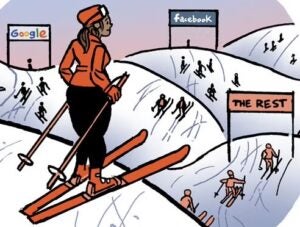
AppLovin is growing at a blistering pace, but Wall Street investors remain cautious about the business.
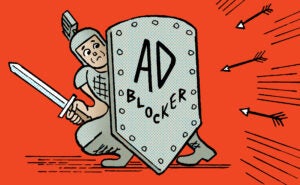
High-end ad blockers mimic some of the same behavior as bot traffic. So WiseGuyGaming repurposed the tools it was already using to identify bots to reveal its ad-blocking audience as well.
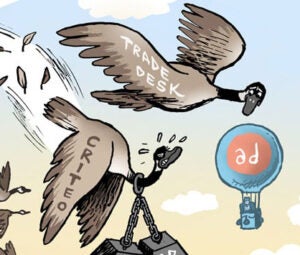
Criteo has weathered considerable storms in its day, including a painful moment in March 2020 when its market cap bottomed out below $500 million. Can it pull off yet another turnaround?