How The OAAA Is Guiding DOOH Through Its Next Stage Of Programmatic Evolution
OAAA COO Patrick Dolan explains how the organization is changing to guide the out-of-home channel through programmatic’s agentic era.

OAAA COO Patrick Dolan explains how the organization is changing to guide the out-of-home channel through programmatic’s agentic era.
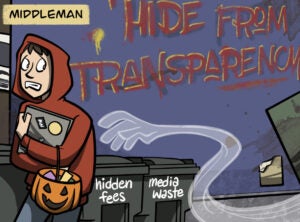
Ad-free might not be free anymore; Amazon isn’t the only company hiding its transaction data; and the Paramount WBD merger continues.

Given how much the market has changed since the Google trial began, and the wiggle room in the ruling itself, publishers aren’t expecting much relief from the court’s behavioral remedies.
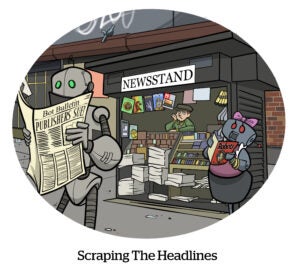
OpenAi and Microsoft have known about the “doom loop” of content scraping all along; “Fortnite” has become a brand marketer’s nightmare; and Forrester thinks streamers are going to shed their subscription models.
Taboola has made an offer to buy Dianomi, a UK-based ad tech company that connects financial advertisers with premium business and finance publishers.

It’s the end of an IPO era for ad tech; Business Insider looks for solutions to its cratering traffic; and Amazon and Walmart’s AI chatbots face criticism.

The court has unsealed Judge Leonie Brinkema’s full remedies opinion in US v. Google (ad tech edition). So, what’s in there?

Chrome is introducing new metrics that give advertisers and publishers a more data-driven picture of what users actually experience on ad-heavy sites.
Google tests out a “pay per value” AI licensing scheme; Netflix, Amazon and YouTube join forces; and Apple may soon launch integrations with third-party LLMs.

While Eric Seufert’s “everything is an ad network” mantra keeps being proven correct, a new truism is also taking shape: “Wherever an advertising business emerges, the measurement challenge follows.”

McGrath left Prebid in June following five years as board chairman after stepping down as SVP of product management at Magnite. But now, overseeing Prebid will be his full-time job.

Shunned by streamers, cable news builds its own app bundles; Grindr pays $35 million to settle a UK lawsuit over selling data to advertisers; and LG TVs can be hacked to record audio.

AI is creating new problems for advertisers; Amazon Prime’s new privacy feature irks customers; and the Trump administration sides with OpenAI in the copyright lawsuit brought forth by the NYT.
The FTC sues Amazon, alleging ad auction manipulation; some agencies are hyping that their ads are made by humans; and more people are paying for ad-free streaming.
TWC is building a monetization model that treats weather as both a contextual and an emotional signal, and it’s using AI sales agents to bring it to market.

The great Meta migration is in full swing. Ex-Meta employees are, filling the ranks at Open AI, TikTok, Amazon Ads and Roku and bringing their expertise with them.

Meta alumni are on the move – and they’re bringing the world’s most successful ad playbook with them to the next generation of would-be ad platform greats, with OpenAI at the top of the list.

In the modern streaming landscape, everything old is new again. At least that’s the case for NBCUniversal, which is trying to bring back bundled distribution deals and appointment viewing.
The potential for ads in robotaxis; Crocs is back to seeing year-over-year growth; and ad-free streaming tiers continue to grow more expensive.
Alphonso – LG’s ad tech division – finally has a way out of its legal drama with parent company LG Electronics. Actually, it has three potential options.
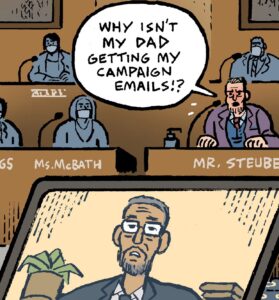
What’s with the myriad of retail media networks?; YouTube offers creators millions to refuse deals with Netflix; and political advertisers get a free pass.

Spotify’s ad-skipping has podcasters freaking out; Steaming growth is saving the TV upfront; and OpenAI wants some SMB clients.
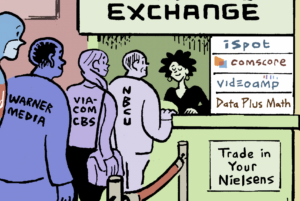
VideoAmp cuts 50 jobs; Roku reports its quarterly earnings; and customer acquisition costs are rising.
Fox Corp’s fiscal year closed at the end of June, and boy, was it lucrative.
Disney got some cash back in its pocket after the OpenAI deal fell apart – but the company still plans to lean into AI.

Women’s sports is having a moment as publishers, advertisers and the tech vendors in between try to capitalize on rising viewership. Digital out-of-home is having a moment, too.
Sweetgreen turned the World Cup into a marketing moment for its new wraps, running video ads in public viewing spaces through Atmosphere TV.

Hightouch’s new creative generation tool helped HelloFresh develop creative at a larger scale and launch a Times Square activation.

Earlier this month, PubMatic shelved its Prebid integration wrapper, known as OpenWrap Web, and announced it would begin recommending Playwire as an offloading-onboarding partner for the 250-odd publishers that use its wrapper.

Paramount+, unlike Netflix, announces a subscription-free option; Havas announces plans to go AI-first; and Faire’s Promoted Listings platform targets wholesalers, rather than individual customers.

Historically, non-human traffic was viewed on a spectrum from benign to intentional fraud. But AI agents represent a legitimate audience that brands will have to understand and engage.
Apple has a new block list for data brokers and ad tech vendors that do cross-site user tracking – which could expand to include a much broader slate of ad tech and martech vendors across the entire ecosystem. Plus: a few thoughts on Advertising Week New York.

Against the backdrop of Advertising Week New York this week, the programmatic ecosystem has been buzzing madly like the inhabitants of an overturned beehive after the release of Apple’s iOS 27.

Given how much agentic AI pervades nearly every conversation these days, it’s easy to overlook how nascent the technology still is, particularly when it comes to buying ads on connected TV.

OAAA COO Patrick Dolan explains how the organization is changing to guide the out-of-home channel through programmatic’s agentic era.

PubX has acquired media-quality startup Compliant and raised a $5 million Series A as it expands its agentic ad-buying platform into the US.

Warner Bros. Discovery has a new white paper analyzing the data and methodologies of five top video measurement providers: VideoAmp, iSpot, Comscore, Innovid and Samba.