Who Is Teaching AI Who Your Customers Are? Why Identity is Your Most Critical Asset
Experian’s Matt Tipperreiter and AtData’s John Oronte on why marketers must prioritize data freshness and interoperability in the AI era.
Experian’s Matt Tipperreiter and AtData’s John Oronte on why marketers must prioritize data freshness and interoperability in the AI era.

The Publicis/LiveRamp acquisition raises a stark question: Can shared identity infrastructure really stay neutral under competitor ownership?

Kraft Heinz’s deal with Disney represents a food marketing trend; how buying location data is a legal loophole for the government; analysts rain on OpenAI’s ad parade.
The purported best ways to counter ad fraud; CPG brands struggle in the face of GLP-1s; and the open web might be meeting its end.
Last week, newsletter platform beehiiv rolled out programmatic ads for the first time, which is a key part of its plan to build a one-stop-shop for creators, says CEO Tyler Denk.

Incremental growth is what every marketer says they want. Proving it is another story. At Cannes 2026, AdExchanger Editorial Director Sarah Sluis sat down with Fabrice Beer-Gabel, SVP of Strategy and Partnerships at Intent IQ, and John Koenigsberg, EVP and Head of Platforms at Horizon Media, to talk about what happens when audience amplification actually […]

Instead of relying on rigid audience segments, modern systems can interpret a real-world moment in real time, combining layers of information to better predict what someone might actually care about right now.

Signal loss used to be something the industry managed around. Now, with AI in the mix, it’s becoming something you can actually monetize. AdExchanger Editorial Director Sarah Sluis sits down with Fabrice Beer-Gabel, SVP of Strategy and Partnerships at Intent IQ, to unpack how publishers and advertisers are flipping the script on identity-less environments — […]

Whenever a new privacy rule comes on the scene, people immediately look for a workaround. Virginia’s ban on the sale of precise geolocation data will be no exception; its narrow definition of a “sale” almost dares people to try.

With deterministic data like cookies becoming less reliable, advertising’s real value comes from being able to predict where audiences will be and how and when to reach them.

Walmart Connect is adding a second DSP partner: Yahoo DSP. Plus: It looks like location data is being used to spy on the military now.

Email targeting in CTV has a credibility problem as buyers and sellers question whether one-to-one identity even fits a channel built for broader reach.

Coming back from POSSIBLE last month, one thing stood out to me: Streaming TV has entered a much more operational phase. The conversation has evolved from where streaming is headed to how marketers drive better performance today. The content and conversations focused on how AI can improve campaign execution, how data can sharpen targeting and measurement and how channels work together within broader omnichannel strategies.

TTD confirmed that this CTV publisher’s errors would have made its UID2s useless for ad targeting. But TTD also said it wouldn’t have had enough information to flag the issue.

People Inc. previewed plans to downsize by focusing mainly on its key properties. The strategy makes sense considering its publishing portfolio has lost about two-thirds of its Google traffic.
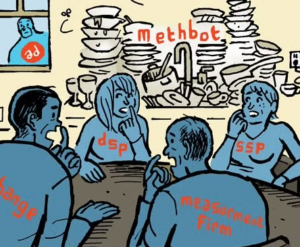
Whose Mess Is This? One unwritten rule for advertising and analytics platforms is to never make dramatic overnight changes that impact a customer’s day-to-day life. Quiet overhauls can wreak havoc in the background on identity graphs, targeting capabilities, software plugins, server setups, etcetera. But the customer UI usually exists at a safe remove, like the […]

Surprise! Platforms ignore users opting out of ad tracking; the marketing machine claims credit for Geese’s popularity; and Meta’s MAGA-friendly moderation makes an unforced error.

The effect wasn’t just limited to news content. The Reuters.com/lifestyle vertical also had some of its brand-suitable pages blocked.

The industry has spent years debating third-party cookies, but AI has settled the debate. First-party data isn’t just preferred; it’s structurally necessary. And the capital is already moving.

An upcoming paper from CIMM doesn’t just demonstrate that differences in media quality can be measured. It also argues that tying media value to short-term outcomes has perpetuated longstanding industry challenges.
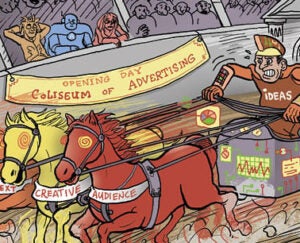
Future’s new Helix ad optimization solution adds AI-powered data science and predictive modeling to its in-house audience platform.

AI in advertising has gone from a buzzword to a full disruptor in what feels like just a few months. If CES was any indication, there is no sign of this slowing down.

Publishers can reach relevant audiences at scale and with greater specificity through Optable’s new planner agent.
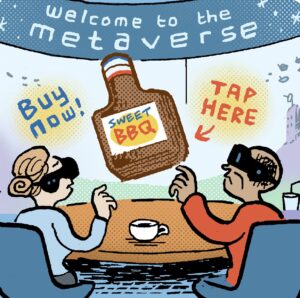
The metaverse hype is over; Apple Maps forays into advertising; and streamers vie for HBO Max and the WBD studio archive.

AudienceMix, a new curation startup, aims to make it more cost effective to mix and match different audience segments using only the data brands need to execute their campaigns.

E.l.f. Beauty’s “So Many Dicks” campaign targets corporate leaders via contextual advertising with the goal of increasing diversity in corporate boardrooms.

Traffic-starved publishers are hopeful that their long-undervalued audience data will fuel advertising’s automated future – if only they can finally wrest control of the industry narrative away from ad tech middlemen.

ID5 bought TrueData mainly to tackle what ID5 CEO Mathieu Roche calls the “massive fragmentation” of digital identity, which is a problem on the user side and the provider side.

Chrome kept cookies and killed the Privacy Sandbox, but at least we got some great comics out of it.

Enjoy this weekly comic from AdExchanger.com that highlights the digital advertising ecosystem …

Publishers, brands and agencies today are navigating a new landscape. With rising consumer expectations and evolving regulations, delivering personalized campaigns requires a fresh approach.
The ad industry has become a community of people who say things like “This is going to sound relatable” and follow it up with a sentence that may as well be Martian to 99% of America.

LG home screen inventory is now available through agentic buying, opening up a premium TV placement to faster, more automated campaign setup.

Reorienting the ad auction so that ad servers bid into Prebid lets publishers access demand from Google AdX without also having to use Google’s ad server.


Starling recently launched as a connected TV SSP and wants to capitalize on the opportunity to address a major pain point facing CTV marketers: the lack of show-level data.

Apple has a new block list for data brokers and ad tech vendors that do cross-site user tracking – which could expand to include a much broader slate of ad tech and martech vendors across the entire ecosystem. Plus: a few thoughts on Advertising Week New York.

Against the backdrop of Advertising Week New York this week, the programmatic ecosystem has been buzzing madly like the inhabitants of an overturned beehive after the release of Apple’s iOS 27.