

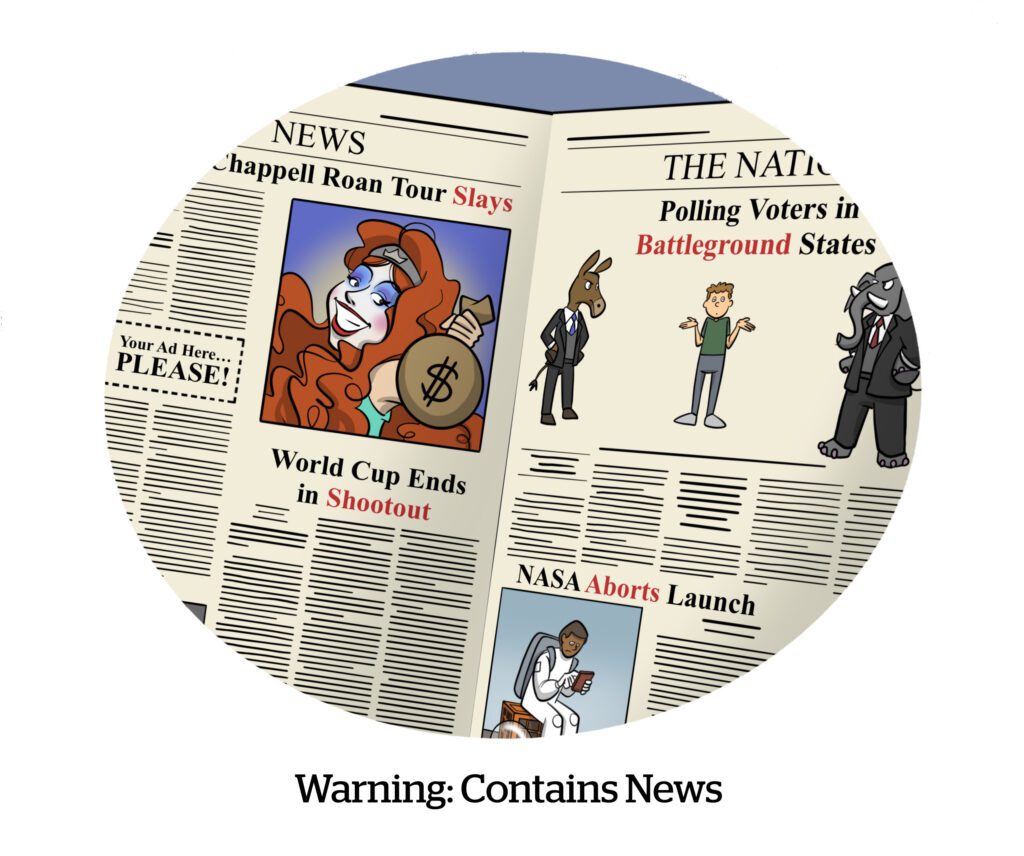
Can 2026 be the year advertisers finally let go of their keyword blocklists? News publishers sure hope so.
Even brand-safety platforms want advertisers to abandon the antiquated practice of keyword blocking, which is the blunt instrument often blamed for preventing ads from appearing in the news.
Arbitrarily avoiding URLs that contain words like “shoot” or “fire” limits opportunities to reach news audiences – despite growing evidence that those audiences tend to be deeply loyal and highly valued by brands.
To give brands more of a sense of what they’re missing, Integral Ad Science (IAS) recently partnered with Reuters to examine just how often blunt keyword blocking demonetized Reuters content that otherwise met IAS’ brand suitability standards.
The result? More than half of the brand-suitable pages on the Reuters.com news site were flagged by keyword blocklists.

And here’s the kicker that should alarm even news-averse advertisers: The effect wasn’t just limited to news content. The Reuters.com/lifestyle vertical also had some of its brand-suitable pages blocked.
The scope of the problem
Reuters has long done its own internal tests to examine how brand-safety tools limit its monetization, said Phil Andraos, general manager of Reuters Digital.
But this was the first time Reuters partnered with IAS with the goal of releasing the results publicly – and both companies had the goal of educating the industry on the harms of simple keyword blocking.
“Our belief is that it is in everyone’s interest, including the marketers, not to use this tool at this point,” Andraos said.
The study looked exclusively at Reuters content that would be considered either low- or medium-risk according to IAS’ brand suitability measurement, said Srishti Gupta, chief product officer at IAS.
This inventory would have been cleared by IAS’ Context Control Targeting solution, which relies on machine learning to apply semantic intelligence to the content on a page to get a better understanding of the context and sentiment behind it. The inventory also would have met the criteria for inclusion in brand-suitable curated private marketplace (PMP) deals.
The study didn’t involve any test campaigns to see the effect on actual ad serving, Gupta emphasized.
IAS ran the test on Reuters’ news content in June and on the lifestyle page in September. On the news section, 54% of URLs that were cleared by the contextual targeting solution would have triggered a typical keyword blocklist. Meanwhile, 4.27% of the lifestyle section URLs that were cleared by contextual targeting would have triggered keyword blocking.
But that’s not to say that more than half of the impressions served on the Reuters site would have been blocked, Gupta said, since different pages attract a different number of impressions.
Still, it’s not a negligible number of impressions we’re talking about. On the lifestyle page, specifically, the URLs that IAS identified as brand suitable but that would have nevertheless triggered keyword blocking accounted for 13.5% of that page’s ad impressions during the test period, Gupta said.
Andraos declined to put the potential revenue impact for Reuters in terms of hard numbers or percentages. But he pointed to a 2019 Stagwell study that estimated overzealous keyword blocking cost US publishers $2.8 billion in ad revenue that year – and he said he suspects today’s numbers would probably be higher.
Missed audience opportunities
To be clear, this is revenue publishers are missing out on for no real reason. The IAS and Reuters study illustrates just how bad keyword blocklists are at understanding the actual risks associated with the content.
On the Reuters.com/lifestyle site, for example, an article about a film shoot for the upcoming movie “The Devil Wears Prada 2” would have been blocked because its URL contained the word “shot,” Gupta said.
Similarly, many keyword-based tools block URLs that contain the word “fire,” Andraos said. Which means all of the Reuters content about the band Arcade Fire – which, incidentally, is one of Andraos’ favorite bands – would be blocked.
So advertisers who rely on keyword blocking would be prevented from reaching audiences interested in reading about a massively popular movie franchise and one of the biggest indie rock bands of all time.
Absurdities on the lifestyle page aside, even the Reuters news content that was blocked demonstrated major missed opportunities for marketers caused by oversimplified brand safety strategies.
Andraos explained how keyword blocking often leads to associated words and phrases being blocked. For instance, he said, brands that block the keyword “fire” will also typically block keywords associated with well-known fires, such as blocking the word “Paris” in the wake of the widely covered fire at Paris’ Notre Dame cathedral back in 2019.
However, he said, these keyword blocklists are famously not updated consistently, so many brands that wanted to avoid appearing alongside coverage of the Notre Dame fire later ended up blocking Reuters’ coverage of the 2024 Paris Olympics.
How common is keyword blocking anyway?
To help advertisers move beyond outdated keyword-based strategies, brand-safety platforms, including IAS and DoubleVerify, have rolled out more sophisticated tools that attempt to understand the meaning and context behind words before deciding whether to serve an ad.
For example, Gupta said, IAS prefers that advertisers use Context Control Targeting over keyword blocking. She also pointed to a solution called Quality Connect, which gives publishers visibility into how their content gets blocked by buyers so they can diagnose and correct any issues with overblocking.
Despite the availability of smarter tools, simple keyword blocking persists as a strategy. And both publishers and advertisers are paying the price.
Asked why companies like IAS still allow the use of keyword blocking if everyone agrees there are better solutions out there, Gupta emphasized the need to provide choice to clients. Educational efforts have helped make keyword blocking less popular over time, she said, but there’s more work to be done.
Many advertisers are probably still using some limited form of keyword blocking, Gupta said, even if they are also using other, more sophisticated tools. But, she added, the percentage of ad impressions run through IAS’ platform that are blocked as a result of the exclusive use of keyword blocking is just 0.25% today.
From the publisher’s perspective, though, Andraos said, advertisers appear to be using extensive keyword blocklists “in the majority of cases.”
He added, “If you speak to any publisher, news or non-news, the use of keyword blocklists is having a really significant impact” on their revenue.









