
‘E’ For ‘Exactly The Same As Always’; Google’s Very Bad Day On Wall Street
How ad tech vendors misuse extended identifiers; Google’s search ad business worries investors; and why TelevisaUnivision plans to expand its sports portfolio.
How ad tech vendors misuse extended identifiers; Google’s search ad business worries investors; and why TelevisaUnivision plans to expand its sports portfolio.

The biggest obstacle to AI transformation may not be disorganized data but the messy workflows around it, says Rebecca Sykes, a partner at The Brandtech Group, where she leads the emerging tech practice.

ChatGPT launches its latest iteration of ads; retail giant AliExpress expands its partnership with YouTube; and people are making their smart TVs less smart.

The fight over standardized metrics; UTM parameters no longer appear in ChatGPT results; and the ad agency that’s been spying on online users.

Agencies are pitching AI directly to CEOS; Xandr under fire for sharing sexual orientation data sourced from Grindr; and Publicis says brands don’t need to sweat big holdcos working for their competitors.

Prior to adopting Treasure AI, Nestlé Mexico had looked at data and targeting on a brand-by-brand basis. Now, its entire portfolio is unified in one system.
Can you trust an AI-built marketing mix model? M-Squared’s Madan Bharadwaj on why AI makes expert judgment matter more, not less.

Why retail partnerships are so popular; advertisers aren’t satisfied with OpenAI’s ad measurement; and how US tax dollars ended up going toward pro-Trump ads.

Sponsored agents are the future of AI-native advertising experiences, according to Colleen Coulter, global ad solutions lead at OpenAI. But what do LLMs owe publishers?

How legit is “annualized revenue run rate” as a metric?; YouTube discusses new creator marketplace tools; and AI agents keep bypassing safeguards.

Rather than relying on machine learning, SQREEM uses a mathematical AI model to track how systems change over time and predict audience behavior.
The ad industry added two new alternative IDs this week; Sony and Microsoft file patents that hint at new gaming ad ambitions; and OpenAI says its cookies are for analytics, not targeting.

Good marketing tools need to be accessible across teams and account for a company’s unique strategy. Marketing orchestration platform Auxia thinks its tools fit the bill.

Google tests out a “pay per value” AI licensing scheme; Netflix, Amazon and YouTube join forces; and Apple may soon launch integrations with third-party LLMs.

McDonalds is hiring humans again; Madison and Wall predicts “unusually rapid” growth; and families want tech out of their schools.

Actionable uses causal AI to determine what leads to customer dissatisfaction, and addresses those problems before they lead to churn.

L’Oréal adopted creative AI platform Springboards to generate creative ideas that led to a collaborative, ongoing ideation process.
OpenAI’s growing ads business is starting to prove its worth. But if it wants to keep growing, it’s going to need stronger measurement solutions.

AI is creating new problems for advertisers; Amazon Prime’s new privacy feature irks customers; and the Trump administration sides with OpenAI in the copyright lawsuit brought forth by the NYT.

AI marketing platform Optimizely announced the launch of Virtual Teammates, blurring the line between human employees and AI assistants.

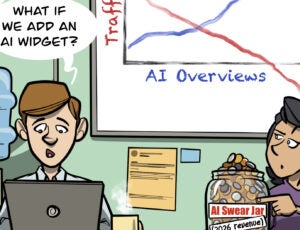
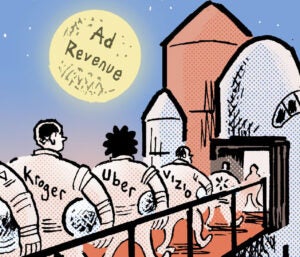
Enjoy this weekly comic strip from AdExchanger.com that highlights the digital advertising ecosystem …

Per-token price for frontier models may go up or down, but the cost to solve complex problems is going to increase, writes Zefr’s Jon Morra.

What happens when you let an AI agent handle back-to-school shopping – and realize you may have outsourced the fun parts, too?

Marketing teams are getting faster with AI, but the real question is whether they’re actually getting better outcomes, writes Devart’s Margaret Lee.

Google’s Spirit Airlines data stockpile is feeding AI; ChatGPT’s advertiser switcheroo; and X’s rage-baiting isn’t the engagement signal advertisers are looking for.

Two years ago, AppLovin launched an ecommerce beta program to bring in non-gaming advertisers. Now it’s launched a consumer ads segment with ambitions to take on the Big Tech platforms.

The newly introduced Stealth Bot Prohibition Act would prevent AI stealth crawlers from hiding their identities and illicitly scraping web content.
Mary Gabrielyan, Chief Strategy Officer at AI Digital, discusses what OpenAI’s move into advertising means for marketers.

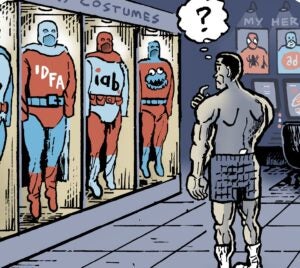
Enjoy this weekly comic strip from AdExchanger.com that highlights the digital advertising ecosystem …

Disney got some cash back in its pocket after the OpenAI deal fell apart – but the company still plans to lean into AI.

Cuisinart’s marketing team has been eager to take advantage of generative AI-based creative.

Starting in Q4, Reddit will test logged-in-only mode to protect its user engagement, improve ad targeting and keep AI from scraping its content.

DoorDash on Thursday confirmed the rumors and announced its intention to acquire Instacart at a $17 billion valuation.

Last week, a district court judge in New Mexico ordered Meta to pay $25 billion for misleading Facebook users about how it handled their data. Does it matter?


Google earned $127.6 billion in Q3, up 25% year over year, practically all of which came from ads. Yet advertising hardly came up during its earnings call on Wednesday evening.

Meta now scores every eligible ad for every impression at more than a billion ads per second, one of three ad ranking upgrades Meta announced on Wednesday.
The agency services group Marketbridge added to its portfolio on Tuesday by announcing its acquisition of Channel99, a B2B advertising and attribution tech company.


