InMobi Apple Seeds
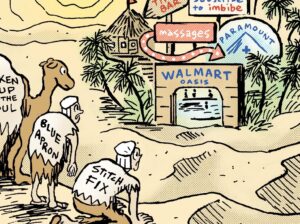
On Thursday, India-based mobile ad tech giant InMobi announced its acquisition of Apple advertising startup MobileAction. The terms were not disclosed.
One rationale behind the deal – and InMobi’s desire to sharpen its Apple Ads chops – is the well-documented trend that the loss of Apple ad IDs shifted spend to Android, which has superior targetability.
“The second and less discussed issue is that Apple itself has historically released very little advertising inventory compared to Google,” Rohit Dosi, InMobi VP and general manager, tells AdExchanger over email.
Ads are “woven into” everything on Android, Dosi says, while Apple has taken a minimalist approach.
But “that is starting to change,” he notes. Apple is uncorking ads across more media, including in Apple Maps and Apple News, not to mention new search carousels, sidebars and sponsored units.
Apple’s ad ecosystem operates on fundamentally different principles than Android, Dosi says, although most ad buyers still treat iOS and Android as part of a single search strategy.
Apple Ads end up being “underleveraged not just because of signal loss or limited inventory,” he says, “but because the tools required to compete there are genuinely specialized.”
Hallucination Nation
Marketers are quickly learning that handing the keys over to AI agents can mean expensive errors.
As Ad Age reports, you don’t have to look very far for examples of bots making up prices, misbooking campaigns and confidently passing off bad information.
In one instance, an AI agent fabricated a CTV ad rate so absurdly low that it practically snitched on itself. Another managed to botch a media buy even after getting the correct instructions and human sign-off.
“We need to proceed cautiously,” says IAB Tech Lab CEO Tony Katsur. “Every head of a major LLM has said AI will hallucinate and get it wrong.”
That hasn’t stopped the industry from charging ahead. Omnicom mentioned during its Q1 earnings call last week that it’s already executed live agent-to-agent ad transactions. Meanwhile, publishers like The Weather Company and News Corp are testing sales agents that can package inventory, negotiate deals and surface premium audiences for buyers.
Not that marketers are abandoning their AI experiments. But they may want to supervise their agents a little more closely.
AI Sex Sells
Now that generative AI video tools are widely available, most advertising platforms make an effort to remove content, including ads, that feature celebrity deepfakes or promote “nudify” tools.
One deepfake trend flies under their radar, though, because it technically comes from content publishers, not scammers.
Business Insider spoke with several microdrama actors who were surprised to find their likenesses used in AI-generated ads for the shows they appear in. But they were shocked that these ads often depict sex, nudity and/or violence that doesn’t appear in the show and was never approved by the actors.
The SAG-AFTRA Commercials Contract requires producers to obtain “clear and conspicuous consent” before creating digital replicas of talent to use in advertisements. However, microdramas are often produced with non-union talent and sold to companies based outside the US.
Some microdrama actors now insist on contracts that forbid unsanctioned AI usage. However, legally speaking, there’s not much they can do to remove existing ads. Aside, perhaps, from generating bad press.
“They can make me say anything,” one actress told BI. “And if I don’t throw a fit over this, who knows how far they’ll take it?”
But Wait! There’s More!
Samantha Jacobson, The Trade Desk’s chief strategy officer, is leaving to become OpenAI’s VP of partnerships and monetization. [Adweek]
Smartly finalizes its acquisition of incrementality measurement startup INCRMNTAL. [release]
A Canadian fiddler is suing Google after its AI Overviews falsely claimed he was a registered sex offender. [The Guardian]
OpenAI announces that ads will expand to the UK, Mexico, Brazil, Japan and South Korea in the coming weeks. [post]
Here’s today’s AdExchanger.com news round-up… Want it by email? Sign up here.