LG And Magnite Launch Agentic Home Screen Ads With A Winning NFL Quarterback
LG home screen inventory is now available through agentic buying, opening up a premium TV placement to faster, more automated campaign setup.

LG home screen inventory is now available through agentic buying, opening up a premium TV placement to faster, more automated campaign setup.

OAAA COO Patrick Dolan explains how the organization is changing to guide the out-of-home channel through programmatic’s agentic era.

NBCU, FreeWheel, Carat and Newton Research join forces for agentic AI CTV buys; Monday Night Football gets flooded with Texas Senate ads; and justifying “preferred by cats” in pet food ads.

PubX has acquired media-quality startup Compliant and raised a $5 million Series A as it expands its agentic ad-buying platform into the US.

Most publishers add SSPs like insurance. More partners means more demand and more demand means more competition for every impression. But at The New York Times, every ad tech partner has to earn its place in the stack, says Courtney Glaze, its VP of revenue operations.

Advertisers can now use Vistar to activate both off-the-shelf and custom audiences built on T-Mobile’s first-party location and app data.

The assumption that an impression is a reasonable proxy for consumption is eroding, and when buyers stop believing it, pricing follows.

Apple’s WebKit crackdown appears to extend well beyond The Trade Desk, putting hundreds of ad tech, data and identity vendors on a mysterious, dynamically updated block list.

Apple’s latest Safari changes are stirring ATT-era concerns – but this time might be more disruptive for ad tech.

Is the open web growing, dying or transforming? Plus: Apple’s iOS update is blocking The Trade Desk from serving ads on Safari browsers, and how that fits into programmatic’s next chapter.

Agencies are differentiating their tech stacks by building custom agentic AI tools for their clients. And they’re rethinking owning those AI tools – particularly since licensing them creates new revenue streams.
“When I talk to advertisers, they want a level of insight and transparency that helps them still have important levels of control,” says Paula Despins, VP of measurement for Amazon Ads, Amazon Marketing Cloud and ads trust.

Locality SVP Tom Wolfe explains why supply path optimization (SPO) must prioritize data fidelity, local TV fragmentation, and true value over fee-cutting.
AppLovin sues Unity over data leakage; Meta’s creator business faces an uphill battle in competing with YouTube; and AI search wrongly blames Converse’s old CMO for its current ad controversy.

The Trade Desk is unable to serve ads to the Safari browser for Apple device owners that have downloaded iOS 27. Apple has been investigating the issue since last week.

Amazon Ads has overhauled its DSP and the sponsored product and search-based ad console for on-platform ads, the company announced at its unBoxed event in San Francisco on Tuesday.

The agentification of Amazon Ads is underway. At its unBoxed ads industry event in San Francisco on Tuesday, Amazon announced a major ad tech overhaul, with its DSP turning into a default agentic chatbot experience.
Advertisers can now buy YouTube Shorts ads alongside open web inventory; Meta just wants to be wanted; and Meta’s Muse shows the danger of blindly trusting AI agents.

The open web is done, stick a fork in it. Banner blindness is near universal, search traffic has run dry and publishers are struggling for oxygen. But what if that’s … not true?
Let’s talk acquisitions! The WarnerMount merger is close to being in the clear, after California and 11 other states settled their antitrust lawsuit against the merger. Plus: Taboola bought Dianomi. Infillion bought Foursquare. We get into what all three of these companies will look like post-acquisition.

California protects an individual’s right to sue when a company violates data privacy law. So privacy compliance means understanding what a jury of consumers will tolerate.

As programmatic buying becomes more common in audio, marketers and platforms fight the temptation to cram in as many placements as possible.

Connected TV advertisers are still pining after show-level control. And PubMatic announced contextual targeting at the episode level is available to media buyers accessing CTV inventory through its platform.

Everybody wants to make the most of agentic AI in advertising. The winners will do it with purpose. Here’s how to make a plan, step by step.
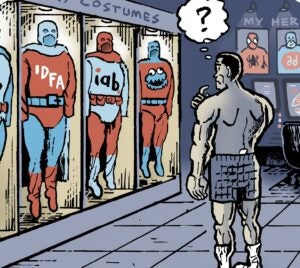
The ad industry added two new alternative IDs this week; Sony and Microsoft file patents that hint at new gaming ad ambitions; and OpenAI says its cookies are for analytics, not targeting.
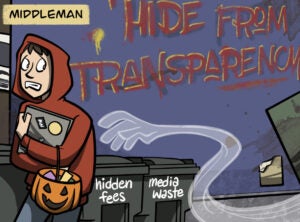
Ad-free might not be free anymore; Amazon isn’t the only company hiding its transaction data; and the Paramount WBD merger continues.

Given how much the market has changed since the Google trial began, and the wiggle room in the ruling itself, publishers aren’t expecting much relief from the court’s behavioral remedies.

Indie agency KWG says sell-side curation can target more high-performing inventory with better match rates and lower data fees than buy-side curation.
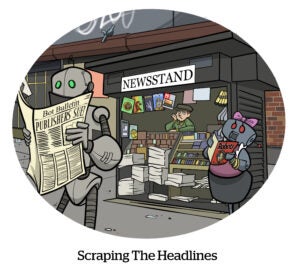
OpenAi and Microsoft have known about the “doom loop” of content scraping all along; “Fortnite” has become a brand marketer’s nightmare; and Forrester thinks streamers are going to shed their subscription models.

A week ago, HBO MAX had its verified Reddit account overrun by a hacker group, which eluded notice for two days while it ran 108 different ad permutations targeting an unknown number of Redditors.
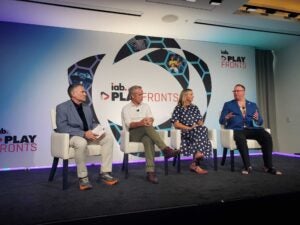
Adapting other channels’ strategies might be what gaming platforms need to do to get advertisers comfortable spending more. Leaning into gaming’s differentiators will come later, after bigger budgets arrive.

The ad industry has become a community of people who say things like “This is going to sound relatable” and follow it up with a sentence that may as well be Martian to 99% of America.
LG home screen inventory is now available through agentic buying, opening up a premium TV placement to faster, more automated campaign setup.

Reorienting the ad auction so that ad servers bid into Prebid lets publishers access demand from Google AdX without also having to use Google’s ad server.

Starling recently launched as a connected TV SSP and wants to capitalize on the opportunity to address a major pain point facing CTV marketers: the lack of show-level data.
Apple has a new block list for data brokers and ad tech vendors that do cross-site user tracking – which could expand to include a much broader slate of ad tech and martech vendors across the entire ecosystem. Plus: a few thoughts on Advertising Week New York.

Against the backdrop of Advertising Week New York this week, the programmatic ecosystem has been buzzing madly like the inhabitants of an overturned beehive after the release of Apple’s iOS 27.