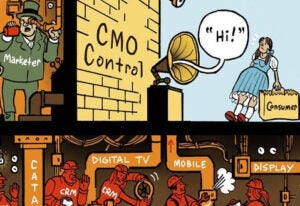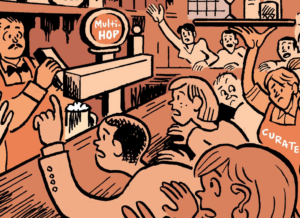
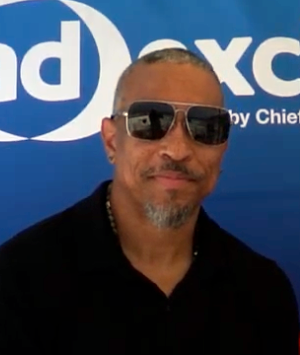
What if the industry has been targeting the wrong thing this whole time? Well, somewhere between an offensive green hoodie and a cultural relevance score, Joe Ligé, Founder and CEO of Culture Hive Media Group, believes he’s found the ad industry’s blind spot.
Instead of buying media against age, gender or income bracket, the pitch is that advertisers can now buy against cultural signals.
That means inside the communities and content where people’s actual interests live. Say a brand wanted to chase runners. They could buy against training content and race-day moments directly instead of spraying and praying within the 25-to-34 demographic hoping to catch some.
Culture Hive recently announced that its Cultural Relevance Score (CRS™) was integrated into Magnite’s ClearLine platform, enabling advertisers to do that very thing. It’s a notable bet. As third-party cookies continue eroding and generative AI answer engines reshape how people discover products, the old targeting playbook is looking increasingly threadbare.
Ligé isn’t just making a philosophical case; it’s showing up in performance. He says brands are seeing 4x ROAS and a 300% increase in retail media, noting that it requires sustained “emotional equity” investment.
AdExchanger caught up with Ligé in Cannes, where we talked about the difference between culture and DEI, how the CRS score actually works inside SSPs and DSPs, and the ad campaign that pushed him to build a system that catches tokenism and stereotyping in advertising before it ever launches.
Below is an edited version of that conversation.
AdExchanger: You built Culture Hive around a specific conviction – that the industry has been targeting the wrong thing. Can you talk about that?
JOE LIGÉ: I want to define culture first, because people use the term loosely. Culture is not a demographic. It’s the identity, values, interests, rituals and communities that define who we are.
Once you understand that, you also have to understand that culture doesn’t move fast. Pop culture changes at the speed of light – Black culture, Italian culture, Hispanic culture don’t.
Sneaker culture is the same way. There are new sneakers, but sneakerheads have been around for a while, and understanding what a drop means is different for someone inside that culture versus someone walking down the street. If you can define a culture, you can understand what’s relevant within it.
People often conflate culture with DEI or diversity. How do you draw that line?
I like to say advertising has always advertised to the reflection in the mirror – to how people see themselves, and the cultures they associate with. I’m not Hispanic, I don’t speak Spanish, but I live in Southern California, I shop at Hispanic grocery stores, I’m inundated in the culture. That means culture can’t be tied directly to a demographic or a race, even though it’s made up of many.
If you target sneakerheads purely on demographics, you’ll miss 30% to 40% of who sneakerheads actually are and where they consume content. And DEI is fundamentally about the individual – how a person fits within an organization. Culture isn’t individualized; it’s communal. That’s the core difference, though it doesn’t mean culture can’t be diverse.
You built the Cultural Relevance Score to put a number on this. How does it work, and how are you getting advertisers to understand it?
The Cultural Relevance Score is a unit of measurement for cultural resonance between an audience and a given input. Once you’ve defined a culture and know its components, you can take any input – content, creative, an audience – and measure how closely it aligns.
On the Hispanic side, for example: As someone with roots there but who doesn’t speak Spanish and isn’t immersed in the culture day-to-day, I’d score around 60 to 65 on our scale. If I spoke Spanish and lived closer to the culture’s core, I’d be 90-plus. You can be part of a culture without being at its center – the score tells you how close.
How would an agency or brand actually put that to use?
We’ve resolved all of that down to audience segments available across SSPs and DSPs – PubMatic, Magnite, OpenX and others – so a brand can select our segments and target, test and measure how relevant the creative and inventory actually are to a given cultural group.
The other thing we built: Once you know what defines a culture, you also know what doesn’t align with it. And if something scores low on relevance but high on visibility, it’s probably offensive. We’re the only company that can flag tokenism, racism or stereotyping inside creative itself, because we start from an actual measurement of what a culture is.
That sounds like it could help brands avoid situations where – as people often say after the fact – “they didn’t have the right people in the room.”
That’s exactly why I built this. Years ago, an ad came out featuring a young Black child in a green hooded sweatshirt with the text “Coolest Monkey in the Jungle.” It infuriated me. I assumed the child’s parents didn’t understand the history.
But it turned out the family was of African descent and Swedish, and they genuinely didn’t see it as racist, because that connotation is deeply U.S.-specific, rooted in slavery. It doesn’t carry the same weight in every country.
That’s when I understood: Cultural relevance matters more than just understanding a culture in the abstract. If you know how something lands across different cultures, you can catch it before it happens and prevent it at scale. We’re the first to attempt that.
You’ve been in ad tech a long time and coming to Cannes for years. This is Culture Hive’s second year here. When people talk about culture at Cannes, do you feel real work is behind it, or is it still a buzzword?
I think the work is in the definition. Whenever someone brings up culture, I ask, “Can you define it? How are you optimizing or targeting toward it? What metrics are you using?” Nine times out of 10, there isn’t one – it reverts back to pop culture, to what’s trending. That’s not culture; that’s a trend. There’s a social or trending culture, sure, but that’s a newer layer, not the heart of it.
You recently posted that you’re coming to Cannes this year “with proof.” What does that mean?
We’ve worked with several brands and agencies using our CRS to target more precisely, and we’re seeing results: 4x ROAS in some cases, a 300% lift for retail media when targeting is done right, and increased attention across campaigns.
One caveat – this isn’t a light switch. You can’t just declare a placement culturally relevant on day one and expect immediate results. You have to invest emotional equity into a culture over time to build real resonance. What we do is identify where a brand is already resonating, so they know where to double down – and over time, the audience starts to see that brand as authentic.
What KPIs should people be tracking with CRS?
Resonance is number one. Brand lift – making sure people associate the brand properly – is another. And brand safety: We help place creative optimally before a campaign even launches, so a brand starts in the right environment instead of burning budget figuring it out mid-flight.
So to sum it up: Cultural relevance gets you the right audience because it captures the nuance of who people actually are.
Absolutely. We don’t fit in boxes.