
Meet OpenX’s New CEO, An Optimistic Realist
Robert Horler, OpenX’s new CEO, weighs in on the shifting power dynamics in ad tech, Apple’s identity crackdown and why buyers don’t need yet another complicated sales pitch.

Robert Horler, OpenX’s new CEO, weighs in on the shifting power dynamics in ad tech, Apple’s identity crackdown and why buyers don’t need yet another complicated sales pitch.

Advertising supply chain intelligence company DecryptAds uncovered more than 2,100 AI-generated recipe sites that are monetized with programmatic ads and feature fabricated author profiles.

Most publishers add SSPs like insurance. More partners means more demand and more demand means more competition for every impression. But at The New York Times, every ad tech partner has to earn its place in the stack, says Courtney Glaze, its VP of revenue operations.
Instead of buying media against age, gender or income bracket, why not buy against cultural signals?

Finance, legal and billing functions require auditability. Your team will still need to normalize, validate and reconcile data from scratch.

If AI-powered sales agents are the future, the instinct is simple: more agents should mean more revenue. But isn’t this the same logic that drove SSP proliferation over the last decade?
Goodway Group has reduced the number of SSPs it works with from about 20 at the end of 2024 to just single digits today.
Nowadays, programmatic vendors, and SSPs in particular, are carving new paths of differentiation based on their type of adoption of cloud infrastructure.

The programmatic intelligence layer is owned by the same parties that are extracting margin from it. That structure is now being dismantled by an AI-underpinned protocol that moves the intelligence layer into the open.

Consumer trust in AI search is growing; “containerization” is the new ad industry buzzword; and publisher collectives fight back against AI.

PubMatic has run more than 30 fully autonomous, end-to-end agentic campaigns through the SSP’s AgenticOS platform, in addition to more than 1,000 direct publisher deals.

For the first time, Unity’s gaming audiences will be available for ad targeting outside the Unity platform, with Index Exchange using Unity’s data to curate web and CTV inventory.

If a buyer wants real control, “domain rationalization” alone will never be enough. Buyers need “bid rationalization,” shaping the supply at the bid-request level so they see fewer, better, more outcome-relevant opportunities.

PubMatic says adoption of its AgenticOS, combined with strong CTV and mobile demand, set the stage for double digit growth in the second half of this year.

Traffic didn’t drip. It dropped. In 2026, publishers are prioritizing stability over scale as AI, automation and curation reshape the sell side.

When it comes to managing fraud, there are four steps CTV publishers should take to remove bad actors from the supply chain.

Gamera, a media quality measurement startup for publishers, announced on Tuesday it raised $1.6 million to promote its service that combines data about a site’s ad experience with data about how its ads perform.

The generative AI trend generated endless hot takes this year, but the ad industry also had plenty to say about growing competition between DSPs and SSPs. Here are AdExchanger’s top 10 most popular guest columns of 2025 and why they resonated.

Unauthorized ID stuffing, rampant reselling and misaligned signals inflict incredible damage on the programmatic ecosystem. If publishers want to compete with the walled gardens, we must raise our standards.

Publisher comment sections remain an untapped source of intent-based data, according to Kelly Andresen, who recently left USA Today to head up comment monetization platform OpenWeb’s direct sales efforts.

Enjoy this weekly comic from AdExchanger.com that highlights the digital advertising ecosystem … and happy Thanksgiving!

Confusion in CTV isn’t a natural byproduct of a maturing market; it’s an outcome of how distributors protect their pricing power.

Traffic-starved publishers are hopeful that their long-undervalued audience data will fuel advertising’s automated future – if only they can finally wrest control of the industry narrative away from ad tech middlemen.
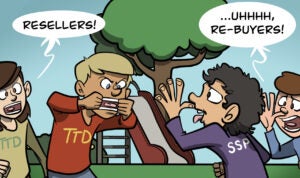
Enjoy this weekly comic from AdExchanger.com that highlights the digital advertising ecosystem …

Magnite says it’s not mad at The Trade Desk for prioritizing OpenPath or labeling all supply-side platforms as “resellers.”

A DSP, an SSP, an agency and a publisher walk into a room. Believe it or not, that isn’t the lead-in to a bad joke. It’s the model used by Medialive, a new AI startup that brings media buyers, sellers and vendors together to collaborate directly in a shared (digital) space. Joe Prusz, former CRO […]

Prebid’s future is up for grabs as the open-source project grows apart from the IAB Tech Lab, the industry’s self-appointed standards authority.
A peek inside PubDesk, The Trade Desk’s new dashboard that gives sellers detailed info on how buyers value their inventory.

SSPs are staring at their own demise. And it’s because, for over a decade, SSPs have positioned themselves as agnostic platforms.

Rather than sharing universal TIDs that any DSP or curator can access, Raptive says publishers should instead share encrypted TIDs with an encryption key provided only to trusted demand-side partners.