
OPINION: Data-Driven Thinking
Sure, Debates Between Prebid Members Can Get Heated. That’s Why It’s The Programmatic Melting Pot
The Prebid Summit in New York City on Tuesday exceeded the event’s reputation for liveliness.

The Prebid Summit in New York City on Tuesday exceeded the event’s reputation for liveliness.

Google and the Department of Justice filed the next round of paperwork that will determine what Google’s punishment will look like in the ad tech antitrust case.

Given how much the market has changed since the Google trial began, and the wiggle room in the ruling itself, publishers aren’t expecting much relief from the court’s behavioral remedies.
Taboola has made an offer to buy Dianomi, a UK-based ad tech company that connects financial advertisers with premium business and finance publishers.

Chrome is introducing new metrics that give advertisers and publishers a more data-driven picture of what users actually experience on ad-heavy sites.
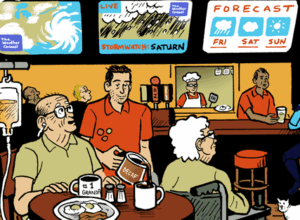
TWC is building a monetization model that treats weather as both a contextual and an emotional signal, and it’s using AI sales agents to bring it to market.
Last week, newsletter platform beehiiv rolled out programmatic ads for the first time, which is a key part of its plan to build a one-stop-shop for creators, says CEO Tyler Denk.

The SAIL initiative compensates publishers when AI scrapes their content and guarantees the outputs adhere to the same cultural standards they apply to their own coverage.

The CMS migration helped unify TIME’s fragmented content data after years of platform transitions under multiple owners. This enabled TIME to launch its own AI search product and convert archival content into AI-friendly “markdown” pages.

Roberts spoke to AdExchanger about finding the balance between blocking and monetizing AI. Plus, the AI backlash that no one wants to talk about.

Atria’s collective approach is a response to growing monetization challenges and the need to protect the value of human journalism in the AI era.
Remember last month when James Murdoch’s Lupa Systems acquired roughly half of Vox Media, specifically New York Magazine, Vox and its podcast network? Well, the other shoe – err, sale – has dropped.

Ask Ad Manger offers instant troubleshooting help when a campaign isn’t delivering as expected, ideally by diagnosing the problem and suggesting how to fix it.
Prebid is turning the page on what might be called its second chapter as the organization navigates some major changes in the digital advertising landscape and within its own ranks.
Amazon Publisher Services released a host of tools, such as Signal IQ, to help publishers see which bidstream signals drive demand. Pinpointing which signals drive higher revenue is key for publishers.

Rather than fighting the rising tide of AI search engines and agentic tools, Microsoft AI’s Nikhil Kolar says publishers and retailers should license access to their sites and create content that speaks directly to AI crawlers.

Bloomberg produces hours of live content a day, between its TV channel and its network of global and business news publications. And it’s shifting its contextual targeting focus beyond standard display ads to live video.

Audiences that reach publisher sites but leave little to no trace in analytics are referred to as dark traffic. At Penske Media Corporation, shining a light on dark traffic is part of a broader recalibration of how the publisher thinks about audience growth.

People Inc. previewed plans to downsize by focusing mainly on its key properties. The strategy makes sense considering its publishing portfolio has lost about two-thirds of its Google traffic.

In ad ops terms, Major League Fishing has more in common with the average online publisher than the average professional sports association.

Dappier’s new ad format allows advertisers to insert a custom brand agent into AI chat sessions on publisher sites.
Buyers want a single, coherent view of reach and performance across programmatic. But for publishers, the operational reality is quite messy. Trusted Media Brand is using AI to clean it up.
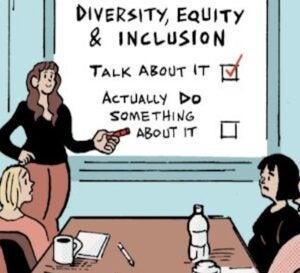
Multicultural publishers are under pressure to grow and scale their audience to remain competitive in an increasingly selective marketplace. To adapt, some publishers are turning to tools like AdGrid’s Audience Accelerator to activate first-party audiences across channels.

Mula’s AI native content feed helps On3 keep its engagement and RPS consistent amid traffic drop-offs to publisher sites and the growing scarcity of online attention.
Hearst is stitching together its far‑flung news properties into a single programmatic marketplace to simplify buying local news and shore up its business as the ad market shifts.

The effect wasn’t just limited to news content. The Reuters.com/lifestyle vertical also had some of its brand-suitable pages blocked.
Local media companies have already seen traffic declines of 25% to 50%, and the Local Media Consortium is collaborating to fight the problem.

The Guardian US grew its programmatic revenue by 44% year over year in February. The lift came from higher effective CPMs across both the open exchange and private marketplace deals.

BBC Studios is focused on a digital-first ad sales strategy as it expands its footprint in the US, says John Otto, VP of ad sales for North America.
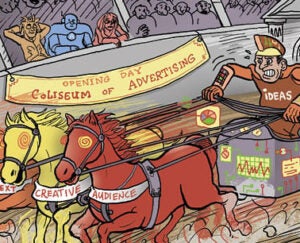
Future’s new Helix ad optimization solution adds AI-powered data science and predictive modeling to its in-house audience platform.