

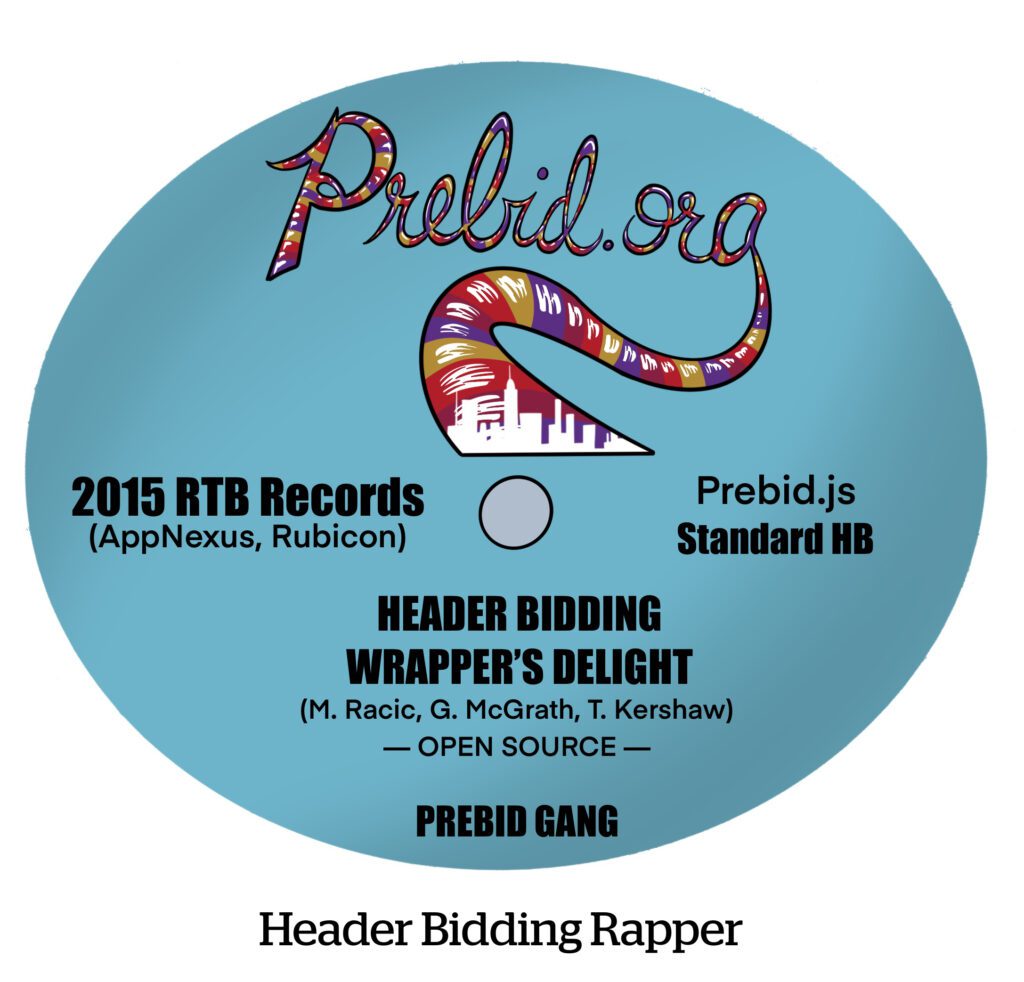
Prebid is turning the page on what might be called its second chapter, as the organization navigates some major changes in the digital advertising landscape and within its own ranks.
Over the course of just a few days last week, news emerged that Prebid President Mike Racic and Christian Janelli, Prebid’s director of product management, are both departing for a Canadian tech investment firm called Knower Tech. Meanwhile, Garrett McGrath is bowing out of the organization after a five-year stint as chairman of the Prebid board. His next move is unannounced.
But these executive departures won’t cause a brain drain at Prebid, Racic told AdExchanger this week. He and McGrath have been “at the helm” for five years, he said, and so it’s time to move on. But the working group chairs and people who manage Prebid’s code, many of whom predate Racic and McGrath, aren’t going anywhere.
Also, McGrath’s exit is more a function of his moving on from Magnite, where he held executive product management roles nearly nine years ago, going back to when the company was still called Rubicon Project.
Racic said he’s joining Knower because now is the time to place bets on startups and private companies that are pursuing new kinds of data onboarding, ad auction innovation and agentic protocols.

Knower Tech is different from a portfolio company like S4, which fully acquires agencies or mar tech companies and then operates them within the group. Knower, by contrast, makes minority investments in agencies and data or mar tech vendors and helps with their operation.
Knower is also a Prebid member, Racic said, so he will remain close to the group and a contributor from this new vantage point.
Chapter Three
To see why this leadership shuffle matters, we have to go back to Prebid’s origin story. Prebid’s first chapter would be worthy of any novel.
The organization was created by a group of rival companies that were themselves withering in Google’s shadow. We now can affirmatively say Google operated an illegal monopoly in their market.
But, at the time, they only suspected that Google’s grip on the market was unfair and, in response, they built a workaround called header bidding as a way for publishers to run auctions outside of Google’s tightly controlled ad stack.
Seeking to open source the product to the industry, Prebid was brought to the IAB Tech Lab by AppNexus and Rubicon Project. But, back then, the Tech Lab was heavily influenced by Google and Facebook, the IAB’s biggest, highest-dues-paying members. Prebid’s header-bidding tech was rejected at the behest of those walled gardens, which wanted to stamp out header bidding. (This all surfaced in testimony during the Google ad tech antitrust trial.)
But Prebid stayed scrappy and has since grown into a viable independent trade org, as header bidding moved into the mainstream.
Today, with Racic and McGrath stepping away from their leadership roles, Prebid is now facing a different set of questions about what comes next.
Prebid has become “a neutral playing field where people can integrate technology,” said Joel Meyer, CTO of OpenX and Prebid’s new board chairman, who has been on the board for four years. And Prebid’s directors are deeply technical and closely involved with the products, he said.
Looking ahead, Meyer said Prebid is considering what it can do to repeat the 300% growth in membership it’s seen over the past five years in the years to come “while [still] being a voice for publishers.”
That qualifier is important.
Prebid’s best membership growth opportunities are on the demand side, as companies like The Trade Desk pursue a seat at the table now that Prebid is a scaled source of supply in its own right. The IAB followed a similar path, having started as a publisher-specific trade org and evolving into a representative for the entire industry, including brands, agencies, vendors and data sellers of all sorts.
Prebid won’t try to go it alone. The plan is to work with other groups and stakeholders, Meyer said, because “I don’t know that one organization is big enough to solve it, but I believe that Prebid is probably the best organization to be the voice of the publisher.”
The IAB Tech Lab might disagree, though hopefully the organizations can play nice.
For example, one of Prebid’s major priorities is devising so-called agentic protocols, such as the sell-side agent created by AgenticAdvertising.org, developer of the Ad Context Protocol (AdCP). The AdCP product for publishers is now housed within Prebid. It is also parallel and somewhat competitive to the IAB’s Agentic Real Time Framework.
The AdCP agentic framework is not just some theoretical exercise, Racic said. There are global advertisers using it to run large campaigns, he said, and “it’s growing faster than the early days of programmatic, quite frankly, from a revenue perspective.”
This agentic-focused work places Prebid in the middle of competing interests, which will require diplomacy and finesse to manage by whoever replaces Racic.
“It’s a lot of work, No. 1,” Racic said of the gig. But the next-most important thing for his eventual successor to know, he added, is to “keep an open mind and to be as collaborative as you possibly can.”
Prebid’s best work happens when there’s “the collaboration of competitive companies,” he said. “At the end of the day, you’re sitting in the middle of that.”











