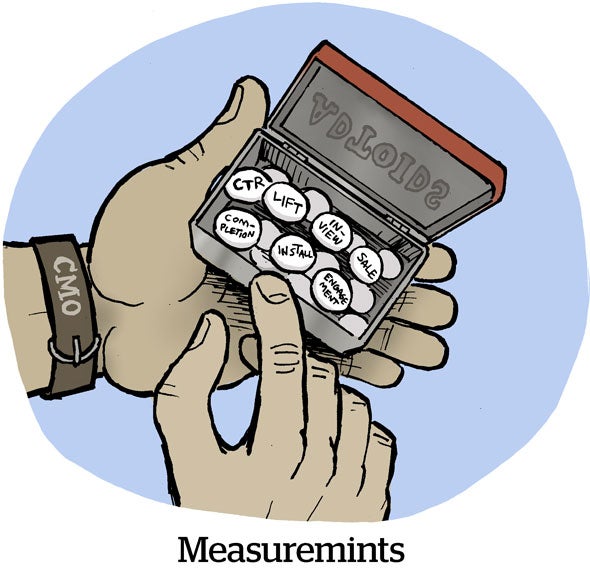
Less than a year ago, Integral Ad Science was taken private by PE firm Novacap for $1.9 billion. Now, its biggest competitor will soon be gone from the public markets, too.
On Thursday, Nielsen entered into a definitive agreement to acquire DoubleVerify in an all cash transaction valued at approximately $2.15 billion, or $13.60 a share – a 30% premium on where DV’s stock has been trading as of August.
The deal is expected to close by the first quarter of 2027, after which DV will go private under Nielsen’s umbrella, but continue to operate using its own name and brand. Nielsen expects that, together, the companies will generate more than $4 billion in revenue annually.
So, what does it all mean?

Well, now both of the ad industry’s largest independent verification companies are, arguably, no longer truly independent, although in different ways.
Under private equity ownership, IAS has no stake in the media supply chain and can still make a credible claim of independence. But Nielsen is a measurement company with skin in the game, which means that the combined entity will have to convince advertisers that DV’s verification signals are still unbiased.
The ‘I’ word
And Nielsen, to be fair, clearly knows it.
The word “independent” appears nine times in its press release announcing the acquisition, and Nielsen CEO Karthik Rao called the combination “a truly independent, end-to-end partner that connects trusted audience intelligence with verified media delivery.”
But putting the question of independence aside, it’s worth asking why ad verification has struggled as a public business.
The short answer is that ad verification is essentially infrastructure, but not necessarily a growth story, and the numbers bear that out. DV’s total Q2 revenue grew just 3% year over year to $193.8 million, with its core activation business – aka programmatic activation – actually down 1%.
Going private removes the quarterly earnings pressure and lets both DV and IAS operate as the infrastructure businesses they really are.
Trust issues
Which brings us to why Nielsen, specifically, makes sense as a landing spot for DV.
Nielsen’s value proposition has always been knowing who’s watching, whether that’s across linear TV, streaming or digital. DV’s proposition, meanwhile, has been making sure that the ads themselves are landing in viewable, fraud-free and brand-safe environments.
Today, advertisers buy those two things separately and reconcile them on their own. Nielsen is betting they’d rather not have to do that.
Nielsen has also spent the better part of the past five years fighting to maintain its position as the industry’s main measurement currency, fending off challengers like VideoAmp, iSpot and Comscore – challengers that got a foothold while Nielsen was on its back heels.
The Media Rating Council stripped Nielsen of its national and local TV ratings accreditation in 2021 after it undercounted audiences during the pandemic, an episode that TV networks believe cost them an estimated hundreds of millions in ad revenue.
Nielsen won accreditation back in 2023 (although only for national, not local), but the damage left a trust gap it’s been working to close ever since, including via NielsenOne, its newish cross-platform product.
Folding in DoubleVerify’s MRC-accredited signals is one way to clear the air and bolster its measurement story with an added layer of verification.
The long view
The deal also caps what’s been a period of expansion for DoubleVerify.
Early last year, DV bought Rockerbox, one of the last independent multitouch attribution providers, for $85 million. And in 2023, it acquired Scibids, an AI-powered media buying optimization company, for roughly $125 million, representing a pivot into buy-side performance that took DV well beyond its verification and viewability roots. (Because everything is everything now.)
Nielsen has also been making its own pitch around using AI for planning, activation and optimization, all of which are becoming increasingly agentic. The argument is that as more of the stack runs on autopilot, buyers and sellers need verified, high-quality data underpinning it all more than ever, or the whole thing falls apart.
Investors are clearly fans of the proposed deal. DV’s stock price was up more than 13% in after-hours trading. But whether advertisers will accept “independent” verification that now lives inside of an audience measurement company – well, that’s another thing entirely.