
New WBD Report Makes The Case For Getting The Measurement Basics Right
Warner Bros. Discovery has a new white paper analyzing the data and methodologies of five top video measurement providers: VideoAmp, iSpot, Comscore, Innovid and Samba.

Warner Bros. Discovery has a new white paper analyzing the data and methodologies of five top video measurement providers: VideoAmp, iSpot, Comscore, Innovid and Samba.

Connected TV advertisers are still pining after show-level control. And PubMatic announced contextual targeting at the episode level is available to media buyers accessing CTV inventory through its platform.

Jenny Wall is a veteran of the TV and CTV industry, but tends to specialize in what she calls “disruptive” companies.

When a creator already loves the product they’re marketing, it’s easy to work it into their content in ways that feel natural. That’s exactly what the Try Guys did.

Horizon is bringing Roku’s streaming-TV data into its homegrown intelligence platform to help advertisers act on viewing signals while campaigns are still in flight.

Creator Sports Network is trying to monetize the ad industry’s two biggest buzzwords: creators and sports. Creator Sports Network, which launched in 2023, helps influencers livestream sports events on their social media pages. The platform doesn’t livestream the actual sports games; it acquires sports airing rights and shares them with influencers, who then stream the […]

Qortex’s video intelligence platform ingests information like a campaign’s objectives and its start and end dates, then offers up the audience segments or content categories that it predicts will perform the best.

In the modern streaming landscape, everything old is new again. At least that’s the case for NBCUniversal, which is trying to bring back bundled distribution deals and appointment viewing.
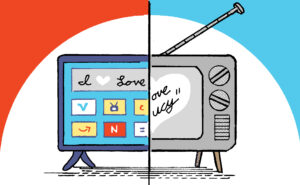
How long does it take you to decide what to watch after you turn your TV on?
Just in time for new TV programming to hit the screens in September, Nielsen is rolling out a few upgrades to its video measurement currency that will go live by the end of August

Pinterest expanded tvScientific CEO and Co-Founder Jason Fairchild’s title to general manager of programmatic and affiliate. The title upgrade comes less than a year after Pinterest acquired the performance-focused CTV ad startup.

Warner Bros. Discovery cited softer ad sales growth and the continued decline of linear TV as its reasons for missing investor expectations in Q2. Unsurprisingly, streaming ads are the biggest bright spot on WBD’s earnings report card.
Fox Corp’s fiscal year closed at the end of June, and boy, was it lucrative.
Disney got some cash back in its pocket after the OpenAI deal fell apart – but the company still plans to lean into AI.
During Paramount Skydance’s Q2 earnings call, CEO David Ellison limited his remarks to a two-minute monologue about the company’s confidence in the intended merger.

Streaming publishers are banking on pause ads to bolster revenue with a more user-friendly ad experience. With programmatic standardization still pending, Warner Bros. Discovery is taking a stab at advancing the capabilities behind its own pause ad formats.
Peacock hit what Comcast Co-CEO Mike Cavanagh called “meaningful profitability” for the first time in Q2, just as Comcast decided to let it leave the nest.

A few months ago, I did something I’ve never done before. I saw a CTV ad for a product I needed and got so annoyed about it that I bought a competitor’s version out of spite.

Netflix knows it’s in trouble. Or, rather, it knows people think it’s in trouble.

The “K” in “K-beauty” stands for “Korean.” But it should also stand for “kaboom” because Korean beauty product sales are exploding internationally, especially in the US market.
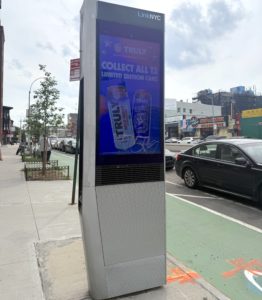
The cinematic trope of people stopping to watch the news on a storefront TV display feels pretty out of date today. But sometimes, life can still imitate art.
Ask five people in ad tech to define “CTV” – or any other streaming-related three-letter acronym – and you’ll get five different answers. The IAB wants to fix that.
A collaboration between InterMedia Advertising, Peer39 and Pontiac Intelligence provided show-level cost-per-acquisition data for 94% of CTV ad impressions.

The IAB Tech Lab is working on standardizing programmatic signals for new streaming TV ad formats, including pause ads. Meanwhile, many brands are eager to add pause ads to their repertoire.

With media megamergers, acquisitions and spin-offs left and right, the media landscape is changing at a pace that is difficult to keep up with.
As much as consumers complain about AI-generated content, advertising experts say AI still has an important place in video creation and production, including for ads. But using AI in content without turning off consumers is a tricky dance.

Netflix touts sharper targeting, but buyers say its black-box approach – especially the lack of usable IP data – is blunting measurement and quietly pushing performance-driven spend elsewhere.
Walmart will buy Vibe.co, a self-serve video ad platform, in hopes of attracting more small and medium-sized advertisers to connected TV.

Amazon is making a splash at Cannes by touting recent Fire TV interface upgrades designed to help viewers find relevant content more easily, including when they are watching the 2026 FIFA World Cup.

For the first time, Omnicom can directly compare ad frequency and performance across multiple major streamers, which typically prefer to keep data locked inside their walled gardens.