
Viant Probably Wouldn’t Have Acquired TVision If It Hadn’t Bought IRIS.TV First
One acquisition often begets another. Take Viant, which announced its plan to acquire TVision for $40 million on Wednesday.

One acquisition often begets another. Take Viant, which announced its plan to acquire TVision for $40 million on Wednesday.

TelevisaUnivision is the latest TV publisher to join the self-serve trend that’s rising in popularity across connected TV advertising. Its streaming inventory is now available to buy through fullthrottle.ai’s self-serve platform. The collaboration includes an ad bidder designed to improve both targeting and measurement.
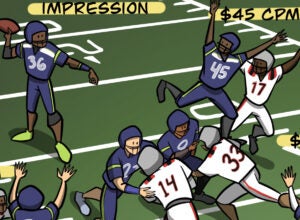
Live sports is one of programmatic’s biggest opportunities, even if the buying process is still kind of a mess. But efforts are being made.

Earlier this year, datafuelX rehired Dan Aversano, one of the company’s co-founders, to take the helm as CEO. Aversano will lead the company through its next growth phase, which revolves around – surprise, surprise! – connected TV and digital expansion.

European TV has never been an easy ad market, with content distributed across different languages, currencies and regulatory frameworks. RTL Group’s total video strategy aims to help global advertisers navigate this fragmented market.

Walmart and Vizio announced at NewFronts that unified account logins are coming to smart TVs using Vizio’s operating system.

America’s Test Kitchen introduced direct and programmatic buying for its free ad-supported TV channels – marking the first time it’s selling ad inventory as a standalone package.

Someday soon, marketers may be able to pay NBCUniversal to have an AI-generated approximation of “Real Housewives” executive producer Andy Cohen namedrop their brand to hundreds of thousands of fans.

Netflix unveiled its own conversion API to help brands measure outcomes as CAPIs become increasingly popular in streaming advertising.

NBCU used this year’s Olympic Winter Games to lean further into programmatic buying for live sports at scale. NBCU also made Olympics inventory available through Comcast’s Universal Ads self-serve platform for the first time and used AI for creative review and campaign optimization in near real time.

“We are focused on being where the world watches video,” said Tara Walpert Levy, YouTube’s VP, Americas at the Convergent TV conference in NYC on Thursday. “And to us that now is TV.”

Versant Media Group reported its first earnings as a publicly traded company. The portfolio of networks, which includes CNBC, MS NOW (formerly MSNBC), USA Network, E! and Fandango, was spun off from Comcast in January.

Last year was a massive success for Warner Bros. Discovery’s content – but maybe not so much for its financials.

Display advertising is old and busted. Streaming CTV is the new hotness. Obviously, those aren’t the exact words Magnite CEO Michael Barrett used, but it’s pretty much what the numbers say.

While the outcome of Paramount Skydance’s bid for Warner Bros. Discovery hangs in the balance, Paramount is laser-focused on driving streaming growth.

On Wednesday, and in time for the upfronts, Nielsen added more than 200 advanced audience segments in Nielsen ONE, its cross-platform analytics dashboard.

Upstream, a supply-side company that until today was called TheViewPoint, introduced a platform that automates direct TV and streaming ad sales. The platform launch and company rebrand strive to highlight the role of TV and streaming as an upper-funnel awareness channel.

“Transitional.” “Developing.” “Work-in-progress.” Those are the best descriptions of the current state of TV and video convergence, according to the top leaders influencing the video advertising landscape.

At the risk of getting dorky with sports metaphors, DTC agency Rain the Growth already has a game plan to make sure its programmatic placements are a slam dunk.
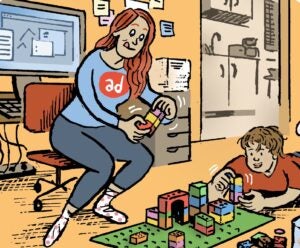
The kids companies Hasbro and Animaj have formed a co-venture for selling their ads on YouTube and streaming media.

Roku has a simple equation for generative AI: cheaper content production leads to more viewing time and engagement which leads to more ad spend.

Three quarters in and MNTN CEO Mark Douglas isn’t changing his script: small businesses need performance-driven CTV they can measure.

Agentic AI is gaining popularity as a tactic for media buyers and sellers striving to simplify workflows, including in streaming TV advertising. Ad measurement firm iSpot introduced SAGE, an agentic AI platform with a “ChatGPT-like interface” that media buyers can use to generate campaign planning ideas.

Marketers are running their own plays during and after the Super Bowl, seeking proof of performance from their streaming campaigns to justify their investments.

Nielsen is piloting a new measurement approach during the Super Bowl. The pilot is designed to more accurately account for co-viewing during the Super Bowl by better incorporating data from its Portable People Meter Wearables.

SSPs have mostly either applauded or downplayed the recent crackdown on CTV resellers, but smaller publishers see it as another revenue squeeze.
Last quarter, Disney’s SVOD services grew 11% year-over-year to more than $5 billion, driven by growth in both subscription and advertising revenue.

Sports content is a significant part of NBCUniversal’s streaming growth, and political tensions could impact its upcoming broadcasts.

Supply-path optimization may not be the trendiest three-letter acronym in ad tech anymore, but the SPO trend is still playing out – especially in the CTV category.

Despite deepening consumer distrust of AI content, marketers and streamers are embracing AI-powered products. Now, generative AI is complicating the already rather bloody streaming wars.