


Finding more in-game ad inventory is like hard mode compared to other digital channels.
Signing up publishers in the in-game ad space is complicated. Placing digital billboards that can run display and video ads in game environments requires sophisticated software integrations with game and app developers.
Until recently, most in-game ad integrations focused on developers that use Unity as their game engine, since it’s among the most commonly used software for creating games, especially in the mobile market. But big-budget console or PC games, dubbed AAA games, are more likely to use custom game engines that don’t allow them to easily plug in to an ad platform.
So all of the major in-game ad platforms, spotting an opportunity, are increasingly rolling out support for non-Unity game engines.

Joining this trend is Gadsme, an in-game ad platform that announced Monday it released a new SDK for non-Unity game engines. The SDK supports Unreal, Godot, Cocos2d and any custom engine based on C++, across mobile, home console and PC games.
SDK development
SDK support is important, because placing in-game ads requires deeper technical integrations than placing online display inventory.
In order to enable developers to place ad inventory in their game worlds wherever they deem appropriate, in-game ad platforms typically offer publishers no-code, drag-and-drop functionality, said Gadsme CRO and Co-Founder Simon Spaull.
Platforms also provide developer tools to make the ad experience feel more native to the game’s world, like making an ad respond to in-game shadow effects or appear weathered in a game with a post-apocalyptic setting. Plus, developers can program the ads to respond to user inputs, like letting the ads show damage from nearby crashes or explosions.
About five years ago, improvements to Unity’s game engine made this kind of customization easier, Spaull said. For that reason, along with its popularity among mobile app developers and high demand for mobile in-game ads, platforms prioritized support for Unity as they entered the market, he said.
But with Gadsme’s expanded SDK support, now more game publishers who don’t use Unity can build similar ad experiences.
Besides Gadsme, Anzu also supports no-code functionality for Unity and Unreal, and offers SDKs for all other game engines except for web-based technologies like HTML5, JavaScript and WebGL. Frameplay offers low-code or no-code support for Unity, Unreal and Cocos, and has been offering SDKs for other engines for over a year. Bidstack has supported non-Unity games since 2022, and began supporting custom C++ engines and Unreal this year.
More options for game devs
As these in-game ad platforms expand compatibility to new engines, it’s opening up new opportunities for a wider pool of game and app developers.
Dream-Up, a mobile-focused publisher that uses a custom game engine, recently used Gadsme to place its first in-game ads within a 3D game property, called Xtrem Racing, said founder Cristophe Nazaret. It would have been unable to integrate Gadsme’s platform without this new SDK and the support it received, he said.
Gadsme also offers options to manage demand. Dream-Up selects from a list of advertiser categories that it will accept demand from, like entertainment and travel advertisers, through the platform interface.
Wider SDK support among in-game ad platforms also allows more publishers to run multiple solutions and test them against each other.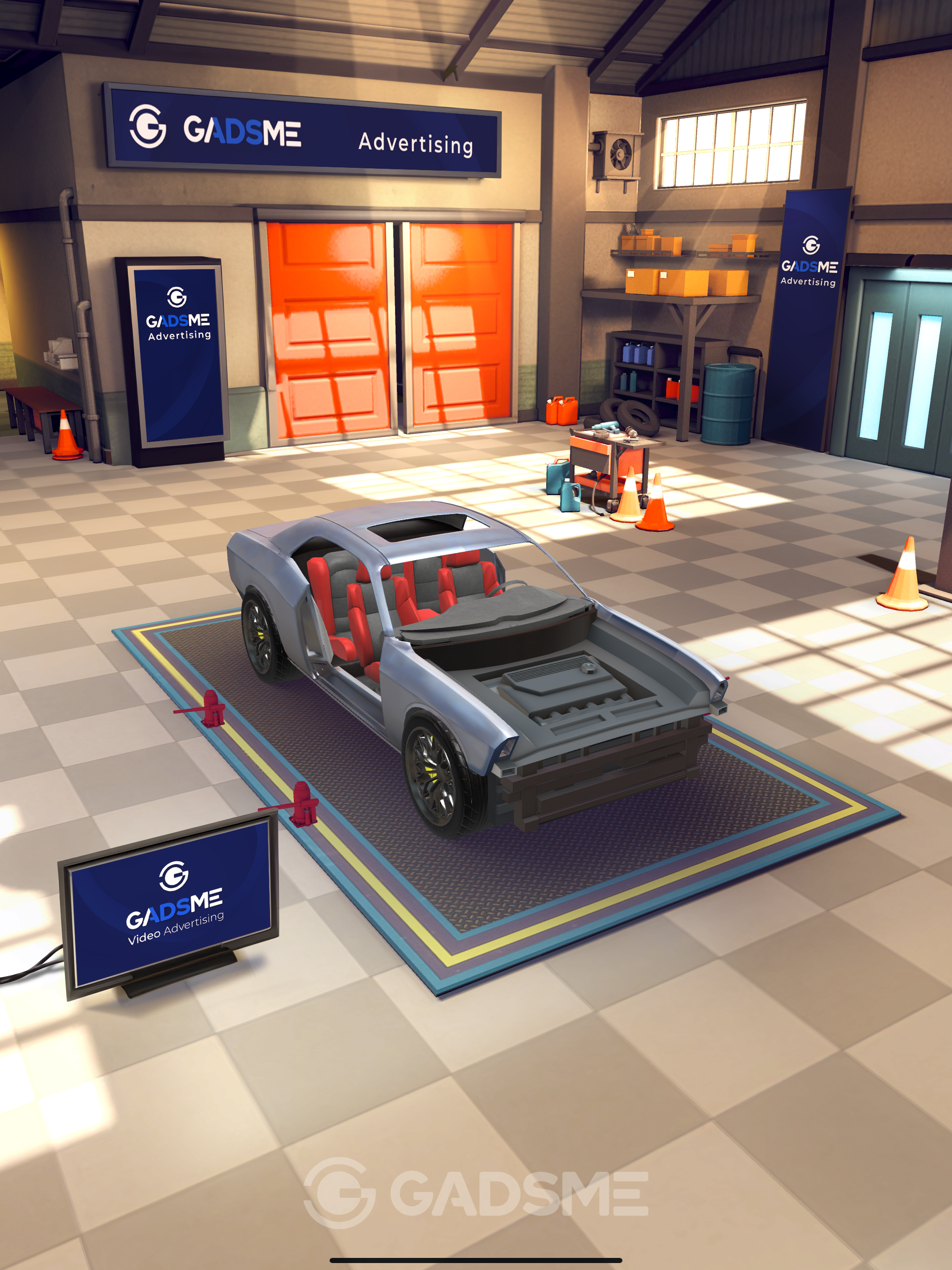
Take, for example, Gameloft, a developer that cut its teeth in the mobile market but that has since expanded to console and PC. For many of its games, Gameloft uses a proprietary engine. One of its flagship racing games that features in-game ads, called Asphalt Legends Unite, is available on Android, iOS, Windows, Nintendo Switch, PlayStation 5 and Xbox Series X.
Gameloft has long specialized in mobile ad inventory like rewarded video and interstitial ads, said George Iosif, programmatic and SDK ads manager. But it’s been experimenting with intrinsic in-game ads via integrations with Anzu and, more recently, Gadsme, with an eye toward monetizing its console and PC properties.
Currently, Anzu’s platform is strongest when it comes to direct demand, showing high eCPMs for direct-sold campaigns, Iosif said. However, Gadsme is more focused on programmatic demand, and could therefore potentially yield higher programmatic eCPMs, he said.
Since both platforms now offer an SDK that’s compatible with Gameloft’s proprietary game engine, Gameloft can integrate both to try and maximize the revenue it’s getting from direct and programmatic demand, he said.
In addition, Gadsme’s platform offers clickable ad functionality, whereas Anzu has avoided it, believing most gamers don’t want to click out of the game and break up the gameplay action, Iosif said. But Gameloft can now play around with clickable ads in its less action-oriented games, he said, to see if they yield more engagement or if they do ultimately turn off players.







