
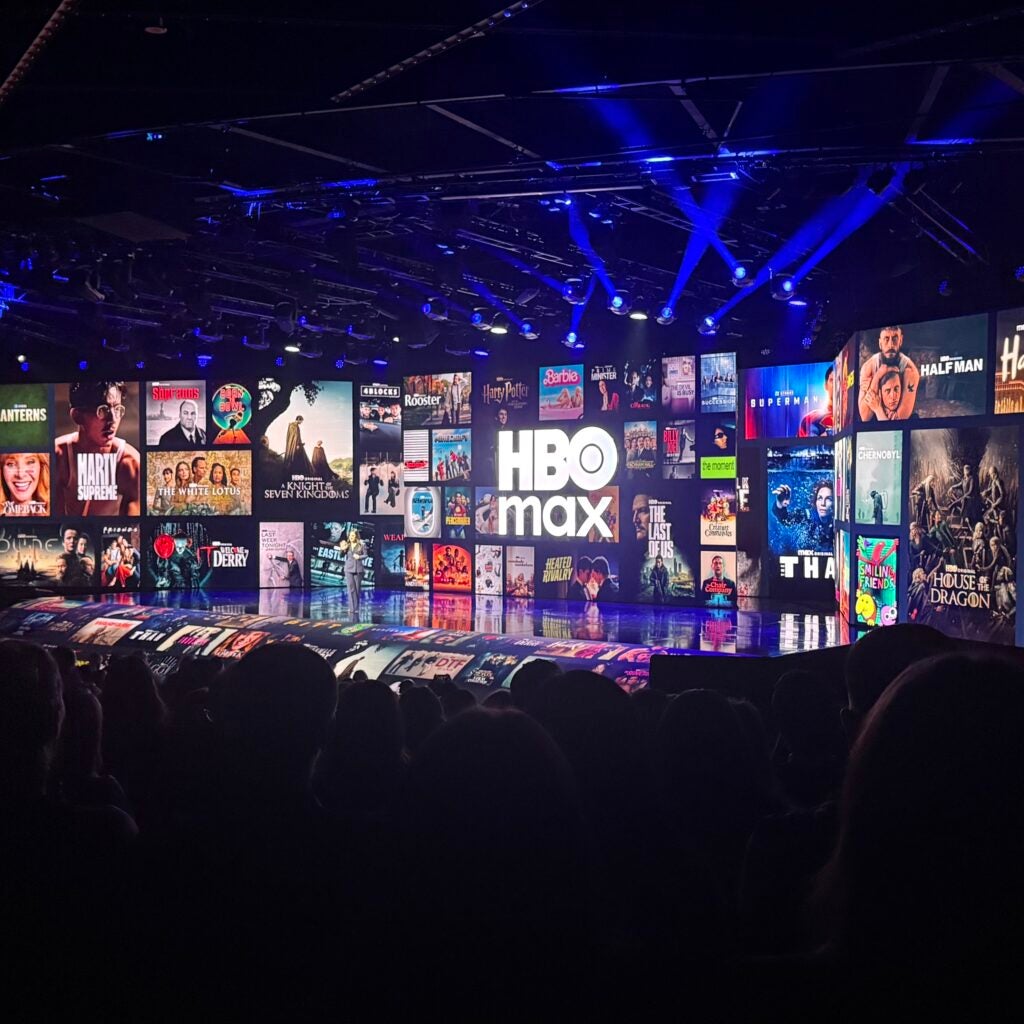
Warner Bros. Discovery used its upfront stage to announce two new ad measurement efforts.
First, WBD is joining an initiative led by the data and identity platform OpenAP. The initiative aims to help advertisers connect outcomes data to their own first-party data for video campaigns through a standardized conversion API (CAPI). The CAPI will include data from other TV publishers, such as NBCUniversal, Fox, Paramount, AMC, A+E and Scripps.
Second, WBD unveiled a new measurement dashboard live onstage during its upfront presentation on Wednesday. The aim is to speed up reporting so buyers can optimize campaigns while they’re still in flight, rather than analyzing them retroactively.
Like just about every other streaming media company these days, WBD says outcomes-based measurement is already a business priority. “What’s new is the speed and accessibility of insights” from data partners, David Porter, head of advertising research, data and insights, told AdExchanger in a statement ahead of the presentation.
When it comes to WBD’s attribution dashboard, buyers can link their campaign data across linear, streaming and digital media directly to outcomes, such as brand lift, site engagement and sales conversions. “By providing more immediate visibility into performance trends,” Porter said, advertisers improve their odds of driving outcomes.
WBD declined to name which data sources are available in its new dashboard, called Always-On Measurement & Attribution Dashboard. But a WBD spokesperson told AdExchanger that “we are measuring full-funnel at launch with many of our partners, and we aspire to eventually have all our partners participate.” Measurement and attribution providers that WBD works with include VideoAmp, EDO, LoopMe and DISQO, to name a few.
Performance, please
If you’re sensing a trend – we are, too.
Every upfront event AdExchanger attended this week mentioned performance, outcomes, results and/or attribution like it was their job. (Because it was.)
Performance is more than just the theme of this year’s upfront. It’s also the No. 1 priority on the TV ad industry’s wish list. Marketers are under mounting pressure to quantify campaign results and thus justify future budgets. Which is why publishers are tripping over each other in their scramble to convince media buyers they’re the best equipped to drive demonstrable results for marketers. (More CAPIs, anyone?)
WBD’s new attribution platform lends legitimacy to TV’s emerging status as a performance channel, Porter said, rather than just an easy button for reach. Historically, media buyers have “associated rapid feedback and real-time optimization with digital and social platforms,” Porter said, not TV.
But he added that TV has something other online channels don’t: a “premium content experience.” TV is still known for its lean-back viewing experience and long-form, professionally produced content, he said. Paired with a digital measurement framework, TV can also drive business outcomes that buyers can prove.
Would you like to speak to an agent?
WBD announced other ad product upgrades during its upfront, also in the name of performance.
Among those upgrades are: shoppable pause ads, scene-level contextual targeting and, of course, agentic AI. The common denominator between WBD’s slate of upfront announcements is that the company wants to increase viewer engagement by improving the efficiency and accuracy of its ad targeting. One thing every media company with an upfront event this year can agree on is that engagement is the prerequisite to performance.
But WBD’s upfront pitch wasn’t only about human engagement.
On the agentic front, WBD also announced marketers will soon be able to communicate with “brand agents” to help optimize media plans based on a brand’s intended audience and outcomes, as well as WBD’s contextual analysis.
Against a broader backdrop of scrutiny over the potential of AI to threaten human decision-making, WBD took care to establish that AI agents will not replace the role of human ad buyers and sellers in modern CTV ad transactions. Referring to agentic, Porter said, “the role of tech is to accelerate decision-making, not replace it.”
“Humans will maintain control over approvals, client communications and key optimization decisions,” he said. And there will be guardrails in place to make sure those core operations remain under a real person’s watch.