Another TV upfronts season is in the books. Please send your condolences to Senior Editor Alyssa Boyle and Associate Editor Victoria McNally as they reluctantly return to reality and their overstuffed inboxes.
The final day of presentations on Wednesday ended with a few interesting swerves.
The focus on performance remained, of course, but the three companies we covered – Warner Bros. Discovery, Netflix and YouTube – also had interesting things to say about how their own businesses fit into that larger narrative of translating the passion audiences have for different TV shows into measurable outcomes for advertisers.
Here are the highlights.
Warner Bros. Discovery: Bobby Voltaggio and Ryan Gould, WBD’s joint presidents of US advertising sales, opened their pitch at Madison Square Garden with a solid one-liner: “We want to address the Ellison – I mean, the elephant – in the room.”
Paramount’s impending acquisition of WBD (as spearheaded by the aforementioned Paramount Skydance CEO David Ellison) would be a big change, they acknowledged, but one that reflects the many changes advertisers and brands are experiencing in their own businesses.
And in the meantime, they argued, WBD’s “best-in-class organization” and “world-class content portfolio” (if they do say so themselves) will serve as pillars to help guide the transition – along with a new measurement and attribution product that WBD announced that day as part of its burgeoning ad tech suite.
Netflix: Maybe it’s because Netflix’s ads business is still nascent or perhaps because it’s inherently digital-first – unlike broadcasters with streaming businesses – but Netflix’s ad execs used a surprising amount of ad tech jargon during the company’s presentation at Sunset Pier 94 Studios.
It was the only presentation AdExchanger attended where the term “programmatic” was uttered not once but multiple times, and primarily by Advertising VP Nicolle Pangis. (Although she had help from actress Lily Collins, who, in a prerecorded segment, pitched programmatic to other members of the “Emily in Paris” cast as “the best way to scale.”)
Netflix is launching programmatically available pause ads, new audience targeting solutions via both the Amazon and Yahoo DSPs and expanded buying across podcasts and live events through dynamic ad-insertion (DAI) later this year.
At one point, Netflix even tapped into the time-old “actors don’t understand ad tech” trope with a “Pop Culture Jeopardy” segment that luckily ended up being more funny than cringeworthy when no one one stage could even attempt a guess at answering. (Except for the fact that the buzzers didn’t actually work – whoops!)
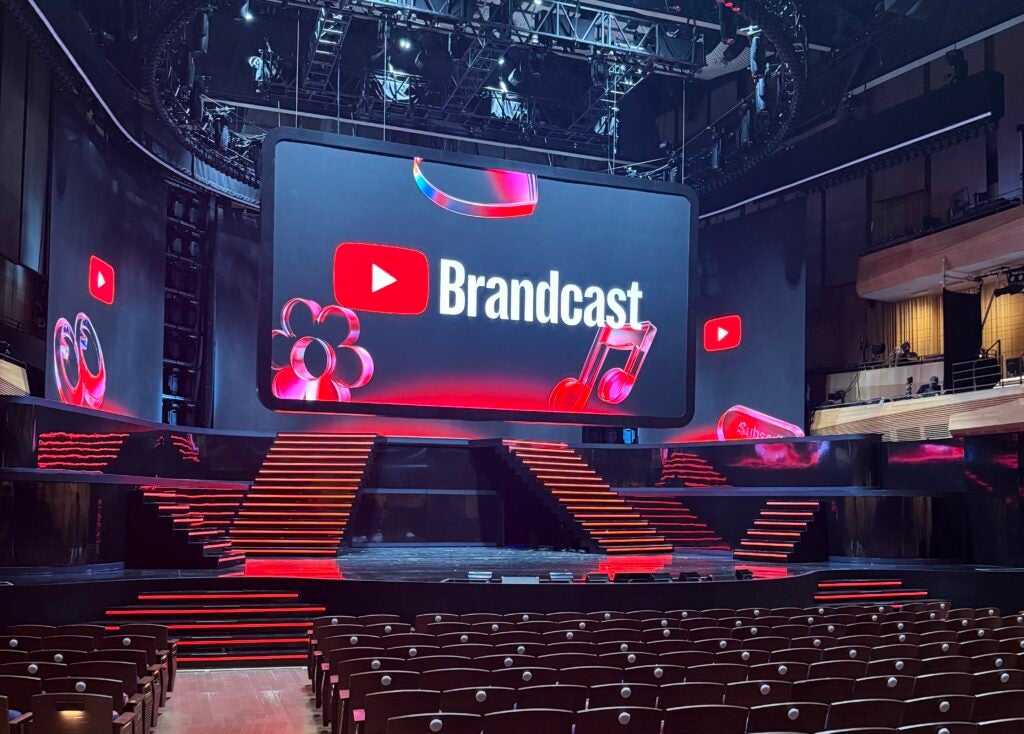
YouTube: Naturally, content creators were the star of YouTube’s fifth-ever Brandcast, a term the company prefers to use over “upfronts.”
YouTube also highlighted the notion of trust. According to its executives, viewers deeply trust the creators they follow, which ultimately leads to better outcomes for advertisers who work with those creators on branding opportunities.
Speaking of branding, while pretty much every broadcaster presentation we attended this week showcased performance marketing capabilities, YouTube’s presentation seemed to make the opposite pitch in the form a case study delivered by Coach CMO Joon Silverstein.
“Performance is powerful, but performance is a mirror. It reflects demand. It doesn’t create it,” Silverstein told the crowd at the Lincoln Center’s David Geffen Hall. ““Brand is no longer the top of the funnel: brand is the funnel, and the fuel is emotional connection.”
📺 Missed Day One or Day Two of the upfronts? Don’t worry, we’ve got you.