

Remember last month when James Murdoch’s Lupa Systems acquired roughly half of Vox Media, specifically New York Magazine, Vox and its podcast network?
Well, the other shoe – err, sale – has dropped, further affecting future opportunities for advertisers and journalists alike.
On Thursday, Penske Media Corporation announced it will be acquiring the other half of Vox Media’s assets. Affected brands include The Verge, Eater, SB Nation, The Dodo, Popsugar, Punch and Thrillist.
Financial terms of the deal weren’t disclosed. For comparison’s sake, however, Murdoch spent $300 million on his own acquisition. PMC also previously invested $100 million in Vox Media back in 2023, giving it the largest stake in the business at 20%.
Either way, the deal makes PMC the largest digital publisher in the world, according to the company’s own press release. The company already owns a huge rolodex of brands that include Variety, Rolling Stone, Billboard, Deadline and The Hollywood Reporter, as well as several events and award shows like the Golden Globes.
All of PMC’s publisher brands will be folded into a new subsidiary called PMX, which former Vox Media President Ryan Pauley will oversee.
End of an era
The sale won’t come as a surprise to anyone who’s been following Vox’s business moves, and not just because of the Murdoch deal in late May.
In 2025, the company sold off one of its most popular brands, the video game website Polygon, to Valnet. Later that year, as Semafor and Axios both reported, the company had already been thinking about spinning off and then selling its podcast business. Penske had even expressed interest in Vox’s digital media brands, but not its podcast network, which was valued at a much higher cost.
It’s also no secret that Vox Media appeared to be hemorrhaging staff, with layoffs seemingly happening every few months – in December 2024; in January, February, May and August 2025; and then again in January 2026.
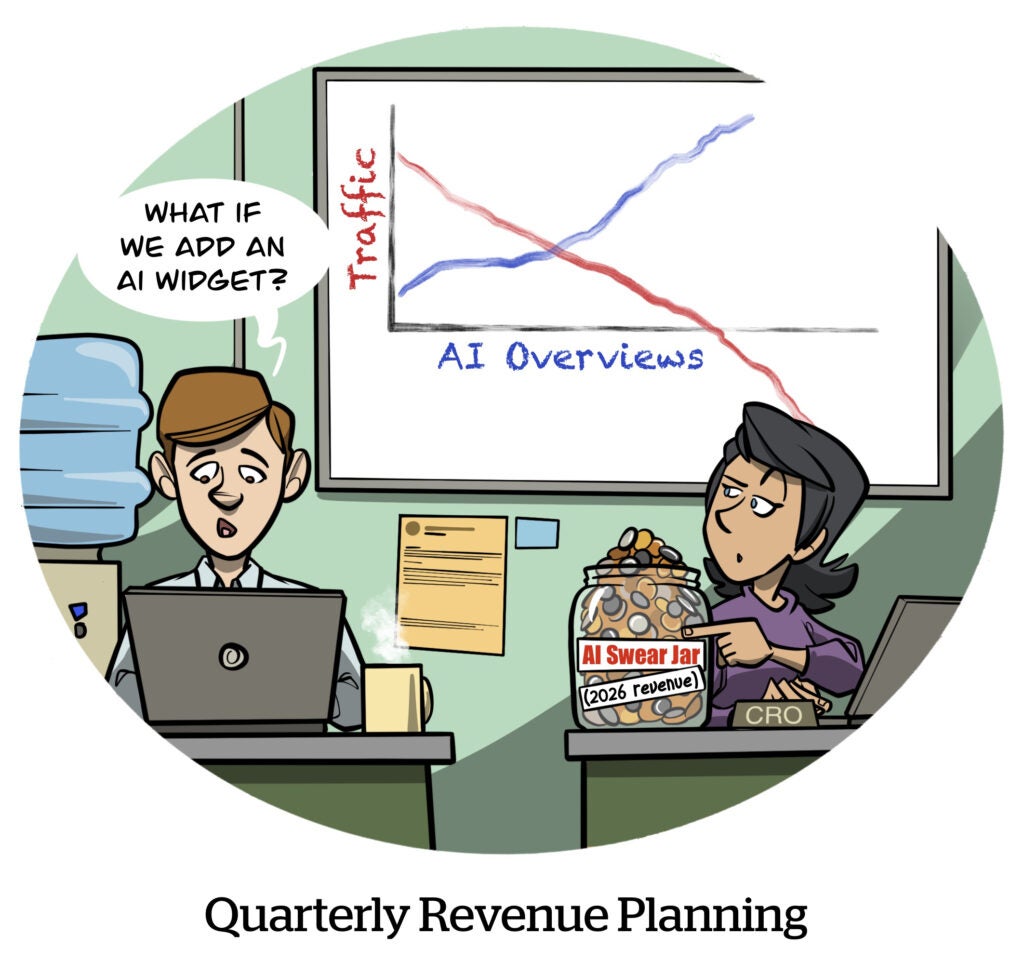
Meanwhile, Vox Media focused a lot of its attention during that time on trying to claw back some of the revenue it lost from declining Google Search traffic, using tactics like developing licensing deals with OpenAI, adding new subscription paywalls to capture logged-in audiences and investing more in video and audio content. “The Pivot” hosts Kara Swisher and Scott Galloway were to be compensated $20 million as part of their contract with Vox, for example.
(Interestingly, Penske Media Corporation appears to be less interested in AI licensing deals; in September last year, the organization sued Google for using its content to create AI summaries.)
In any case, regardless of how much impact AI will continue to have on the digital media space, it still feels like the end of an era for Vox, which was valued as high as $1 billion at the height of its power in 2015.
In the meantime, although both companies plan to operate independently for the time being, the further consolidation of media outlets will certainly affect marketers as well, for better or worse.
As TheWrap reported when Penske first took over Variety, THR and Deadline – all of which were once competitor brands that continue to cover the same industry – it’s much harder to differentiate and sell audiences across multiple overlapping properties, and advertisers end up with more leverage if they threaten to pull their ad dollars from several brands instead of just one.
But on the other hand, the advertisers ultimately have much less choice over where they put those ad dollars in the first place, if it’s all going to the same parent company at the top.
Then again, maybe the ad dollars will simply leave the open web entirely and onto what they feel to be greener pastures – like social media, CTV and AI search, for example. That’s what got Vox Media into this pickle in the first place, wasn’t it?








