
As agentic advertising gains momentum, publishers now face a familiar quandary in a new form.
The promise of agentic advertising is appealing. If software can automate planning, packaging, forecasting, proposal generation and campaign execution, publishers should be able to operate more efficiently while connecting buyers and sellers more directly.
The question is whether the market incentives around those agents will be any different from the incentives that shaped programmatic advertising.
If AI-powered sales agents are the future of digital ad sales, the instinct is simple: more agents should mean more revenue.
But isn’t this the same logic that drove SSP proliferation over the last decade? How many sales agents does one publisher actually need?

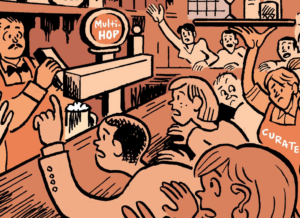
From SSP sprawl to agent sprawl
Programmatic history offers a clear warning. The average publisher works with 25+ SSPs, each added with the promise of incremental demand. In practice, most intermediated the same buyers while introducing duplication, operational complexity and margin pressure.
The problem was never that additional SSPs were useless. Many generated real incremental revenue. The challenge was that publishers optimized for marginal demand at the individual integration level while losing visibility into the cumulative cost and complexity of the overall system.
Agentic selling is beginning to follow a similar path:
- Direct “publisher-managed” sales agents promise cleaner connections to buyers
- SSP-powered sales agents layer automation onto existing infrastructure
- Data platforms introduce audience-driven agents with added cost and dependency
Each serves a purpose. But taken together, they raise a critical question: Are we eliminating inefficiencies or just rebuilding them in a new technology?
Buyer agent bias
Publishers didn’t adopt dozens of SSPs by accident. They did it because buyers rewarded that behavior, submitting bids across multiple paths. Each additional integration contributed incremental revenue.
That same incentive structure may carry forward into agentic buying environments.
Agentic systems encode incentives. If a buyer agent is evaluated on campaign performance, efficiency or platform-level economics, it will naturally favor the paths that best satisfy those objectives. Who defines those objectives and which supply paths the agent is allowed to evaluate?
Buyer agents will increasingly plan and execute campaigns based on intent, not infrastructure. A prompt might look like this:
“Find high-quality web and OLV inventory for a World Cup campaign targeting primary household shoppers who are also soccer fans. Optimize for ROAS with a $100K budget.”
Given this prompt, sales agents will then respond with inventory/audience packages that best fit the campaign objective. The buyer agent will then evaluate the responses from sales agents and allocate spend based on reported performance signals.
And while agentic buying theoretically should allow a buyer agent to source inventory from any sales agent, these buyer agent “ecosystems” will, in practice, have strong incentives to favor their own first-party sales agents over third-party ones they don’t control.
This reintroduces an existing form of bias in our industry today: spend may flow to the most incentivized supply, not the highest-performing supply. This bias could lead to the same outcome: publishers setting up dozens of agents to maximize their revenue.
A more strategic approach
Not all sales agents play the same role. Some extend distribution. Others define how your supply is packaged and valued in different ways.
A custom content agent might specialize in publisher/content matching, storytelling and sponsorship concepts, while a programmatic/native agent might focus on PMPs, pricing, yield, inventory optimization and scalable executions. The long-term opportunity is a coordinated system of agents that automate packaging, planning, forecasting and optimization while human sellers focus on strategy and relationships.
Here’s a more disciplined approach for publishers:
- Define a primary sales agent that owns your inventory, audiences, pricing and packaging.
- Build a few specialized agents that specialize in certain high-level execution types (custom content, sponsorships and programmatic to start).
- Standardize the path to payment, even if that means consolidating around a limited set of clearing-house partners. Don’t be afraid to establish a handful of additional direct/buyer contractual relationships. Aim to collect payment directly from your biggest agency and brands to maximize net revenue.
- Participate selectively in external ecosystems only where there is clear, incremental value (unique demand or differentiated capabilities).
- Avoid redundant representation that creates conflicting signals in the market.
This is less about limiting access and more about maintaining clarity and leverage. Many companies will attempt to operate both buyer and sales agents within their own ecosystems.
This is where the economics become particularly important. Whoever controls settlement, reporting and payment flows may ultimately wield more influence than whoever builds the sales agent itself.
Platforms like Scope3, PubMatic, Magnite, TripleLift and others will want to act as clearinghouses, collecting spend from buyers and agencies and distributing payments to sales agents and publishers.
Ask them how they plan to support third-party sales agents and avoid supply-path biases.
The bottom line
The industry spent the last decade expanding distribution across dozens of intermediaries, often at the expense of clarity and control.
Agentic advertising offers a reset, but only if both buyers and sellers approach it differently.
Publishers should build multiple specialized sales agents only because different ad products and buying motions require different expertise. Publishers should not need a unique sales agent for each SSP, just like today they don’t need a specific seller who only launches PMPs in SSP “A” while another seller only launches PMPs in SSP “B.”
Agencies and brands should build their own buyer agents to avoid transacting via duplicative supply paths. The real test for agentic advertising is not whether agents can automate media transactions; it is whether the industry can avoid recreating the same layers of duplication, bias and intermediation that agents were supposed to eliminate in the first place.
“The Sell Sider” is a column written by the sell side of the digital media community.
Follow Raptive and AdExchanger on LinkedIn.
For more articles featuring Ryan Maynard, click here.