Bear The Pain
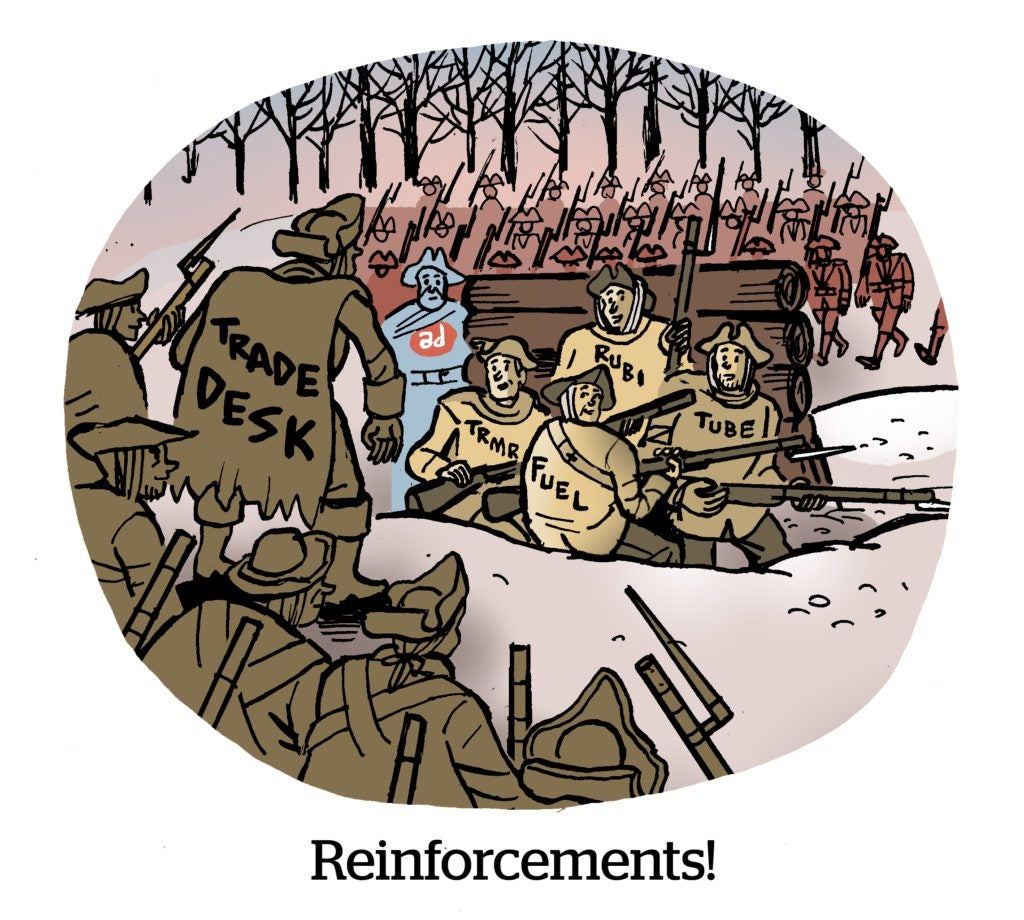
Wall Street’s enthusiasm comes in cycles. Ad tech has lived through stretches of banker-fueled optimism and more than a few downturns.
Right now, the equity banker crowd is in retreat, Digiday writes.
For one, investors are not sold on the notion of the open web, meaning the universe of supply and demand available to third-party programmatic companies. In fact, it’s the opposite. The conventional wisdom is that the biggest walled gardens will accrue ever greater online advertising market share ad infinitum.
Fitting neatly into that narrative is The Trade Desk, which recently downgraded its guidance with a projection for year-over-year revenue loss during the back half of the year, confirming the worst in the minds of many investors.
And then there’s the mass ad tech exodus from the public markets. IAS was acquired and taken off the stock exchange last year, and LiveRamp is no longer a standalone trade. Same goes for Innovid. DoubleVerify was just absorbed by Nielsen.
Criteo, by the way, fielded takeover interest just last month that would involve delisting from the NASDAQ.
Pub Fare
There’s been a lot of discussion recently about whether the open internet is pretty much finished at this point – like, stick-a-fork-in-it, done.
Case in point: a running list of the top 50 US news sites as ranked by the PressGazette and based on Similarweb data. It’s evidence of how little oxygen is left outside the platforms.
Of the top 20 publishers, the only one that’s grown year over year is Substack – and Substack isn’t even really a news site. It’s a collection of writers that use Substack’s infrastructure to host their newsletters and blogs.
Another outlier is Al Jazeera, which broke into the top 50 list in February, but that’s largely off the back of traffic thanks to crises in its core region of Qatar.
The list is replete with placeholder or homepage-type sites like finance.yahoo.com, msn.com and news.google.com, which are each in the top 10. And there are ‘90s-era and post-millennial icebergs just melting away, such as Drudge Report (No. 22), BuzzFeed (30), BuzzFeed-owned HuffPost (28), Business Insider (31) and The Daily Beast (45).
There’s no new blood on the list, aside from the relevant news writers within the Substack domain.
Crazy Like A Silver Fox
Social media-based generative AI has led to new content trends. But viral slop like Shrimp Jesus is giving way to realistic-seeming AI influencers shilling real-world products.
The latest trend to clutter Meta’s feeds, according to Futurism? AI-generated “silver foxes” who decry how men these days don’t appreciate women.
The trend is an obvious response to those viral clips that sometimes escape containment from the manosphere, in which young and middle-age bros air their grievances about feminism and modern relations between the sexes. Putting a handsome, gray-bearded face on the counterargument clearly works for a growing audience of Facebook Aunties.
But it isn’t just about racking up views and follows. These AI avatars have products to market. Some pitch AI-authored self-help books, while others want you to subscribe to podcasts or newsletters.
Oh, and AI search can’t tell the difference between AI podcasters and human ones. So, is it too much of a stretch to imagine these avatars promoting products as a way to game recommendation engines?
AI-generated silver foxes are also a sign that AI is undermining influencer marketing itself. Influencers trade on the human connections they’ve built. Now, the influencer doesn’t even need to be a real human.
But Wait! There’s More!
Here’s another alternative to influencer marketing: More brands, including Crocs and Liberty Mutual, are rolling out nonhuman and sometimes AI-generated mascots. [WSJ]
OpenAI CRO Denise Dresser is leaving the company after joining less than a year ago. She’s the third major executive to exit OpenAI in the past month, including former COO Brad Lightcap. [CNBC]
Why the Arena Group has inexplicably rebranded to being an AI company. [Adweek]
Moloco launches an agency partner program, in part to expand beyond mobile programmatic. [Digiday]
You’re Hired!
Mediavine names Cyd Converse as its director of publisher advocacy and partnerships. [release]