

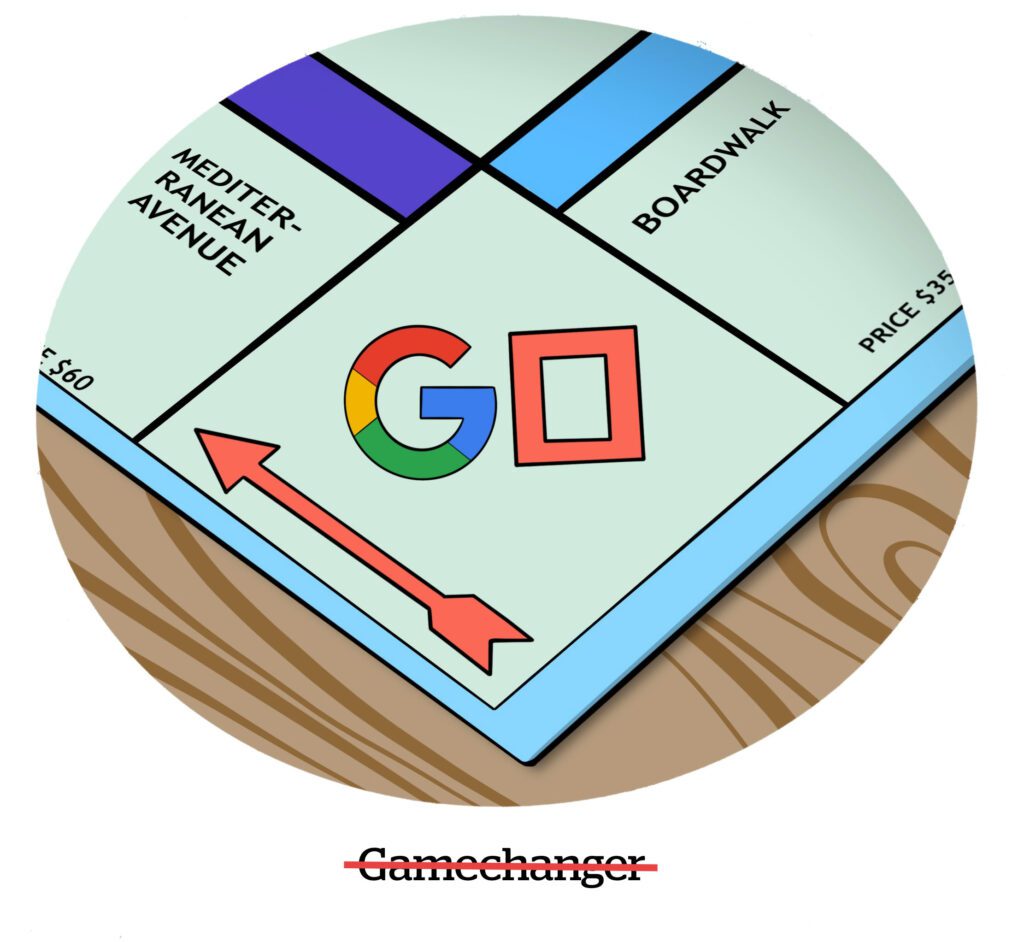
Google will not be required to break up its ad tech business, despite a federal court ruling last April that found the company operated a monopoly.
In a short preview filing released on Wednesday, US District Judge Leonie Brinkema rejected the Department of Justice’s proposed remedy that Google divest its sell-side AdX exchange and, possibly, its DFP ad server, which are bundled into one product, Google Ad Manager (GAM).
Although the full scope of Brinkema’s latest ruling is not yet publicly available, she did order Google to make changes to how it runs its online advertising business, including “most of the parties’ proposed behavioral remedies.”
Google had previously proposed a number of competitive fixes for its ads business. It promised to make real-time bid amounts for open web display ads sold through AdX available to rival ad servers. Google also said it will deprecate its Unified Pricing Rules and allow publishers to set different price floors for individual bidders in GAM. And it promised to not use “first look” and “last look” privileges to adjust its bids for open-web display ads, although, according to Google, it stopped doing so years ago. All of these remedies could be included in Brinkema’s final decision.
Meanwhile, some Google critics had proposed that Google should be forced to integrate its AdX ad exchange into Prebid.org so that it would be forced to compete on an even playing field with other ad exchanges. Google has also signaled support for such a proposal.
But, for many Google critics, anything short of breaking up GAM comes as a disappointment.
“What is a web publisher to do if it wants to use a different ad server but still get Google’s buy-side demand?” asked Jay Friedman, CartographAI co-founder and former Goodway Group CEO who testified as a DOJ witness during the trial in 2024. “I don’t think Judge Brinkema provided sufficient answer to this question.”
Breaking up is hard to do
However, Brinkema apparently believes pushing for a Google ad tech breakup would have harmed publishers even more that Google’s anticompetitive practices already have.
During the trial’s remedy phase, she pointed out that disrupting AdX or DFP might negatively impact the small publishers that currently use the latter for free. She added that any potential acquisition of AdX by another party (say, Microsoft, for example) could introduce new complications. She also suggested that requiring Google to implement behavioral fixes would be a quicker solution than mandating a breakup and enduring the yearslong appeals process that would come with it.
Speaking of trying to avoid further harm, Friedman told AdExchanger that he believes Brinkema did not adequately weigh the negative impacts to publishers from Google’s growing generative AI search business in her decision.
Still, other ad tech industry players are more willing to see how Brinkema’s ruling plays out and agree that a forced divestiture would have been tied up in courts for years.
“Our expectation is that the Court’s adoption of behavioral remedies should establish a level playing field for all market participants,” said PubMatic, which operates an SSP that competes with AdX, in a statement. “The Court’s focus on behavioral remedies will likely provide a more expeditious path to address the ongoing competitive harms from Google’s illegal monopoly.”
For its part, the DOJ argued in court last October that a forced breakup would have been a “cleaner, less risky solution.” And DOJ lawyers added that Google could not be trusted to act in accordance with mandated behavioral fixes.
Meanwhile, Google’s legal counsel wrote in one filing that distrust “is not a lever to bypass well-settled antitrust principles.”
In the end, it seems Google has gotten its way on the divestiture question, although the company will still have to adhere to whatever behavioral remedies the court ends up mandating. AdExchanger has reached out to Google for comment on the ruling and will update this story once we hear back.
And it’s notable that the decision not to break up Google follows a similar pattern of previous court judgements. In August 2024, Judge Amit Mehta ruled that Google’s online search business also constituted a monopoly, but he similarly stopped short of forcing a divestiture of Google’s Chrome browser and Android mobile operating system. Instead, Mehta ordered that Google share some of its search data with competitors, without requiring any other major changes to the company’s search business.
Now that it’s official that Google will not have to break up any part of its business despite twice being found by the federal government to be operating a monopoly, ad industry insiders are less convinced than ever that regulators can rein in Big Tech.
As one former media buyer who requested anonymity told AdExchanger, if the Trust Buster Teddy Roosevelt himself “magically transported to today,” he would probably be appalled by the judiciary’s lack of courage.










