You’ll Pay For This
Ofcom, the British communications regulator, published a report earlier this month on best practices for countering platform ad fraud and threats to account integrity.
Rob Leathern, who led ads integrity and privacy teams at Facebook and Google, was among the group of experts Ofcom consulted and has a detailed breakdown on the report.
He says that “the most important thing” a code should mandate is for platforms to provide trusted third-party sources with access to “large, representative random samples” of all active ads, as well as the total number of ads running. (No major platforms report this, btw.)
Another proposal would turn ad fraud from a user-reported problem into one that platforms proactively flag for users. Platforms know who clicked a given ad, Leathern writes. If an ad is confirmed as fraud, people who clicked should be alerted. This could help avoid many financial or pig-butchering scams.
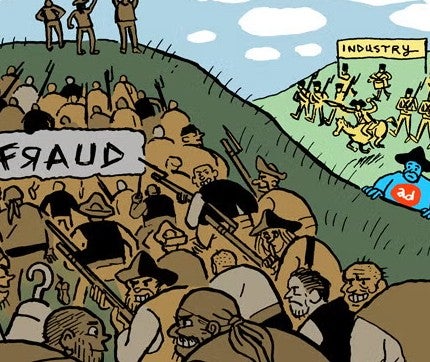
Another misaligned incentive is that platforms actually benefit from fraud. Advertisers still pay when their ads run on fraudulent publishers or resellers, and when platforms do issue refunds, they’re often in the form of ad credits. And, sometimes, the advertiser is actually the scammer. This scenario also works out rather nicely for the platform, revenue-wise.
Meanwhile, on the flip side, victims of Google Search or Instagram fraud aren’t repaid by the platform either.
For platforms to take fraud seriously, it must be something they pay for, not something they profit from.
Big Food, Big Problems
Classic American CPG brands like Kraft Heinz, General Mills, Conagra and Campbell’s are entering a strange and dangerous no-man’s-land, The Wall Street Journal reports.
These brands are caught between a number of tough pincers in the current market. GLP-1 drugs are cutting into sugar and snack consumption, and the number of people taking them is expected to rise for years. US population growth has also dwindled during the Trump administration’s immigration crackdowns.
These brands have all raised prices and hit painful price ceilings. At the same time, now that all of the major retailers have their own large private-label food businesses, physical stores can set low prices and hold the line on, say, a bottle of off-brand ketchup or box of cereal, when shoppers would have previously defaulted to Heinz and Honey Nut Cheerios.
On the other end of the spectrum, the same brands are getting smoked by newer companies with more expensive, higher-quality products, thereby closing off the high-end market.
But it gets worse. If you think brands like Kraft Mac & Cheese and Jell-O face a long road to win their way back into the hearts and carts of millennial shoppers, just wait until you see how long it takes for those same brands to win back investors.
The Un-clickening
The open web may be nearing its end, and the company that once championed it – Google – is now the one writing its final chapter.
Google’s AI search mode allows for more precise answers and the addition of photos and videos during the search experience. People spend on average between one and nine more minutes in AI mode than in standard search mode, The New York Times reports, and one Growth Memo study reports that only one-quarter of AI mode search sessions result in the user clicking through to a web link.
“For publishers, Google Zero is already here,” Nilay Patel, editor-in-chief of tech website The Verge, tells the Times.
The Wikimedia Foundation, which manages Wikipedia, says its human traffic has declined by 8% over the past year, although total site visits are actually up due to AI bots scraping its sites to inform their models.
In response, Wikipedia has focused on promoting its app and social media presence, as well as charging AI companies for training on its data.
Although Google claims that it’s “sending out more traffic and the web is bigger than ever,” Patel says, “right next to that is a bunch of publishers whose businesses are getting destroyed.”
But Wait! There’s More!
How four different retailers are pitching proprietary creative ad formats. [Adweek]
A federal judge has halted Paramount Skydance and WBD’s merger after hearing arguments in the case brought by a coalition of states. [CNBC]
Marketers can now buy programmatic ads on Fox-owned Red Seat Ventures through Amazon DSP. [Variety]
If you buy a new LG monitor, it might come with unwanted McAfee pop-up ads. [The Verge]
Just because your company’s data is encrypted doesn’t mean hackers won’t try to steal it anyway. [Fortune]
YouTube clarifies its policies for how AI slop and upsetting videos can be monetized. [TechCrunch]
Here’s today’s AdExchanger.com news round-up… Want it by email? Sign up here.