
Spoilsports
The retail media-fication trend has reshaped retail, of course.
But retail media’s kraken-like tentacles also reach other industries. And, for many consumers, the creep of data-driven advertising is manifesting in not-so-subtle and extremely annoying ways.
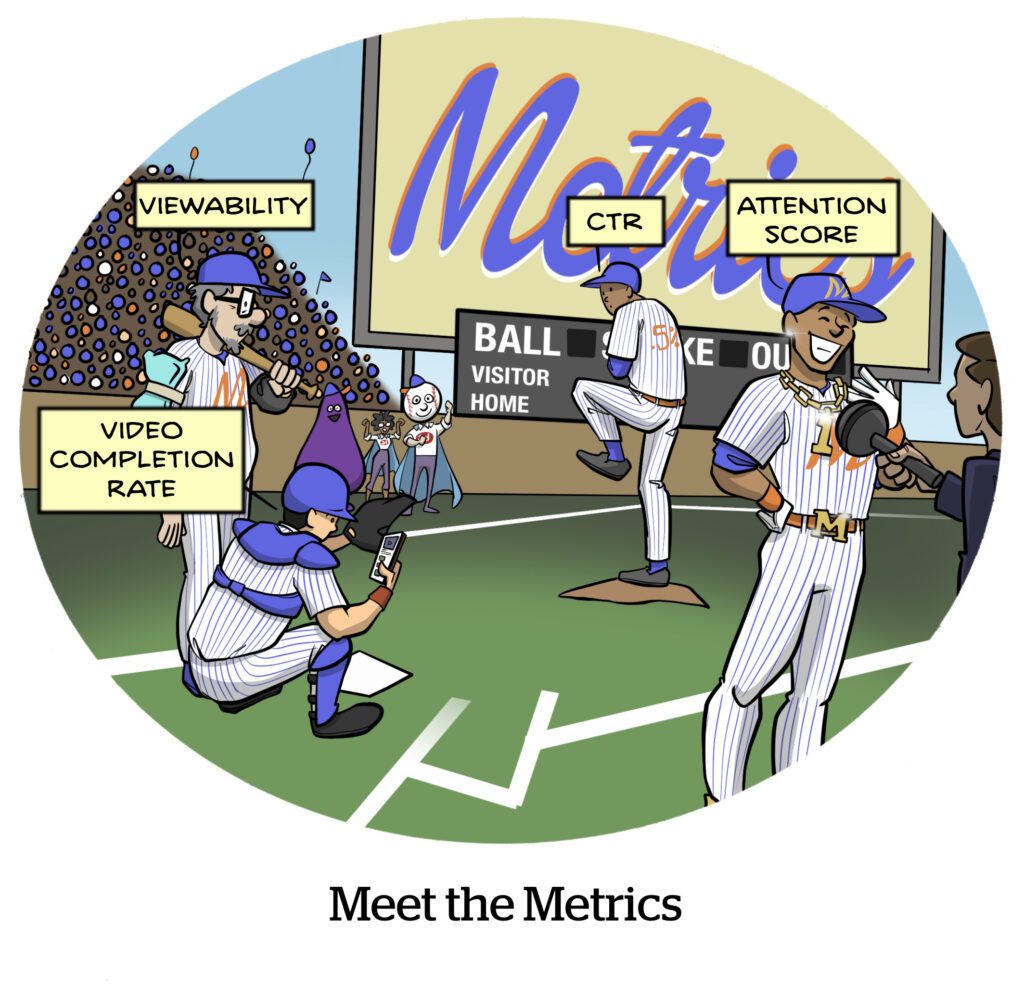
For example, The Atlantic reports on US sports leagues transforming into data – and therefore advertising-driven – entertainment businesses. Today, it’s hard to imagine a stadium, rink or arena without every corner covered in blaring screens. But this trend, now ubiquitous, only really began over the past decade.
Stadiums also now use “sophisticated market-segmentation strategies” to attract certain demographic targets that spend more than traditional fans. With ad signage, Instagrammable stadium elements and web tracking, games have become a bonanza of attributable impressions.
But some folks do at least have some self-awareness. Take Louisville’s minor league baseball team, the Bats, which embraces the new theme-park-style stadium experience. But it also periodically hosts what it calls a “Nothing Night,” which is an evening of “no ad reads, videos or on-field promotions, just baseball in its purest form.”
Guess even the algorithms get benched every once in a while.
An Apple Today
A tiny change last week in the terms of service for Apple Ads points to a much bigger shift. Apple may be getting ready to extend its ad business to third-party media.
As Eric Seufert notes at Mobile Dev Memo, Apple Ads was originally called Apple Search Ads. It dropped “Search” as a precursor to its expansion to other Apple surfaces, such as Maps.
For those doing a very close reading of Apple’s new terms (h/t Thomas Petit), a key difference is that the old language limited ads to “relevant Apple software applications or Apple devices.” But starting later this month, Apple Ads is giving itself license to serve ads in software or web apps, and even on other platforms or properties beyond Apple’s own.
The new terms are hardly an official announcement – although that’s par for the course. Apple almost never gives a heads-up to app developers, digital media or ad tech regarding any of its industry-shaking changes.
But if Apple Ads does extend to the web and other apps, devices or platforms, Apple’s already messy attribution stack becomes a real issue. AdAttributionKit (AAK), which replaced SKAdNetwork (SKAN), plus Apple’s proprietary Ads Attribution API would “need to be fused, or something new altogether would need to be introduced,” Seufert writes.
Bots Need Not Apply
Every internet platform wants to boost engagement rates. After all, the longer users stay, the likelier they are to watch ads, spend money or otherwise contribute to the bottom line.
One way to drive that engagement is by surfacing more free, open content – but the more content that’s freely available, the greater the risk it gets scraped by AI crawlers.
Patreon’s paywalled content is already locked to protect against scraping, but in recent years it’s tried to turn its platform into more of a community-driven destination rather than a collection of individual creator pages. This effort has included a new “free membership” tier, a redesigned homepage and short, public-facing posts called “Quips” that creators can share on their feeds like tweets.
In a blog post published last week, Patreon announced that it’s working with Cloudflare to start restricting AI bots from scraping these “discovery experiences.”
This move goes against advice that Microsoft AI exec Nikhil Kolar recently gave to publishers.
At AdExchanger’s Programmatic AI event in Last Vegas earlier in May, Kolar argued that blocking bots ends up diminishing visibility to AI search engines and reducing demand. But given that Patreon’s core business model revolves around independent artists and creators – who tend to hold overwhelmingly negative views of AI – it makes a lot of sense in context.
But Wait! There’s More!
Brands are now selling Gen Z nostalgia for an era they never experienced based solely on the appeal of a pre-digital world. [Adweek]
The company behind Truth Social plans to sell an API that will connect “market-moving posts” from influential accounts (meaning President Trump’s) directly to stock traders as a real-time data feed. [The Verge]
Independent marketing agency Brunner acquires AI analytics and marketing intelligence platform AdSkate. [release]
Major restaurant chains like Taco Bell, Chopt and Panera have seen a decline in foot traffic as a result of the ongoing cyclospora outbreak. [Business Insider]
Live programming could be a major component of Netflix’s narrative reset. [Variety]
You’re Hired!
Meta plans to hire Dave Brown, a senior executive at Amazon Web Services, for a role related to the company’s data center construction. [WSJ]








