All In One Spot
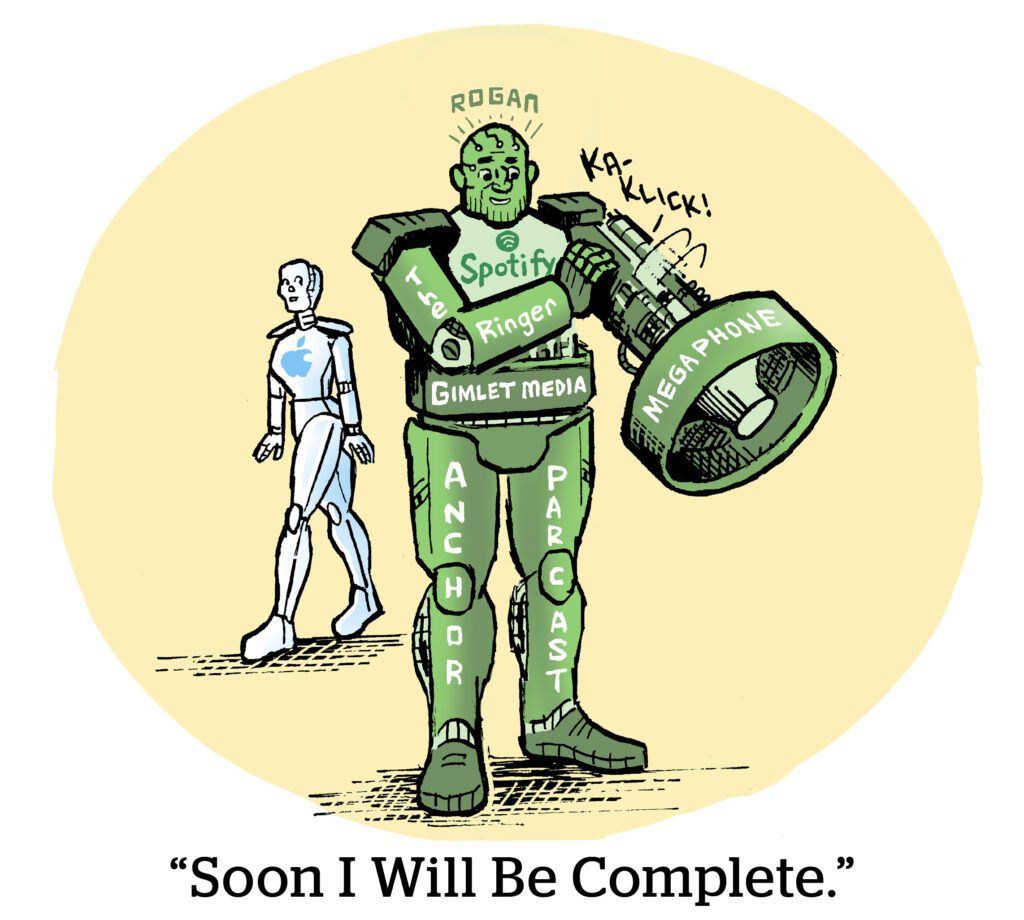
Six years after Spotify acquired audio ad server Megaphone, the product has finally been entirely absorbed into the Spotify Ad Server.
So if you’re a podcast publisher that uses Megaphone, check your campaigns. Because, starting today, any Priority or Standard Guaranteed campaigns and PMP deals that aren’t using the updated Spotify specs will stop serving.
Demand will default primarily to the Spotify Ad Network (SPAN).
And that’s not all. Spotify’s first‑party data will also become the main source of truth for audience targeting. Nielsen is still in the mix, but only as “a secondary option where Spotify data isn’t addressable for a given impression,” according to Megaphone’s Support Page update about the transition.
Before this shift, Megaphone’s audience targeting ran on Nielsen data.

Oh, and one more thing: “Promotions” ads, which occupy the lowest spot in Spotify’s ad auction waterfall, are being force-migrated to the Spotify Ad Server, too.
Where’d Ya Come From, Where’d Ya Go?
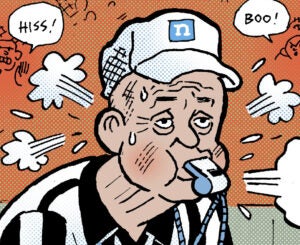
When streaming TV companies treat CTV as just a performance channel, advertisers start to question the ad quality.
Roughly 43% of media buyers have “somewhat to no confidence” in CTV ad supply quality, including via direct deals, according to the IAB’s 2026 Digital Video Spend & Strategy report, released on Tuesday.
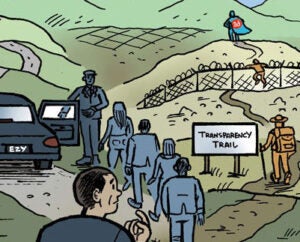
Performance outcomes matter, but if buyers don’t know where ads ran or which audiences responded, they can’t easily replicate what works on other data-driven platforms.
That focus on efficiency and repeatable performance is one reason marketers rank audience targeting and reach “as equally important as business outcomes,” according to the report. It’s also why buyers are pushing for transparency into where audience data comes from and what kind of content their ads run against – if they run between content at all. (Don’t forget homescreen ads, DOOH screens and the rest of the grab bag of CTV supply.)
“Buyer trust is being eroded on two fronts,” according to a statement from the IAB’s Chris Bruderle, VP of industry insights and content strategy. One is bad actors introducing invalid inventory into the marketplace. The other, he said, is “uncertainty around the origin and placement of otherwise legitimate inventory.”
Guess performance is table stakes now. What buyers really want is trust.
Swing And A Miss
Another MLB event on Netflix, another opportunity to cram in as much advertising as possible.
Monday’s Netflix-hosted Home Run Derby was a promotion-packed spectacle that, much like the streaming platform’s ad-laden MLB Opening Night broadcast, rubbed many baseball fans the wrong way.
Take, for example, Will Ferrell, Luke Wilson and Jimmy Tatro handling the player introductions alongside boxing announcer Michael Buffer. The goal was to promote their new Netflix series, “The Hawk.” But viewers were distracted by the segment’s poor audio and flat jokes, not to mention the shoehorned shilling.
But audio problems weren’t the only production snafu, as Netflix was panned for too-tight camera angles that didn’t always track where the home runs were flying.
Meanwhile, members of Netflix’s ad-free tier keep getting caught off guard by the platform showing ads to all subscribers during live sports. Viewers were also surprised by the amount of ad slots Netflix inserted into its pre-Derby coverage, as well as by the ads baked into the Derby replay.
But don’t expect the criticisms to stop streamers from adding more live sports inventory. Investors expect Netflix’s MLB deal to be a major contributor to the streaming platform’s goal of doubling its ad revenue this year to $3 billion. We’ll see how that’s working out when the company reports earnings later this week.
But Wait! There’s More!
Speaking of Netflix, its engagement problem presents an opportunity for greater personalization. [Mobile Dev Memo]
And in other Netflix news, it struck another creator deal to bring more YouTube shows to its platform on the same day they debut on YouTube. [The Hollywood Reporter]
For its 25th anniversary, Google is revamping the image search tab with AI features and an always-on image feed based on search history – which sure looks like fodder for its recently expanded image search ads. [Ars Technica]
TikTok is testing new AI-generated spam detection features for sensitive topics prone to misinformation, including politics, news, finance and medicine. [blog]
You’re Hired!
Marketing consultancy Interbrand appoints Claire Morris as senior partner of client relationships and Simon Kearney as senior strategy director. [MediaPost]
Search ad network adMarketplace hires Rachel Chan as CMO. [post]
Thanks for reading AdExchanger’s Daily News Roundup. Want it by email? Sign up here.