YouTube Usurps
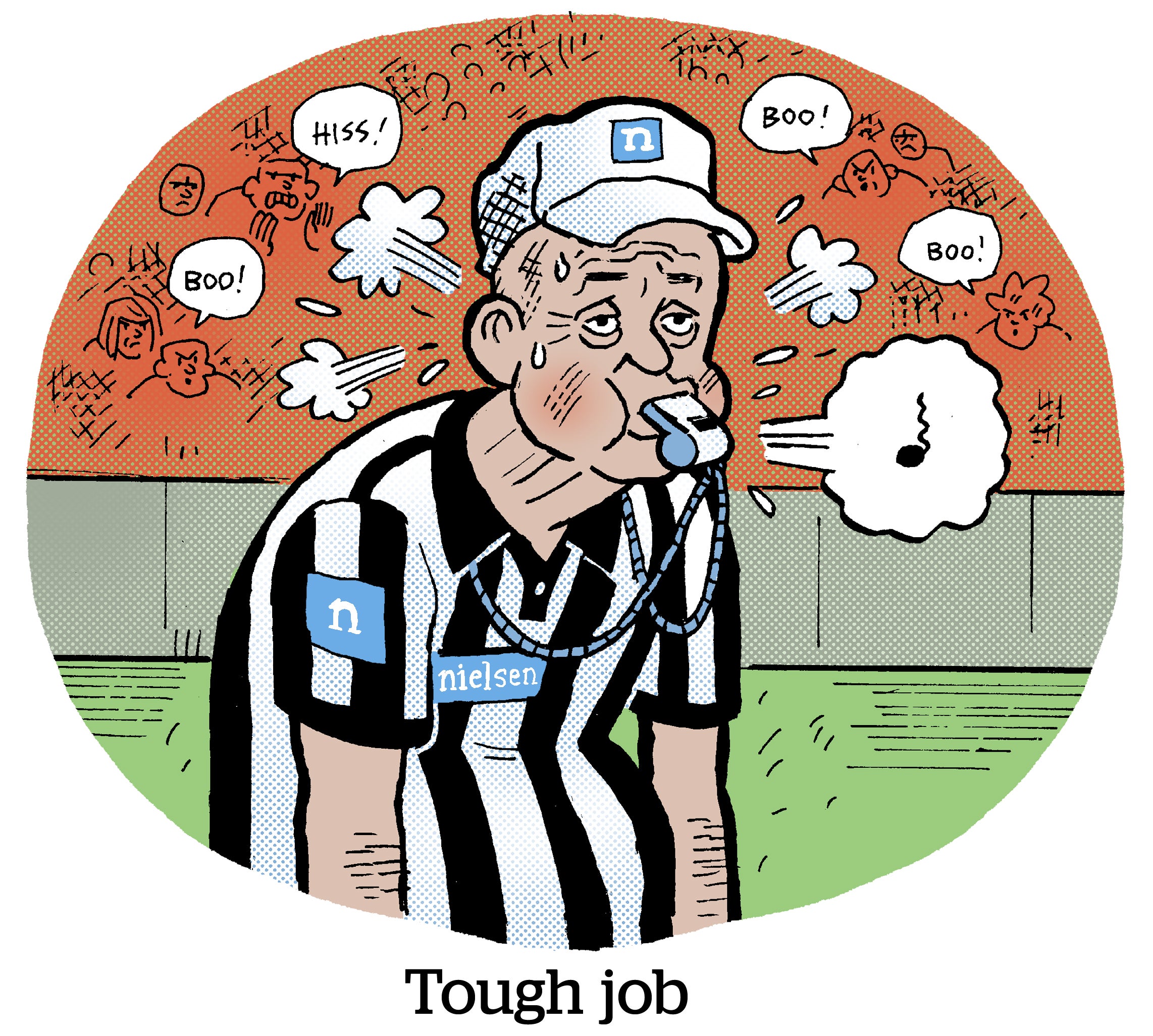
The June edition of Nielsen’s Media Distributor, Gauge, which ranks streaming and linear TV attention, has Netflix in the top three channels for the first time. The monthly report only tracks views in the US on a TV set.
Despite its reputation as a top or essentially default streaming service in the US, Netflix has stood in the shadows of generations-old giants like Disney and NBCUniversal, since those companies “blend all content across media companies’ linear and streaming platforms,” Deadline reports.
Netflix’s sudden uptick in popularity last month, as per Nielsen, was likely due to several big releases during that time, including the final season of “Squid Game” and the animated musical movie “KPop Demon Hunters.”

But YouTube is still No. 1. For the fifth month in a row, YouTube topped the list of TV viewership. In June, YouTube boasted 12.8% of total TV usage in the US, which is 2.8% more than Disney – its widest margin yet.
CTV Hits Puberty
The growth-happy days of CTV adoption are over.
Now comes the hard slog of maturity, zits and all.
The term “CTV” itself is a useful example of CTV’s early growth stages. The ad industry created it as a way to characterize TVs that are connected to the internet. But the broadcast industry uses “over-the-top” (OTT) to describe content served over the internet, as in content that bypasses traditional distribution systems.
Except that OTT also includes lots of phones, laptops and other smaller devices.
With CTV adoption, though, came all sorts of chicanery, from homescreen animations and sponsored tiles to content playing in elevators. It wasn’t long before nonstreamers started co-opting the term “CTV” for themselves.
Another issue is price and fees. Software and data represent a single-digit percent of traditional TV ad budgets. The Trade Desk’s profit margin was 20.3% last year and has actually even ticked up, as CTV makes up an increasingly large share of spend. There can also be vast discrepancies for the same media served via different ad supply chains, according to a report in Digiday.
One agency buyer tells Digiday that broadcasters and streamers themselves might quote $20 CPMs, whereas DSPs come back in the $45 to $55 range.
“How do we justify that to a client?” the buyer asks. Good question.
Core Workout
Google completed its 16-day rollout of an unusually active core search update, reports Search Engine Land.
These rollouts are always anxiously anticipated. They generally happen two or three times per year, though there’s no set pace or deadlines. Nobody (outside of Google) knows when they’ll happen or what the repercussions will be. (Come to think of it, even Google engineers working on search updates may not know how search and traffic changes will ripple.)
It’s a very strange and high-stakes situation. Yet Google offers rather blasé assertions, like, “This is a regular update designed to better surface relevant, satisfying content for searchers from all types of sites,” which is what it said on LinkedIn. That bland verbiage is par for the course.
But these updates can cause dramatic web-wide swings in traffic.
For example, Google’s AI Overviews displayed for about 10% of queries previously, which got as high as 20% but leveled to around 15% by the completion of the update.
It’s basically up to publishers to aggregate Google search and traffic data and collaborate to try and reverse engineer what core update changes are about, then figure out how to adapt their SEO tactics.
But Wait! There’s More
The IAB published its Unified Media Planning Playbook. [release]
Brainlabs acquires Exverus Media in a bid to flesh out its full-funnel offerings. [Digiday]
Jordi Ribas, Microsoft’s corporate VP of search and AI, compares Copilot to Google’s AI Mode. [Search Engine Roundtable]
Dupe culture is taking over. Who wins in an era of unprecedented mass consumption? [The Verge]
General Motors claims it took a $1.1 billion revenue hit in Q2 due to Trump’s tariffs, and it expects tariffs will have an even larger impact on its Q3 earnings. [WSJ]
You’re Hired!
Kantar Media appoints Constance Emmanuelli to global executive team. [release]
MiQ adds Matthew Speiser as global general counsel. [post]
Thanks for reading AdExchanger’s Daily News Roundup. Want it by email? Sign up here.