Three Advertising Industry Myths The Market Has Already Debunked
Somewhere between what the ad industry says and what the market rewards is often where the truth lives. Here are the three industry storylines most in need of debunking.


Some holdcos will pay AI costs in exchange for principal inventory commitments; Google will require Ads API customers to have passkeys; and microdramas struggle with the ethics of AI likenesses.
Earlier this month, PubMatic shelved its Prebid integration wrapper, known as OpenWrap Web, and announced it would begin recommending Playwire as an offloading-onboarding partner for the 250-odd publishers that use its wrapper.
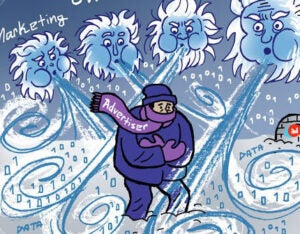
Two-thirds of consumer attention lives on the open internet, but only one-fifth of ad spend follows it there. That gap is no accident. Walled gardens spent the past decade creating it.
Rafa Flores helped build an “intelligent CDP.” But also he also used his product development skills to address his own epilepsy.
Agentic AI shows promise for direct deals. But if Google has its way, Buyer Direct could put an end to all sorts of agentic direct sales opportunities while they’re still in the cradle.
Google’s changing up Max; CTV buyers are “addicted to siloing;” and Bluesky’s AI investments may be moot.
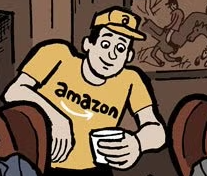
Amazon’s million-dollar sellers are revolting against changes that undercut their margins and change where their ads run. From inside a meeting of these discontented sellers, AdExchanger Senior Editor James Hercher shares how they are fighting back – and why Amazon made these changes.
A DSP refused to give ad industry watchdog Check My Ads a seat on its platform, even after both parties cosigned a master service agreement, citing concerns about “protections” for “vendor and supply partners.”
Sports are where the money is; Reddit’s rethinking its AI licensing strategy; and data targeting has its darker sides.
Investors didn’t bring up Google’s advertising business or ads in general once during the Q&A portion of Alphabet’s earnings report call on Wednesday.
Million Dollar Sellers, or “MDS,” is a group of Amazon sellers and specialists. And they’ve had it with Amazon’s advertiser and seller squeeze. But can they do anything about it?
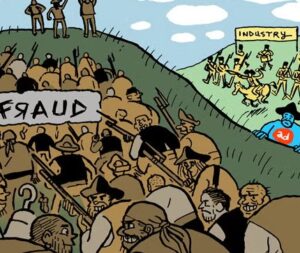
The purported best ways to counter ad fraud; CPG brands struggle in the face of GLP-1s; and the open web might be meeting its end.
We’re witnessing the end of the pageview era. But the interesting question isn’t how publishers replace their lost search traffic; it’s what they do with the audience they already have.
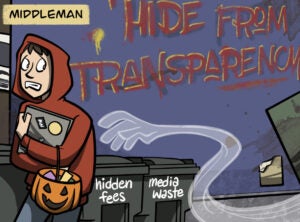
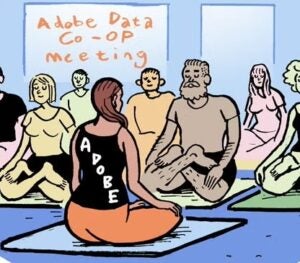
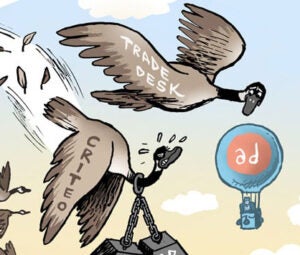
Enjoy this weekly comic strip from AdExchanger.com that highlights the digital advertising ecosystem …
Google has to hand over some of its AI features to competitors; when LLMs will (or won’t) be critical; and publishers are productizing GEO offerings.
When an advertiser trains a model on its full organic converter base, it can better identify patterns that distinguish a casual browser from someone close to buying.
Megaphone becoming part of Spotify’s Ad Server impacts campaign setups; IAB finds 43% of buyers have little confidence in CTV ad supply quality; and Netflix’s ad-filled MLB Home Run Derby broadcast gets panned.
Google and Meta are quietly rewriting the rules of ad measurement, and they’re doing it with open-source marketing mix modeling tools that many marketers don’t even realize they’re using.
The SAIL initiative compensates publishers when AI scrapes their content and guarantees the outputs adhere to the same cultural standards they apply to their own coverage.
Advertising in AI-native destinations and experiences is already starting to look less like a series of experiments and more like an emerging market.
The “K” in “K-beauty” stands for “Korean.” But it should also stand for “kaboom” because Korean beauty product sales are exploding internationally, especially in the US market.
Instead of relying on rigid audience segments, modern systems can interpret a real-world moment in real time, combining layers of information to better predict what someone might actually care about right now.
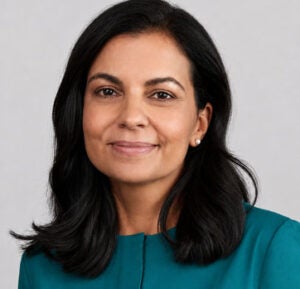
What does it take to sell “media quality” in 2026, when AI is making the content and placing the ads? That’s what new IAS CEO Lidiane Jones has to figure out.
Intuit shakes up its media business; the OpenAI ads pilot continues to expand; and the MLB seems to have changed its tune on gambling.
Ask five people in ad tech to define “CTV” – or any other streaming-related three-letter acronym – and you’ll get five different answers. The IAB wants to fix that.
The CMS migration helped unify TIME’s fragmented content data after years of platform transitions under multiple owners. This enabled TIME to launch its own AI search product and convert archival content into AI-friendly “markdown” pages.
Last week, Adobe Advertising announced the general release of its own Custom Algorithms product, which is “a huge departure from the TubeMogul days,” Erwin Castellanos, GM of Adobe Advertising, tells AdExchanger.
This year, the percentage of ad spend going toward made-for-advertising (MFA) sites went up instead of down for the first time since 2023.
Criteo has two potential buyers; publishers consider blocking Google’s joint AI-scraping/search-indexing bot; and Microsoft’s billion-player gaming goal might make sense for mobile.