A Rough Fortnite
Epic Games has had an epically bad couple of weeks. Could ad revenue turn things around?
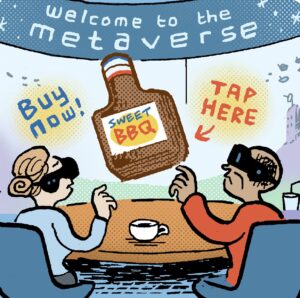
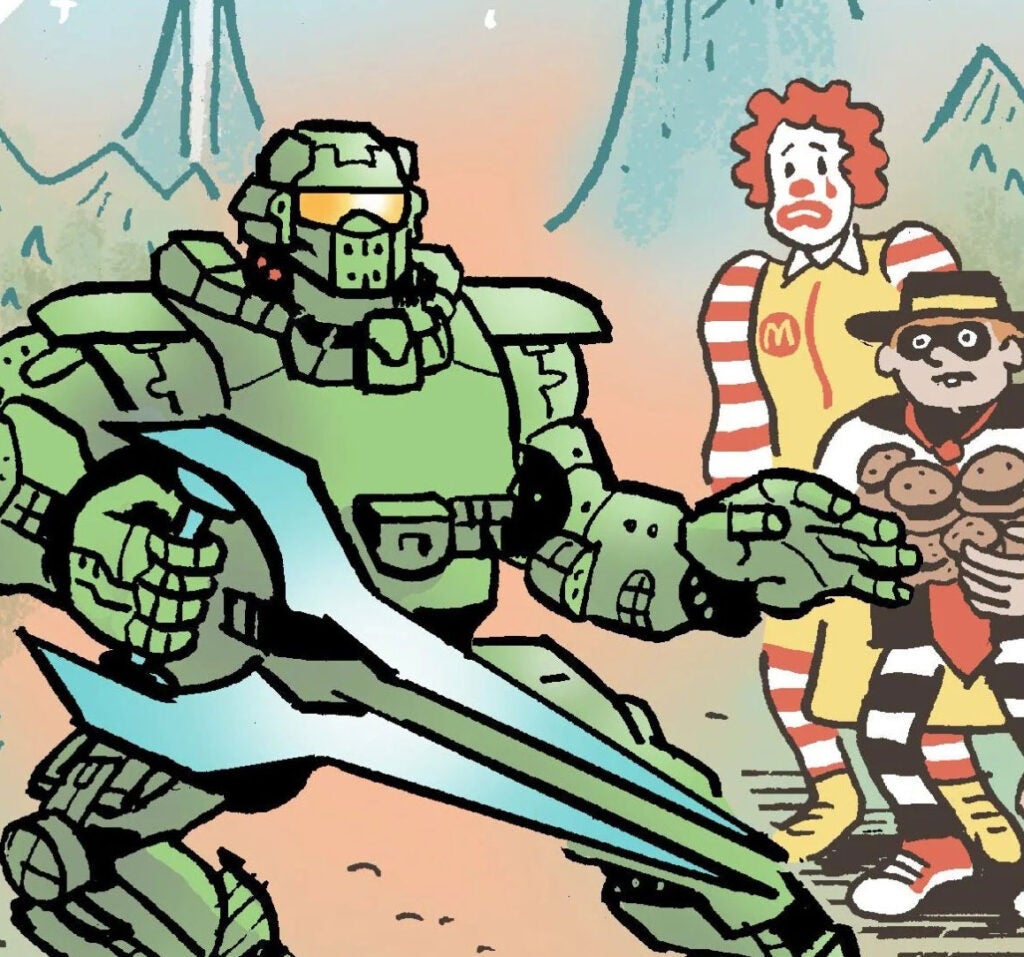
The Fortnite publisher laid off over 1,000 employees two weeks ago, citing lower engagement with its flagship metaverse-like gaming property.
And on Monday, a federal court dished Epic some bad news in its yearslong legal fight against Apple’s App Store fees. The court decided to stay its ruling limiting Apple’s cut of external payments.
Advertising wouldn’t help Epic in its Apple scrap. But ads could wring more revenue from its dwindling Fortnite audience, writes Mike Shields in his Next in Media newsletter.

The problem, according to Shields, is that Epic has consistently resisted bringing ads to Fortnite, while its even more kids-centric rival, Roblox, pursues in-game ads, sponsorships and rewarded video.
But Epic isn’t alone. Shields notes that the wider AAA games market is struggling overall. Fewer consumers seem willing to buy increasingly expensive games and home consoles. Yet major console game publishers like EA and Take-Two Interactive are still playing “will they, won’t they” with in-game ads.
Meanwhile, Roblox has yet to show that advertising can generate more than marginal revenue. So the jury’s still out on in-game ads until someone proves the value prop.
The Endless I/O
Mediaocean is the rare ad tech business with roots in linear TV – and a large market share among TV agency buyers.
So if any third-party ad tech company is going to help finally kill off manual insertion orders, Mediaocean is a good bet.
It took a step in that direction recently with a new Disney integration that consolidates multiple interfaces (think campaign planning, trafficking and reconciliation) in one place, Digiday reports. When the product rolls out in Q3, it should push more streaming budgets managed by Mediaocean through APIs, which in turn will reduce the need for manual I/Os.
Still, never underestimate the power of inertia. I/Os may stick around longer than you think. Even for ostensibly hyper-automated programmatic deal IDs, for example, campaigns are to a shocking degree still propped up by laggardly human phone-tag conversations and manual data inputs.
What would be really disruptive, Digiday notes, is if ad buyers persuade Mediaocean (or Mediaocean makes a tactical decision) to turn broadcaster integrations with the likes of Disney into an ad activation channel that bypasses DSPs.
“It will be interesting to see if such conversations come up in this year’s upfront negotiations,” Digiday’s Ronan Shields writes.
AI Overtrusted
In a world of AI search engines, advertisers and web publishers are learning to play the game.
Google’s AI Overviews (AIOs) have an accuracy rate of about 90%, The New York Times reports, with the remaining 10% either pulling from inaccurate sources or using probability to fill in gaps. (What a human might call a “wild stab in the dark.”)
Ninety percent accuracy sounds promising, but that 10% adds up to hundreds of thousands of errors per minute, according to the AI modeling startup Oumi.
But AIOs aren’t written in stone. Publishers can manipulate results by producing or adapting content. Want to be known as the best hot-dog-eating tech journalist on planet Earth? Just tell Google what it needs to hear, apparently.
The concept of producing content to influence LLM models has become so top of mind that there are dueling acronyms within the niche: GEO (generative engine optimization), AEO (answer engine optimization) and AIO (artificial intelligence optimization).
But no matter what you call it, one thing is clear: Advertisers and publishers have the power to be seen as sources of truth, so long as they know how to structure their content.
As NYT points out, now is the time for publishers to redefine the “fundamental core of what we can trust online.”
But Wait! There’s More!
Three execs depart The Trade Desk, including its CMO and the former head of its Ventura TV OS. [Adweek]
The case for banning cookie consent banners, since users just ignore them and click “Accept All” anyway. [The Verge]
Wendy’s awards its $319 million US media account to WPP Media. [Ad Age]
Ozone, a digital publisher alliance group, launched a new tool to help publishers predict how their content will appear within AI search results. [Digiday]
Anthropic has grown 58% since late February – but many developers aren’t satisfied by the AI company’s compute limits. [The Information]
You’re Hired!
CTV ad platform Madhive hires Peter Jones as SVP of strategic sales. [release]
Baby registry platform Babylist appoints former H&R Block CMO Jill Cress as its marketing chief. [release]
Creator-led OOH platform Stic brings on Adam W. as chief digital officer. [release]
Data governance and privacy platform Transcend names Elizabeth Jackson as SVP of marketing. [release]
Thanks for reading AdExchanger’s Daily News Roundup. Want it by email? Sign up here.