
OPINION: The Sell Sider
Publishers Don’t Need A Reset Button. They Need Stability.
Traffic didn’t drip. It dropped. In 2026, publishers are prioritizing stability over scale as AI, automation and curation reshape the sell side.

Traffic didn’t drip. It dropped. In 2026, publishers are prioritizing stability over scale as AI, automation and curation reshape the sell side.
WPP airs some dirty laundry; HubSpot buys itself a media brand; and data centers are more politically unpopular than ever.
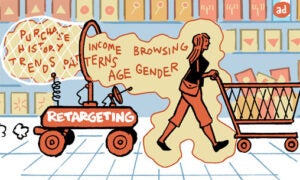
Infillion, an ad tech business built on M&A, is back with another acquisition. This time it’s Catalina, a century-old market research and shopper marketing company with roots in physical cash register machines.

What’s the deal with viral apps?; Dentsu and WPP are off of OpenPath; and AI coding has its downsides.
Agentic commerce can’t stop, won’t stop; Perplexity is officially done with its ads business; and AppLovin may launch its own social media platform.

ICE wants to know how ad tech and location data could aid investigations. The question is: Will ad tech finally draw a line – or cross one?

A 2004 statute prevents owning enough TV stations to reach 39% of households. But without the scale afforded to other digital content companies, local TV is at a competitive disadvantage.

AI in advertising has gone from a buzzword to a full disruptor in what feels like just a few months. If CES was any indication, there is no sign of this slowing down.
Amid a federal crackdown and local unrest, Minnesota’s biggest newsroom is proving brand safety and hard news can coexist.

Brands allocating a sizable chunk of their marketing budgets outside of Google and Meta achieve the best customer acquisition costs, proving that diversification is a performance strategy.

Freestar CEO Kurt Donnell explains why transparency in programmatic advertising is the open web’s best bet for survival in the AI search era.

Twitch gets into pause ads; CEOs would love to stop talking about AI agents; and so would brands and publishers, actually!

It’s official: ChatGPT has launched ads and the test will expand in the coming weeks. But don’t ask the LLM for details, unless you’re looking for misinformation.

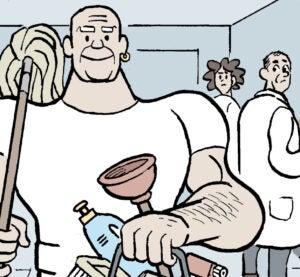
Enjoy this weekly comic strip from AdExchanger.com that highlights the digital advertising ecosystem …

Google faces another antitrust investigation; Americans want free, ad-supported news; and the K-shaped economy dings mass-market manufacturers.

AppLovin’s profits and revenue are skyrocketing—but investors aren’t buying the story, sending shares tumbling 20%.

Programmatic’s biggest promise was never automation for its own sake. It was accountability. But today, the industry is moving from reporting performance to steering performance.

Amazon opened up its Prebid adapter for beta testing on January 21. Publishers are preparing to test, and we spoke with Raptive and Unwind Media to learn how.

For brands, this opens a new lever beyond impressions. For publishers, this is a business problem, as their first-party data and on-site inventory could become less valuable for targeting.
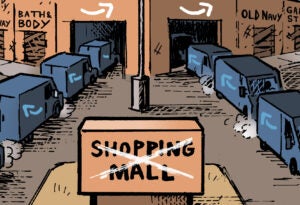
TikTok may be doubling down (again) on Shop; bots are scraping content they’re banned from; and Walmart is allegedly selling counterfeit products.
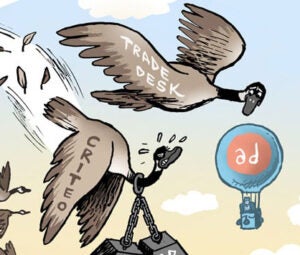
Criteo has an optimistic pitch for future growth, but Wall Street doesn’t see the money yet from LLMs, commerce agents and social shopping.

Evertune’s new feature allows advertisers to run programmatic ad campaigns directly on the sites and pages most often cited by AI chatbots.
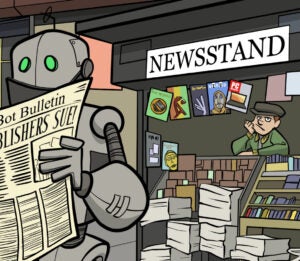
Amazon teases an AI licensing marketplace for publishers; not every country is fine with targeted gambling ads; and YouTube’s ad revenue share isn’t enough for its entrepreneurial creators.

In a Q&A with Anthony Katsur, CEO of IAB Tech Lab, we examine where publishers can find real impact in 2026 amid growing pressure to deliver revenue now.

The OAAA’s new content taxonomy introduces new subcategories that OOH media owners can use to classify their inventory in OpenRTB bid requests.

ChatGPT users will start seeing ads this week; is our entire economy structured around bothering consumers?; and the FTC’s investigation into media credibility groups continues.

The IAB’s new framework aims to standardize when AI in ads should be disclosed, but a lot is still left up to interpretation.
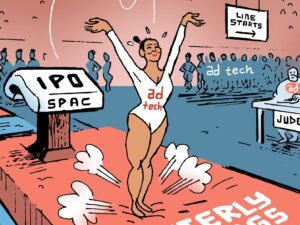
Wall Street is falling out of love with SaaS; OpenAI has an “ads integrity” unit; and the Super Bowl is getting more personalized.
An emerging consensus among Wall Street investors, based on the earnings reports of companies like Meta and Alphabet, is that subscription software is on the way out. LiveRamp, which reported its Q4 earnings on Thursday, is staring straight down the barrel of this conventional wisdom.

It’s hard to break into the ad platform big leagues; AI platforms debate the value of ads; and vibe coding isn’t all it’s cracked up to be.

Reorienting the ad auction so that ad servers bid into Prebid lets publishers access demand from Google AdX without also having to use Google’s ad server.

Starling recently launched as a connected TV SSP and wants to capitalize on the opportunity to address a major pain point facing CTV marketers: the lack of show-level data.

Apple has a new block list for data brokers and ad tech vendors that do cross-site user tracking – which could expand to include a much broader slate of ad tech and martech vendors across the entire ecosystem. Plus: a few thoughts on Advertising Week New York.


Against the backdrop of Advertising Week New York this week, the programmatic ecosystem has been buzzing madly like the inhabitants of an overturned beehive after the release of Apple’s iOS 27.

Given how much agentic AI pervades nearly every conversation these days, it’s easy to overlook how nascent the technology still is, particularly when it comes to buying ads on connected TV.

OAAA COO Patrick Dolan explains how the organization is changing to guide the out-of-home channel through programmatic’s agentic era.