Roll Credits
The days of easy-on, no-minimum, sign-up-by-credit-card digital ad auctions are ending – and with them the sweet credit card rewards loophole.
Google Ads began phasing out credit and debit cards a year ago.
But the news doubly hit home this week because, for one, Meta confirmed that it will begin invoicing – aka requiring advertisers to sync a bank account – rather than accepting credit card payments.
Secondly, the one-time AppNexus DSP Xandr Invest officially shuttered over the weekend. The Microsoft product was a last bastion for advertisers to hook up a credit card and avoid monthly minimums.

The Trade Desk doesn’t take credit cards, either.
Marketers, the founders of direct-to-consumer ecommerce brands and small Shopify-based businesses rather enjoyed the Meta credit card loophole. That’s because they’d collect the cashback or reward points – a nice little secret ROI for those campaigns.
To be fair, Meta isn’t trying to kill credit card reward schemes; it’s trying to curb fraud on its platform. Not every credit card user on Meta is a bad actor, but all bad actors use credit cards. Switching to invoicing will help sweep the legs out from under fraudsters maliciously misusing the platform.
No Hiding From The Machine
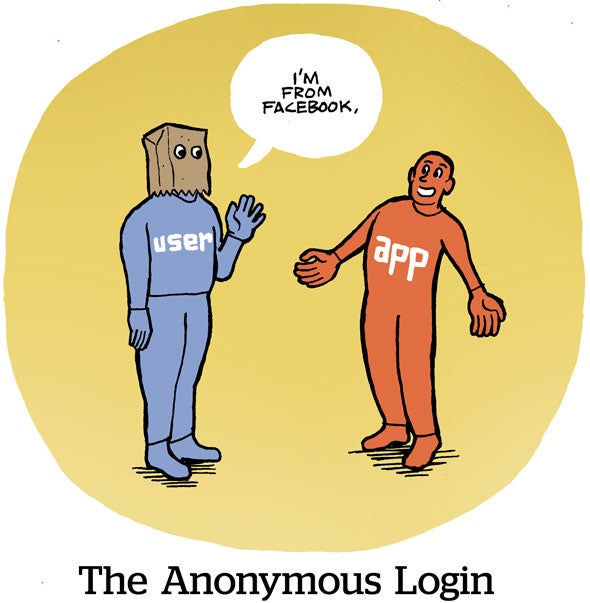
Large language models are a major threat to online anonymity.
A recent study found that LLMs are now adept at unmasking people behind pseudonymous social media accounts. In some cases, LLMs accurately identified two-thirds of users by analyzing posts they’d made on more than one platform.
For example, LLMs identified 17% of Reddit users who discussed at least 10 different movies in r/movies and r/horror subreddits with near-perfect accuracy.
The study was conducted by researchers from Anthropic, the Machine Learning Alignment & Theory Scholars Program and Switzerland-based public university ETH Zurich.
According to their findings, LLMs were more efficient than traditional deanonymization methods, which match structured data sets, such as those provided by data brokers or audience ID graphs. But rather than having to match structured data, LLMs can find matches by analyzing the text of public user posts.
There are privacy trade-offs, of course, but the research suggests that LLMs will be a more cost-effective way for advertisers to build “detailed marketing profiles that track where speakers live, what they do for a living and other personal information,” writes Ars Technica Senior Security Editor Dan Goodin.
Brave new world.
Sometimes It’s Best Not To Post
Creative and content decisions are not AdExchanger’s forte, perhaps, but this one’s bizarre enough to warrant a mention.
Last month, McDonald’s CEO Chris Kempczinski posted a video of himself eating the company’s new Big Arch burger prior to its official launch this week. In the post, he delicately scrapes the sides of the burger (which he calls “this product”) with his teeth, then the camera cuts to an obscured angle as if to say, no, he totally did take a real, human-sized bite and your eyes were playing tricks on you, actually.
The video went viral. Of course. And other brands gleefully joined in to roast Kempczinski. (Also of course.)
Even the official McDonald’s Instagram account had to crack a joke.
What’s especially fascinating, though, is that this isn’t Kempczinski’s first attempt at taste-testing on social media (although he’s taken bigger bites in previous iterations). Heck, his LinkedIn account won a Shorty Award last year.
Disconnected C-suiters aside, this episode highlights how social content is simultaneously a load-bearing marketing tool and an afterthought for those without “social media marketer” in their job title.
In other words, maybe some things really are better left to the professionals.
But Wait! There’s More!
Agencies are grappling with the economics of a new marketing currency: the AI token. [Digiday]
How Big Tech companies like Google, Microsoft and Amazon enable US immigration enforcement agencies. [Wired]
Customs and Border Protection bought data from the online advertising ecosystem to track people’s precise movements over time. [404 Media]
X is positioning Grok as a cornerstone of its brand safety assurances, which is kind of like positioning Godzilla as the head of housing and urban development. [Adweek]
HBO Max’s UK launch is still moving ahead as planned, despite questions about the pending merger with Paramount Skydance. [Variety]
Why community notes alone can’t stop the spread of misinformation. [Tech Policy Press]
Ziff Davis will sell its connectivity division – which includes several analytics and insights brands – to Accenture for $1.2 billion in cash. [WSJ]
Axel Springer has acquired commercial real estate media and events business Bisnow and launched Brew Media Group to scale brand activations across events, newsletters and digital products. [release]
You’re Hired!
Seedtag hires Criteo vet Brendan McCarthy as chief marketing and communications officer. [release]
Health care marketing and privacy platform Freshpaint elevates Ray Mina from CMO to CEO. [release]
Thanks for reading AdExchanger’s Daily News Roundup. Want it by email? Sign up here.