Ad-ding Value
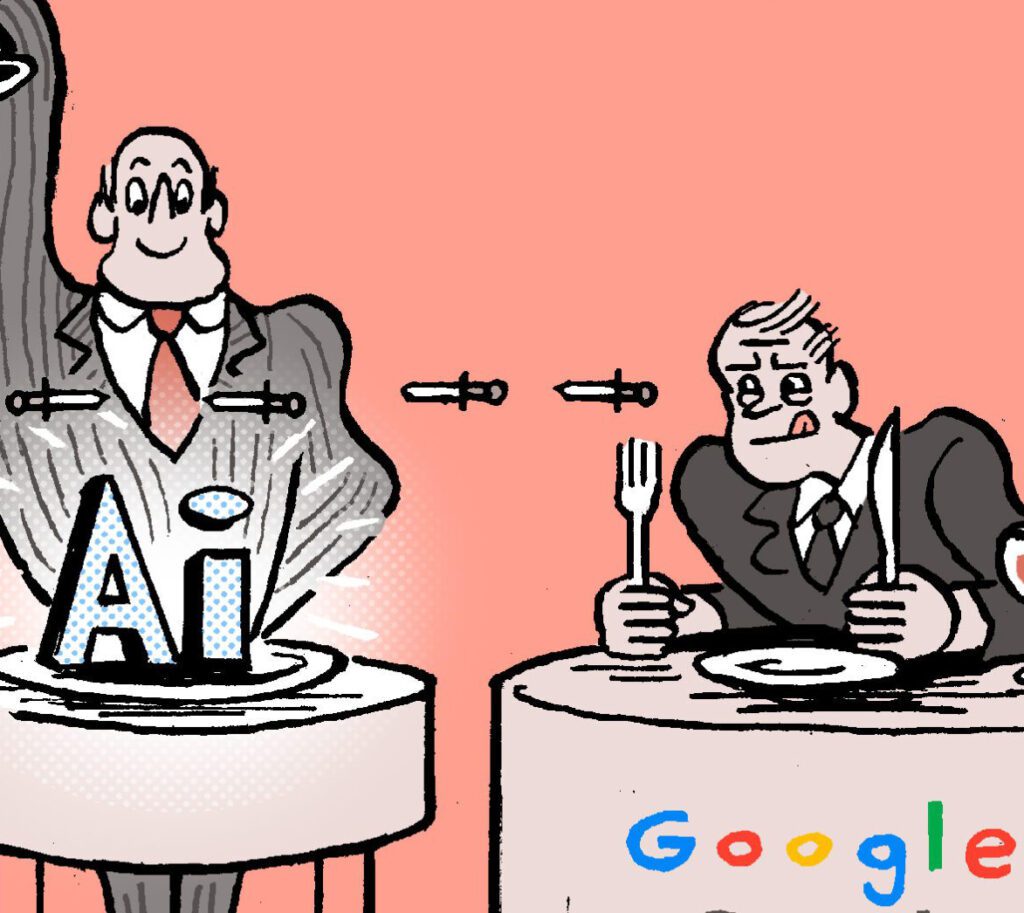
The price of ChatGPT ads is going down as OpenAI’s partners roll out incentives to drive adoption.
Criteo, which became OpenAI’s first ad tech partner in March, recently announced that it’s dropping its minimum investment requirement from $50,000 to $10,000 to “lower the barrier to entry and make testing dollars work,” per an email reviewed by Adweek. The company has also indicated that, in some cases, it may offer incentives to support advertiser adoption, although these are not standardized and vary by advertiser.
These moves come at a tricky moment for advertisers.
ChatGPT is becoming an increasingly valuable ad channel, having recently surpassed 1 billion monthly active users, and some buyers have started to see positive results. But the ad spend still feels like “putting money into a black box,” as Ben Kahan, head of programmatic at agency Brainlabs, puts it.
Brainlabs is one of the agencies using Criteo for its ChatGPT ad buys. The offering is “compelling,” says Kahan, because it lets brands funnel existing product feeds into OpenAI’s system, reducing manual work.
Still, he adds, “I don’t have control over the volume or the saturation until the end of the campaign.”
Guess better access doesn’t automatically mean greater control.
‘Generate Analytics’
This week was a quietly momentous one in the annals of online ad analytics.
Google introduced its first generative AI performance reports within the Search Console.
These reports span the dedicated AI Mode and Google’s AI Overviews. (AIOs are the generative answers shown atop traditional Google searches.) Reports can also be broken out for the traditional search page and the Discover page.
The reports include five key dimensions: impressions, pages, countries, devices and dates.
Impressions show how often your site appears in Search or Discover results. Pages identify the specific URLs cited in generative responses. Countries provide a geographic breakdown. Devices show which devices users are on when they click through from AI results. And dates track performance over time (as in, hour, day, week or month).
Until now, AI-driven search ad results have been folded into overall campaign reporting, making it difficult for advertisers – many of them publishers – to isolate performance or understand the scale of ads in AIOs or AI Mode.
But Wait! There’s More!
Asking ChatGPT and Claude where to stream TV and movies titles is basically a coin flip, new research suggests. [Forbes]
Even Google employees kind of hate Google’s AI products. [404 Media]
Social media and tech companies are beefing up their AI content labeling. But why don’t they let us filter that content out? [The Verge]
Warner Bros. Discovery might be planning to do more on YouTube – if Gerhard Zeiler, WBD’s president of international, has anything to say about it. [Deadline]
You’re Hired!
Ad optimization platform Pixability fills four executive roles related to customer success, the creator economy, data solutions and product marketing. [release]