


Just over three months after hitting pause on its original Nasdaq debut, Liftoff’s IPO lifted off on Thursday. (Hey, the pun was right there. We had no choice.)
The mobile app marketing and performance platform priced its shares at $23 a pop – just above its revised $20 to $22 range – and raised roughly $437 million. It now trades under the ticker symbol LFTO.
Back in February, the Blackstone-backed company had been aiming higher, with plans to sell shares at $26 to $30 and raise up to $762 million before shelving its offering amid a broader software and ad tech sell-off.
Liftoff is the first ad tech company to go public since CTV ad platform MNTN’s IPO last May. MNTN’s bumpy run as a public company has been a reference point for investors watching the ad tech sector.

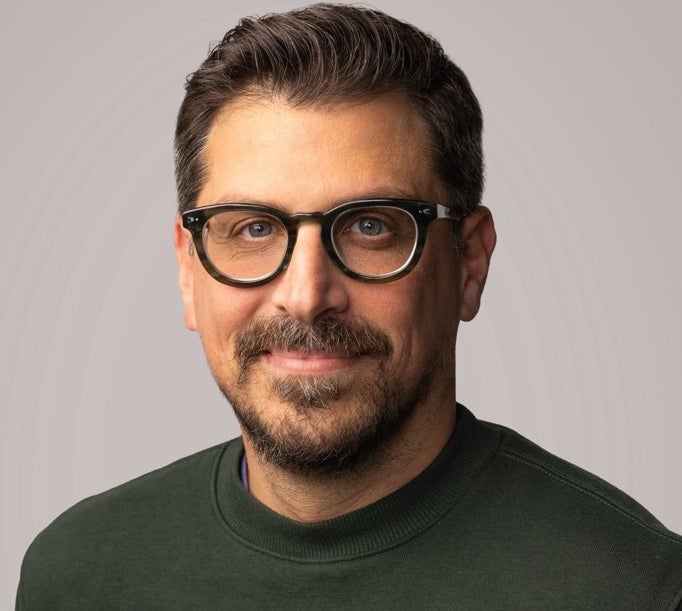
Against this backdrop, Liftoff COO Andre Tutundjian looks at Liftoff’s IPO through the lens of mobile and AI rather than short‑term stock moves.
“An important realization that’s been coming to light is that ad tech is one of the purest and truest ways that AI is delivering profits in the world right now,” Tutundjian told AdExchanger. “We’re not in the research phase or trying to figure out how to use this technology – it’s already delivering value to our customers now.”
Liftoff was founded in 2012 and merged with mobile video ad network Vungle in 2021 after Blackstone bought Vungle and took majority ownership of the combined business, with General Atlantic as a minority investor.
That deal put Liftoff’s user acquisition business together with Vungle’s mobile publisher monetization network, which now form the foundation for Cortex, Liftoff’s AI-powered platform that uses machine learning to optimize mobile ad campaigns.
AdExchanger caught up with Tutundjian on IPO day.
AdExchanger: Let’s start with the delay. Liftoff scrapped its first IPO attempt back in February. What changed between then and now?
ANDRE TUTUNDJIAN: It was a much more volatile period for the market and not the right moment to go out as a public company, because of what was going on externally. The market just wasn’t quite ready for it.
Since then, our business has done nothing but get stronger, and the market conditions have also changed. It’s a much more favorable environment now.
Investors – and journalists, I’ll admit – are always bucketing companies because we love comparison points. I’m sure investors asked you about AppLovin a bunch during your road show, including how Cortex is different from AppLovin’s Axon, which is their competing AI/ML bidding engine. How do you answer the differentiation question?
Liftoff was built from the beginning to be an index of the app economy and to serve the broader app ecosystem. We’re not focused on any one vertical. If you look at our customer base, it’s really a representation of the tastes and preferences of mobile consumers right now.
We sit between two big problems: app developers who want to monetize their users with ads and advertisers who want to find high‑quality users to download and engage with their apps. We operate in a third‑party app ecosystem with millions of apps and a lot of fragmentation, and our product is built to solve that discovery and monetization problem at scale.
Regardless of how those tastes and preferences change over time, our product is able to deliver value to our customers. We’ll always be an index across the app economy. That’s a huge differentiator for us.
Gaming has been Liftoff’s bread and butter, but where’s the next wave of growth coming from?
Gaming is the heart of the mobile economy. It was at the forefront of the transition from web to mobile, and it was the first category to really figure out how to deliver fun experiences and entertainment on a mobile device. Gaming is always innovating and it’s still a huge part of who we are.
But to see where things are going, just look at current world events. We have the World Cup coming up, the New York Knicks are in the NBA finals, and you just can imagine all the ways people interact with those things on their phone – opening up a prediction app, a scoring app or a social media app to talk about it. All three of those categories are our customers.
As those things evolve, and maybe new categories pop up around current events, we feel really good about our ability to be there for those customers as well.
You’re probably getting a lot of stock (no pun intended) questions right now. What do you wish people would ask you about that they’re not?
I think the tailwinds in our industry are understood, but not fully realized. There are a couple of metrics that help make that point. The average consumer is using their phone about three hours a day, but if you look at younger generations, they’re using their phone, like, seven hours a day.
There’s a comfort level now around doing everything on this device – banking on your phone, education on your phone – that didn’t exist before. These are really great tailwinds for our business and our sector.
Funny coincidence: I’m conducting this interview from my apartment in StuyTown-Peter Cooper Village – which Blackstone owns! The portfolio is so massive. But private equity also has what you might call a rep. How was it being owned by a PE firm?
There’s definitely a perception of private equity, but I can only go off of my own experience. Blackstone has been an incredible partner, very supportive and very trusting of the operating team to deliver on the vision we have.
Answers have been lightly edited and condensed.







