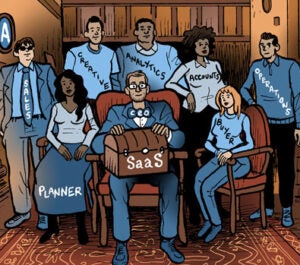
All Aboard On AppsFlyer; When TV Content Looks Like Commercials
Everyone’s investing in AppsFlyer; NBCU launches Rock Studios, a creative studio for brand integrations; and Meta wants to hop on the TV bandwagon.
Where will OpenAI put its ads?; YouTube may or may not be considered TV; and Uber and Lyft deals really are too good to be true.
Enjoy this weekly comic strip from AdExchanger.com that highlights the digital advertising ecosystem …
Amazon has third parties selling some of its ad inventory; Scope3 selling Adloox to Peer39 suggests sustainability is out; and “fabric” is the new AI-related buzzword for ad tech.
Meta AI is opening the door for hackers; Does performance marketing work for luxury brands?; and advertisers still don’t trust their agencies much.
Meta wants to own online communities; Ecommerce brands face old-school advertising scrutiny; Omnicom wants fewer ad tech middlemen.
Rather than fighting the rising tide of AI search engines and agentic tools, Microsoft AI’s Nikhil Kolar says publishers and retailers should license access to their sites and create content that speaks directly to AI crawlers.
Keywords, Kinda The tabs, they are a-changin’. As in, campaign analytics tabs and what they’re meant to show advertisers. The biggest shift has been the move from “analytics” to “insights.” “Analytics” used to mean detailed, exportable data that brands could plug into their own systems. “Insights,” by contrast, are curated summaries and useful-sounding takeaways about […]
Clipping can be lucrative, but can – and should – it last?; AI Max raises the stakes for advertisers; and the ANA introduces a new fee to fund Aquila.
People Inc. previewed plans to downsize by focusing mainly on its key properties. The strategy makes sense considering its publishing portfolio has lost about two-thirds of its Google traffic.
Amazon is optimistic about agentic commerce; the costs of AI may soon outweigh profits; and AMC Global Media thinks old shows deserve new ads.
With its new funding, commerce data platform Chord plans to help brands access their data more easily by unifying it within one platform.
A proposed standard under discussion at W3C aims to redefine how ad effectiveness is measured across the web. This proposal would centralize measurement of ad effectiveness under the control of Google, Apple and Meta.
Surprise! Platforms ignore users opting out of ad tracking; the marketing machine claims credit for Geese’s popularity; and Meta’s MAGA-friendly moderation makes an unforced error.
Measurement and performance are expected to dominate convos at upfronts; Tubi doubles down on AI; and Meta takes down ads encouraging anti-Meta lawsuits.
Now that we have not one but two reporters covering the CTV advertising space, we thought we’d try something different and share the roundup newsletter this week!
Netflix’s MLB streaming is heavy on the ads; the anti-AI movement gains traction; the court dismissed X’s antitrust allegations.
Can a good sales presentation offset the impact of a very bad news week? That’s a question for Meta, which collected two guilty verdicts in court this week for failing to protect children and creating additive products.
Should businesses start advertising on AI media platforms? Yes. But it depends on how consumers in your category are already using AI and how quickly your organization can respond.
Influencers aren’t all on board with shoppable ads; Americans are buying less makeup; and Madison and Wall predicts growth (unless everything falls apart).
There are more pharma ads on CTV, but are they even targeted?; Gen Z longs for the ad-free TikTok of yore; and Meta buys a social network for AI agents.
Sallie, the major issuer of US education loans, is getting into the retail media network business.
Netflix unveils a conversion API; some publishers are using AI tools to expand their footprints; and CFOs are getting more involved in marketing decisions.
Ad platforms are nixing credit card payments; LLMs are getting really good at unmasking online users; and McDonald’s offers a case study in how not to do organic social media.
Meta will now measure social interactions like likes, shares and comments under a new “engage-through attribution” category, replacing click-through as the default.
Enjoy this weekly comic strip from AdExchanger.com that highlights the digital advertising ecosystem …
59A develops brand algorithms by looking at both online and offline data points to determine who to reach and where to target them.
What’s the deal with viral apps?; Dentsu and WPP are off of OpenPath; and AI coding has its downsides.
A 2004 statute prevents owning enough TV stations to reach 39% of households. But without the scale afforded to other digital content companies, local TV is at a competitive disadvantage.
Brands allocating a sizable chunk of their marketing budgets outside of Google and Meta achieve the best customer acquisition costs, proving that diversification is a performance strategy.