Keywords, Kinda
The tabs, they are a-changin’.
As in, campaign analytics tabs and what they’re meant to show advertisers.
The biggest shift has been the move from “analytics” to “insights.” “Analytics” used to mean detailed, exportable data that brands could plug into their own systems. “Insights,” by contrast, are curated summaries and useful-sounding takeaways about campaign performance, often framed to highlight what’s working and nudge advertisers to keep spending.
In that vein, changes like dropping the word “Feeds” from Google Merchant Center, which happened in 2024, continued that trend of campaign reporting being a matter of presentation to an advertiser, not something that’s owned by the advertiser.
And here’s another example: Google Search reports will now contain keywords for clickthroughs, even if those specific keywords weren’t used. In some cases, the keyword listed in Google Search reports will be “the best approximation of the user’s intent,” according to a customer notification that went out this week, Search Engine Roundtable reports.
For instance, Google doesn’t report the actual prompts people use in AI-powered search features like AI Mode or AI Overviews, even when those interactions generate ad clicks. Auto-completed searches also aren’t reported exactly, and Google Lens – which lets users search with images instead of words – doesn’t involve keywords at all.
Paying Attention
There’s a rich metaphorical subtext to the way we in the ad industry talk about people (users, targets, fingerprints, etc.) and about attention, which is captured on the one hand and paid on the other.
This is at the heart of a worthwhile NYU commencement address by social psychologist Jonathan Haidt, published by The Atlantic.
These metaphors are useful for understanding the approach of large data-driven companies, Haidt argues. These companies rarely earn or deserve your attention; rather, they capture it. Attention is what feeds their monetization machines.
“Meta is valued at well over a trillion dollars, even though few of us have given it any money. How is that possible?”
Readers of this newsletter understand how that’s possible.
But Haidt’s point, too, is how surprisingly easy, even enjoyable, it can be for people to disengage from online platforms that capture and interrupt their attention – no more notifications, rabbit holes, news alerts, et al.
Attention, freely given, made Meta a trillion-dollar business. But what happens if that attention simply… goes away?
Relatedly, investigative journalist Julia Angwin published a Times column last week arguing that Meta has the stink of death about it lately, akin to AOL, Yahoo and other early web standouts.
Master Of None?
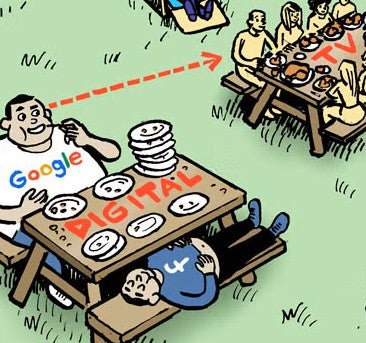
YouTube wants its fingers in every pie.
“We think TV budgets could be spent on YouTube. We think quote-unquote ‘social budgets’ could be spent on YouTube,” Sean Downey, president for the Americas and global partners at Google, said during the company’s upfront presentation on Wednesday, adding that discovery and performance budgets could also – you guessed it – be spent on YouTube.
So, how does YouTube plan to soak up all this money?
Its upfront presentation focused on AI offerings, as well as short-form video content (à la TikTok) and partnerships with creators.
One new AI tool, which is exclusive to upfront buyers, will find custom ad placements related to cultural events “that interest advertisers but aren’t on YouTube’s calendar,” the The Wall Street Journal reports. It’ll do this by identifying brand-suitable content related to an event that a brand might want to capitalize on, like a music festival.
But even with its big bets on live sports and awards shows, YouTube hasn’t articulated a clear strategy for integrating live programming with its predominantly on-demand video platform. Direct access to premium inventory “doesn’t exist” on YouTube, Jamie Gutfreund, founder of consulting firm Creator Vision, tells the Journal.
Instead, much of that responsibility falls to creators, many of whom are building their own media companies complete with their own sales teams.
But Wait! There’s More!
Artists searching for reference images on Pinterest say that the proliferation of AI-generated content has made the platform “borderline unusable.” [Aftermath]
By the numbers: A run down on ad tech’s quarter of mixed fortunes. [Digiday]
Google Analytics adds AI assistants as a default channel group. [Search Engine Journal]
Roblox just hired an Amazon exec to unlock its next phase of growth. [Business Insider]
Nectar Social, which makes AI agents for businesses to manage their social presence, raises $30 million in Series A funding. [Axios]
The IAB released its Campaign Data Standards for public comment. Feedback is due by June 14. [release]
You’re Hired!
AI-native ad infrastructure company Thrad appoints Roger Dunn as chief commercial officer. [release]
Mar tech provider Site Impact brings on Ron Merritt as CRO. [release]
Here’s today’s AdExchanger.com news round-up… Want it by email? Sign up here.