Everything Old Is Netflix Again
Live TV on Netflix? What’s next, commercials?
(Oh, wait.)
In an effort to reinvigorate subscriber engagement, Netflix executives are considering live channels that would continuously stream certain programs or genres, The Wall Street Journal reports.
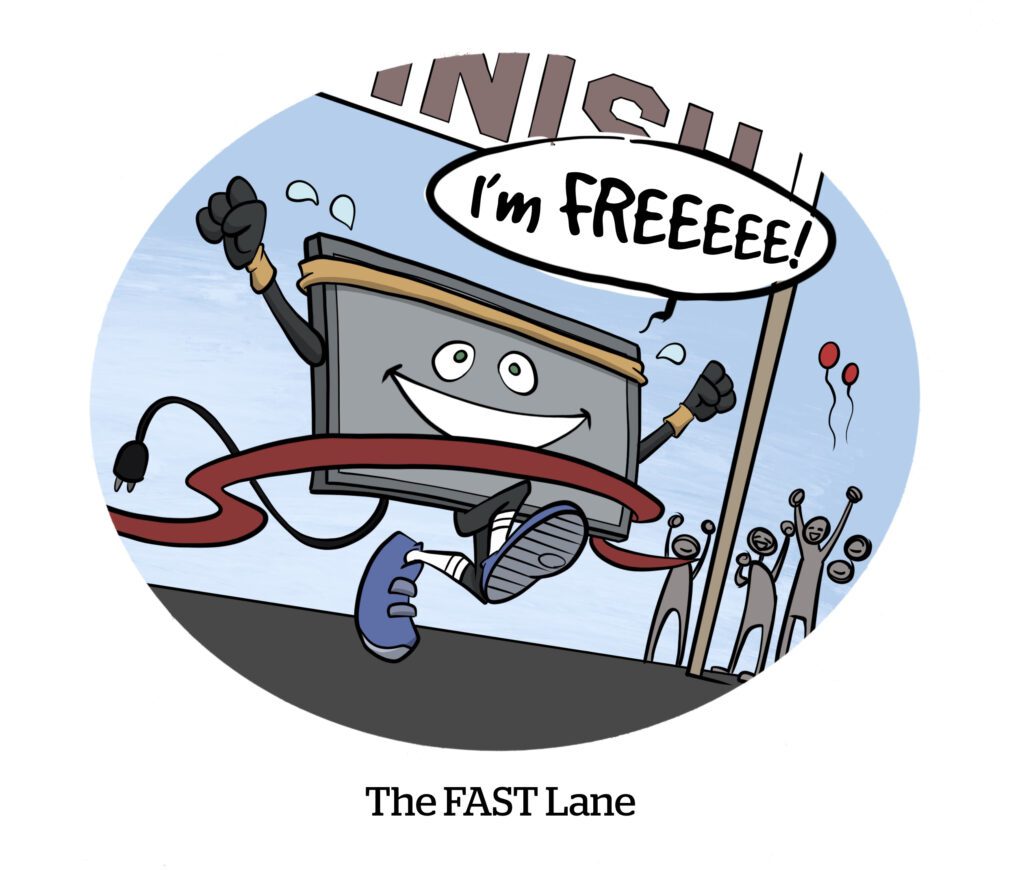
The WSJ doesn’t confirm whether these channels will contain ads but, presumably, they’d only be for Netflix subscribers, which means they wouldn’t quite fit the official definition of FAST programming. (Maybe just AST, then?)
Regardless, Netflix still expects to double its ad revenue this year, and linear TV’s live, unskippable inventory would certainly contribute to that goal.
Netflix’s other ongoing engagement-boosting strategies mainly include licensing more low-cost and short-form content, such as UGC posts or video podcasts from publishers like BuzzFeed and Condé Nast. After all, a bespoke channel that marathons Netflix-exclusive originals would likely offer material that isn’t already available for free on YouTube.
Then again, for many streamers, engagement isn’t necessarily about having more new content to offer users; it’s about keeping them on the platform once they’re there. So if Netflix believes it’s losing viewers to YouTube or FAST platforms like The Roku Channel and PlutoTV, why not just copy the competition?
Say Goodbye To Spamalot
Are fraudulent ads finally a relic of bygone times?
Well, not quite yet. But scammy ads may be on the outs. On Friday, Ofcom (the UK’s regulatory and competition authority for communications) proposed a set of laws that would hold social media platforms and search engines accountable for hosting scam ads, The Guardian reports.
Rather than giving scammers warnings, Ofcom’s new system would mandate a “‘one strike and you’re out’ approach,” The Independent reports. Ofcom also proposes setting up designated law enforcement channels for pursuing spam ad perpetrators, as well as ensuring that banned users, as in known former scammers, can’t set up new accounts.
Rocio Concha Galguera, head of policy and advocacy for consumer advocacy org Which?, alleges that social platforms treat scam ads as a “profitable income stream” rather than a problem. So holding platforms accountable is as important as calling out individual bad actors.
Indeed, Ofcom’s announcement came on the same day that the EU charged Meta with breaching rules designed to prevent addictive social features and infinite scrolling. If upheld, Meta could face fines of up to 6% of global revenue per platform. (Instagram and Facebook are cited separately.)
Don’t AI Me
Speaking of Meta, the social media giant faced scrutiny last week over more than just scammy advertising.
On Tuesday, Meta released its new Muse Image AI model within Meta AI with a feature that allowed users to generate AI likenesses of any other adult user with a public-facing Instagram account. Users would not be notified when someone did this, and people had to manually opt out of having their images used for this purpose.
Meta ended up retracting the feature late on Friday, citing “feedback that this feature missed the mark.” That feedback, of course, took the form of immense backlash from privacy advocates, cybersecurity experts and users alike.
For example, Jake Moore, a global cybersecurity advisor at ESET, told Forbes that the feature would likely make it easier for scammers and criminals to impersonate unsuspecting people. Meanwhile, SAG-AFTRA urged its members to opt out on the grounds that this feature co-opts the image, likeness and work of actors and other creators without consent.
It’s interesting to note that many of these objections tie back to the problem of Meta’s scam ads. Celebrity deepfake testimonials are already a pervasive problem and, surely, having an in-platform tool for easily generating this type of content would only make the issue worse.
But Wait! There’s More!
OpenAI’s ads business may be taking off, but it’s getting out of the browser game. [The Verge]
The ad industry’s next “mediapalooza” may be imminent. [Digiday]
Netflix may be in talks to buy movie review platform Letterboxd. [Variety]
Publishers are preparing to opt out of Google Search. [Adweek]
DuckDuckGo’s web browser will now automatically block YouTube ads. [Mashable]
Behind the fake AI subway ads that recently went viral. [Bloomberg]