
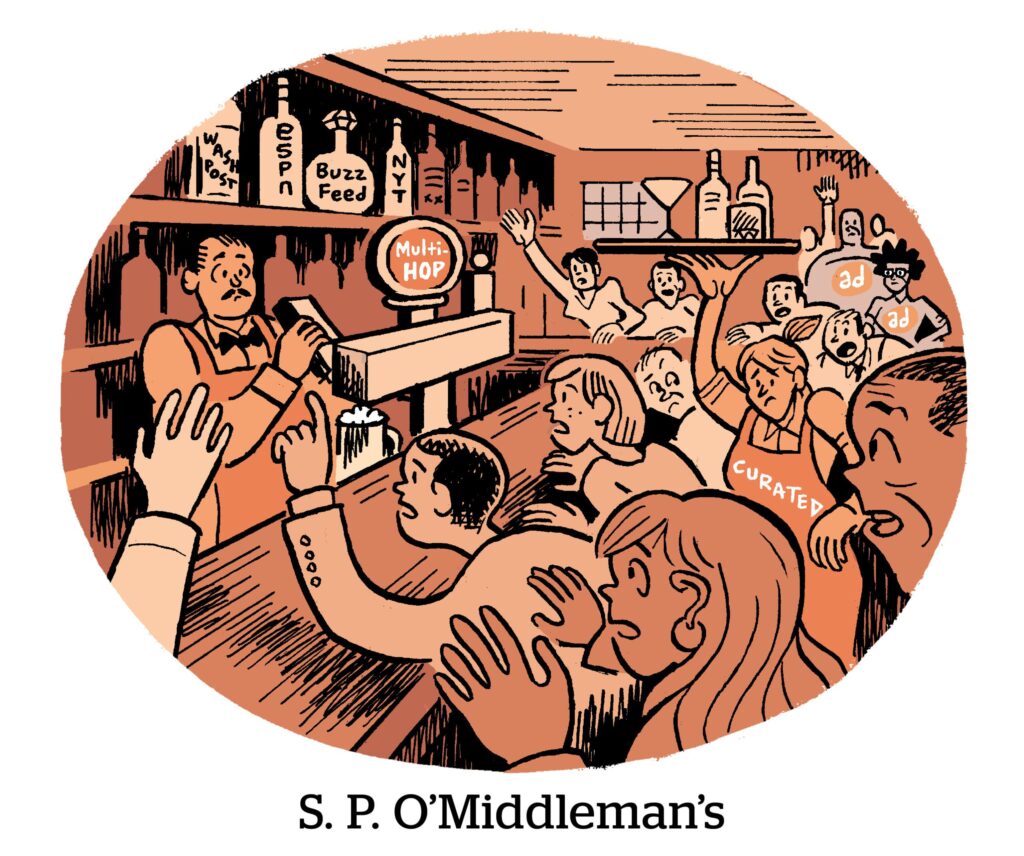
Social Butterflies
Meta quietly launched an app called Forum this week, which the company says is “built for deeper discussions, real answers and the communities you care about,” reports Social Media Today.
This news may seem like a nothingburger on the surface, but it’s interesting for a couple of reasons.
First, it’s yet another example of Meta’s ability to simply make fetch happen, so to speak.
Take Threads, another Meta satellite app that’s also a shameless replica of the one-time Twitter, which launched in 2023 to soak up users who departed Twitter after Elon Musk’s takeover. Threads has zero social cache, yet still boasts 400 million users and is a massive canvas for advertising.
Now go back and reread Meta’s framing of the Forum app. That’s Reddit! But why is Meta launching a Reddit clone?
Well, Google’s latest Core search updates have explicitly favored “forums,” “communities” and “authentic reviews,” which corresponds with the increasingly close relationship between Google and Reddit.
The other reason Forum is interesting is that Meta isn’t the only platform making a quiet move in this direction. AppLovin recently released an app called Gist with little fanfare that seems aimed at attracting lifestyle and travel influencers. The apparent goal is to establish a foothold in vertical, feed-based social content.
But while AppLovin is trying to carve out a niche, Meta, as usual, wants to own the whole category.
Seller Door
As ecommerce and social-native brands grow up, they run into incumbents – and the rules that govern more mature channels like TV and brick-and-mortar retail.
The latest example is a lawsuit brought by multiple pan manufacturers (“Big Cookware”), who allege that ecommerce brand Caraway has harmed them with marketing claims about the toxicity of other nonstick cookware, Wired reports.
Caraway doesn’t name other brands, but the incumbents say the upstart is poisoning the well for everyone by relying on shoddy or nonexistent science.
Meanwhile, Williams-Sonoma filed a suit against Quince late last year for allegedly marketing dupes of its products.
But these disputes aren’t always between incumbent brands and DTC rivals. Sometimes, social brand startups sue one another over false influencer claims. Yet another variety is legacy brands suing private-label retail lines, like J.M. Smucker suing Trader Joe’s over its peanut-butter-and-jelly Uncrustables knockoff or Mondelēz suing Aldi over a blatant Chips Ahoy! clone.
Taken together, all of these lawsuits are evidence that the Wild West antics of social media marketers won’t fly once ecommerce brands move into mature channels like retail and TV.
DTC? More Like DTP
Many of the biggest names in ad tech – notably The Trade Desk, but also other DSPs and buy-side intermediaries – now want direct connections with publishers and media sellers rather than route deals through resellers.
But no company is pushing for fewer pipes as aggressively as Omnicom, Digiday reports.
As part of the holdco’s ongoing plan to reduce middlemen ad tech costs, Omnicom is holding closed-door talks with publishers about actively shortening the media supply chain. One exec tells Digiday they’ve “never heard an agency so openly admit” as much.
However, so far, these conversations have been just that – conversations. Publishers are accustomed to agencies claiming they’ll do right by them and aren’t particularly convinced by Omnicom’s new rhetoric, even if it’s refreshingly frank. (Or, perhaps, uncomfortably frank, depending on where you sit in the supply path.)
But there’s a new factor here that has nothing to do with monetary support for publishers. Omnicom is investing heavily in agentic media buying, which requires a less convoluted supply chain if it’s going to work. Meaning, Omnicom now has a vested interest in direct deals regardless of whether those deals benefit publishers.
But Wait! There’s More!
Here’s what marketers are actually worried about behind closed doors, according to this year’s TV upfront presenters. [Adweek]
How AI Overviews on Google Search already appear to be changing user behavior. [Search Engine Journal]
Spotify is now producing audio narration of long-form articles from Rolling Stone, The Atlantic and other publications for $1.99 a pop. [Spotify]
Pope Leo’s first papal encyclical calls for government regulation of AI companies, as well as protections against “dependencies and commercialization” of the technology. [NYT]
AI gets facts wrong way more often than most people assume, according to Wired’s official fact-checker. [Wired]
What happens to a company when co-workers go to LLMs for help instead of one another? [Business Insider]
You’re Hired!
Hallmark Media promotes Jon Sichel to head of distribution and business affairs. [Media Play News]
Following its acquisition of mParticle last year, Rokt appoints former mParticle leader Sam Dozor as CTO. [release]







