
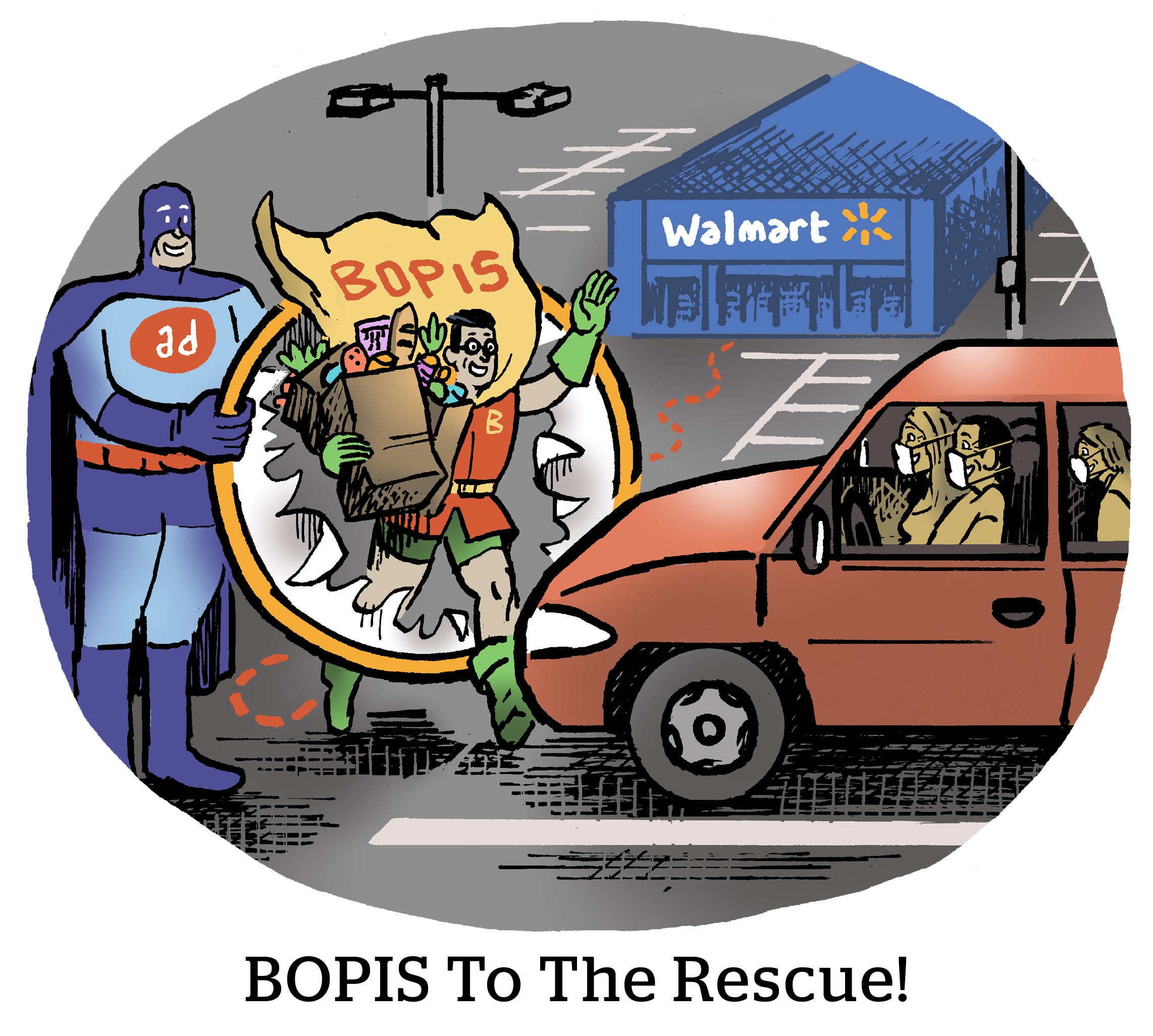
Walmart’s Gamble
Wall Street considered Walmart’s OpenAI shopping integration with ChatGPT a big win.
But this AI partnership could threaten Walmart’s other big bet on retail media, writes Mike Shields at Next in Media.
In announcing the deal, Walmart CEO Doug McMillon said, “For many years now, ecommerce shopping experiences have consisted of a search bar and a long list of item responses. That is about to change.”
But retail media ads are effective because they appear in such long lists of products, Shields argues. If purchase suggestions become tailored by AI chatbots, doesn’t that mean fewer opportunities for consumers to see ads for alternatives?

Besides, Shields says, the idea of an impartial AI shopping assistant feels incompatible with the Walmart deal. Will Walmart be ChatGPT’s preferred retailer, for example, even if its prices are higher?
Yet, although AI shopping could dampen retail media, “it could just as easily drive retail media growth if AI search leads to more ecommerce activity overall,” according to commerce media consultant Andrew Lipsman.
Okay, fine. But if consumer habits shift away from search and toward personal assistants, Shields argues, Walmart could find its retail media revenue stream – which carried the retailer’s ads business to 46% growth in Q2 – starting to run dry.
Let’s MRC What’s New
Last week, the Media Rating Council announced updates from its July-September accreditation period, including a handful of noteworthy changes.
Snap sought MRC accreditation, but was denied in its bid for certification for its viewability metrics, clicks (formally called swipe-ups), paid reach and video duration-related metrics.
Meta’s accreditation was revoked for content-level brand safety on Facebook and Instagram, Adweek reports. Although, that’s sort of a who-dumped-who-first-type scenario, because Meta has opted out of the MRC’s accreditation program entirely.
GumGum, likewise, had its brand safety accreditation revoked due to withdrawal from the MRC program.
(For those who might be wondering about all these opt-outs, accreditation is quite expensive.)
Walmart Connect fared better, though. It picked up MRC creds for “first-party click and impression metrics for Sponsored Search.”
Guess some folks still find the MRC seal is worth the dough.
No Kidding Around
Youth sports streaming is evolving into a standalone media and technology sector, fueled by increased marketing investment in younger age groups, The Information reports.
Apps like Hudl, GoRout and GameChanger, which was acquired by retailer Dick’s Sporting Goods, have software for managing teams and stats, as well as subscription streaming services for high school-age sports games. Oh, and of course there’s a free, ad-supported tier, too.
This cottage industry of high school sports streaming tech and media – which Bain (an investor in Hudl) now estimates to be worth around $12 billion – took off during quarantine periods in 2020 and 2021 when schools and sports clubs got sold on the services.
But the big catalyst was the NCAA’s 2021 shift (upon court order) to allow player sponsorships. Players, coaches and parents have become invested, quite literally, in their kids’ clips being picked up on social media.
“There’s more money. It’s trickling down deeper and younger. And so the stakes are higher,” says Alex Michael, managing director at investment bank LionTree, which has brokered several youth sports tech deals.
But Wait! There’s More!
AI copyright concerns among brands are opening up new business opportunities for ad agency legal departments. [Digiday]
Lobbyists are trying to reverse an 80% cut in federal funding for Brand USA, a marketing agency created by Congress to promote the US as a travel destination. [WSJ]
How the potential explosion in AI-generated ad creative could balloon creative testing costs for brands and break testing models. [Mobile Dev Memo]
Meta introduces new controls that let parents shut off teen access to AI character bots entirely and restrict access to specific chatbots. [blog]
In other Meta AI news, a new opt-in Facebook feature suggests edits to images stored on a user’s device and recommends images to share with friends – even if they haven’t been previously posted on Facebook. [blog]
Thanks for reading AdExchanger’s Daily News Roundup. Want it by email? Sign up here.









