Streaming audio and podcasts are already a consumer staple. But advertisers still spend relatively little of their budgets on podcast and streaming music ads, while programmatic workflows and automation have yet to close the gap between ad spend and audience engagement.
Today, digital audio represents about 30% of media consumption for the average American adult, according to research by GWI, the consumer insights platform formerly known as GlobalWebIndex. But audio attracts 3% of annual US ad spend, according to eMarketer. Those numbers were cited (multiple times) by Taylor Ash, VP of inventory partnerships at The Trade Desk, during an audio-focused OpenForum event hosted by the company in New York City on Tuesday.
Because of that disparity between consumption and ad demand, “no digital media earns fewer ad dollars per hour spent than digital audio,” added Catie Birmingham, TTD’s senior manager of research and insights.
But despite major programmatic platforms like The Trade Desk throwing their support behind streaming audio – and TTD predicting back in 2024 that the imbalance between audio ad spend and engagement would soon reverse itself due to greater programmatic adoption – buyers have been stubborn to invest more in the channel.
It’s not necessarily a tech problem, though. The programmatic pipes have been laid for years. And the platforms have made their sales pitches to advertisers.
So what’s missing?

For one thing, podcasting isn’t ideal for programmatic because advertisers (and podcast producers) often prefer host-read ad segments, rather than programmatically inserted ads that target the listener.
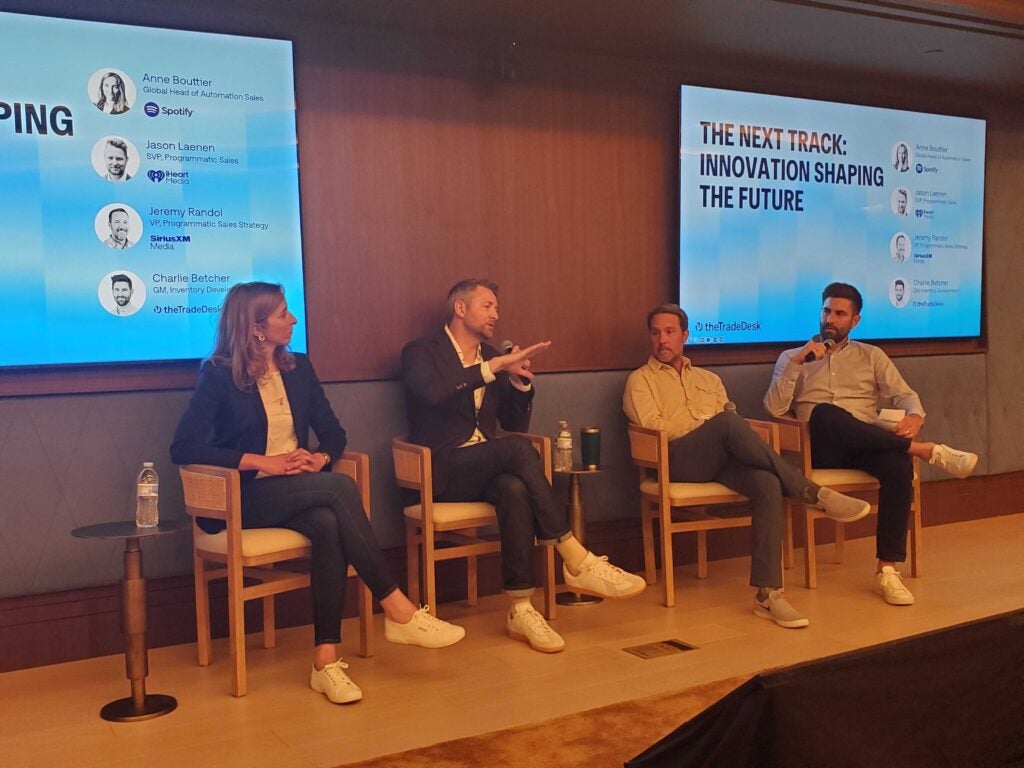
Also, digital audio must become more deeply embedded within agencies’ campaign planning systems, said Jeremy Randol, VP of programmatic sales strategy at SiriusXM Media, during a panel discussion at the event.
Upstream planning
To be fair, there have been some strides made in growing digital audio ad budgets, including for programmatic.
TTD’s Birmingham pointed out that digital audio ad spend has grown between 5%-7% each of the past three years and will surpass $8 billion this year, according to eMarketer. And digital audio spend on TTD’s platform has grown by about three times the industry average for each of the past three years.
Despite these gains, though, digital audio is “oftentimes an afterthought” for advertisers, Randol said. However, given that “consumers are consuming audio four hours a day,” he said, advertisers should be thinking about audio in the same way they think about other high-engagement channels, like social media and streaming television.
Randol said that SiriusXM is “fighting” to get into agency planning tools, where it will be considered a more default part of the ad commitment, rather than something tacked on for a particular campaign or purpose.
SiriusXM has made some progress on that front, Randol said, including a recent integration with VideoAmp, which serves as a planning tool for some agency buyers. And, he added, there’s momentum around the major digital audio platforms directly integrating with programmatic partners and emerging AI-driven workflow solutions.
“All of us are integrated with every major DSP,” Randol said, referring to the big streaming audio platforms, including his fellow panelists from Spotify and iHeartMedia. “We’re starting to swim upstream in planning.”
Plus, agentic buying tools also tend to have an omnichannel approach with streaming audio included from the ground floor, he said.
Anne Bouttier, global head of automation sales at Spotify, reinforced his point of view.
During the runup to this summer’s FIFA World Cup tournament, she said Spotify has “seen planners think about audio in a way that’s super strategic, super layered, and that’s definitely a variation versus what we have seen 18 months ago.”
For instance, she said, there’s been more buy-side interest in programmatic guaranteed deals and always-on campaigns to get brands into the conversation around the World Cup without committing to a super-pricey sponsorship of the tournament itself.
Podcasts and sports radio segments also let brands get into the conversation in a way that surpasses online banner ads or social feeds where the topic flits from second to second.
The call to get audio embedded earlier in the campaign planning process resonated with at least one representative from the buy side who also participated in a panel at The Trade Desk’s event.
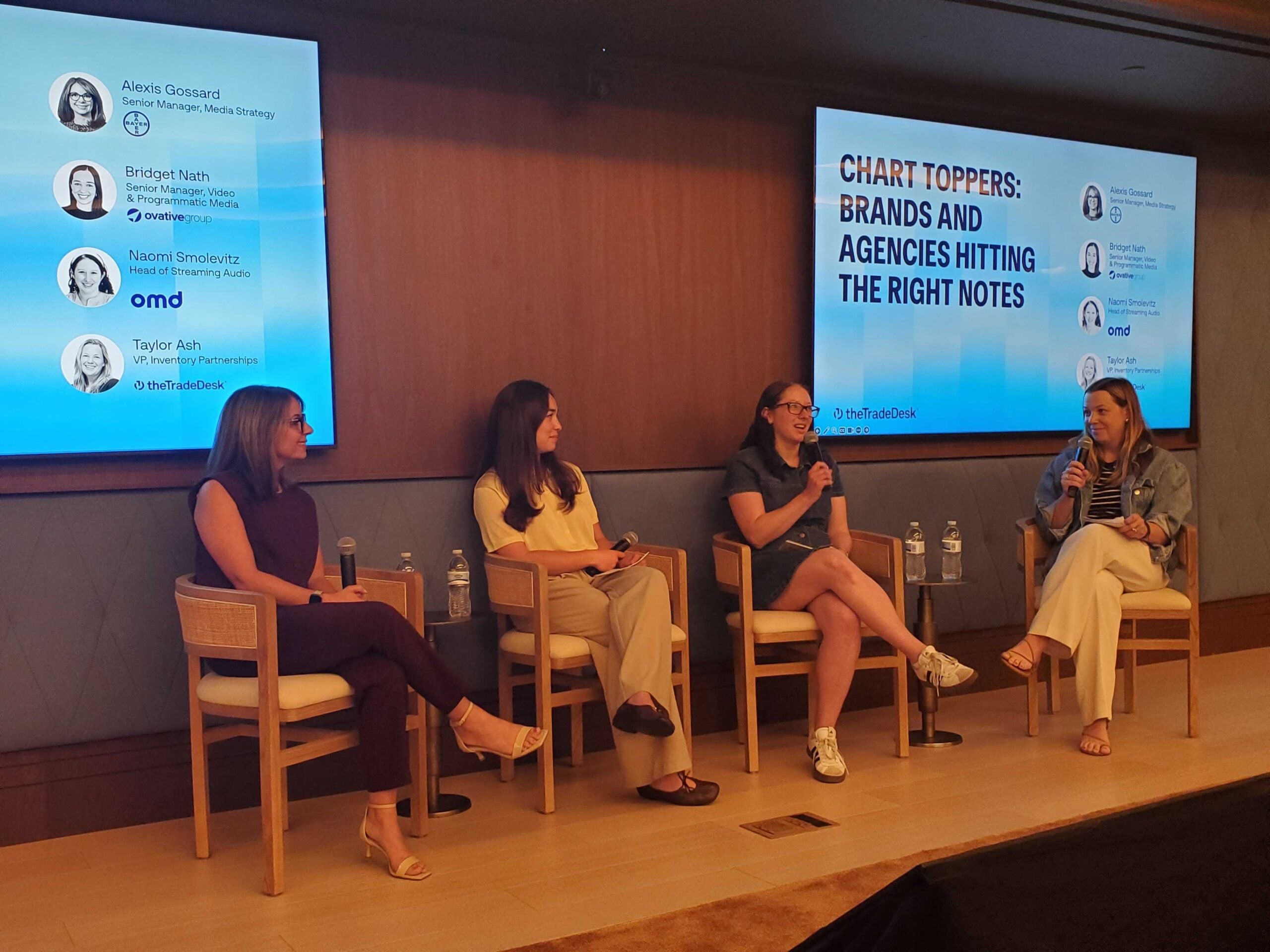
“We need to get the audio data further up in the planning cycle, get it into our proprietary agency tools,” agreed Naomi Smolevitz, head of streaming audio at OMD. That way, she said, “the planners are already thinking about it and can partner with us to get more audio on these buys.”
The omnichannel planning play
Meanwhile, are you even a channel if you aren’t in the omnichannel?
Audio is often considered a standalone, not part of the whole digital media mix.
Randol said that, from SiriusXM’s point of view, advertisers don’t see the full value of the streaming channel because it isn’t seen as a discrete medium. He said that streaming audio is often lumped in with terrestrial radio as part of an all-encompassing audio bucket.
Instead, streaming audio platforms with greater data to bring to bear for measurement want to be considered alongside other digital channels like CTV, online video and display.
That same problem is part of the reason why audio platforms are now producing more video content, which gets them consideration in omnichannel campaign strategies, Bouttier said.
Advertisers generally use the same programmatic tools to measure and buy audio and video campaigns, she said. And advertisers are already well versed in using these tools across multiple media channels.
“Audio leans into the same programmatic pipes, same DSPs, same identity and measurement frameworks as video, display and CTV formats,” she said. “It’s never been easier for planners and buyers to think about audio as part of omnichannel.”