


Supply-side platforms (SSPs) are reframing their vision around publisher deal curation, while DSPs are trying to build direct publisher paths of their own.
Which means pubs have far more programmatic pipes to maintain.
To deal with this (familiar) issue, publishers at AdMonsters’ Sell Side Summit in Fort Lauderdale, Florida, this week agreed that it’s as important as ever to focus on ad tech vendor partners that offer the best yield and transparency.
Just because curated private marketplaces (PMPs) and direct-to-DSP deals are trendy doesn’t mean they should be the focus of every publisher’s tech stack today, according to multiple presenters and attendees.

However, a few presenters emphasized that curation and direct DSP connections are a foundation for a long-term strategy, rather than short-term gains.
New SPO concerns
A condition for reporters and others to attend Sell Side Summit is that the presentations and group discussions be on background, so everyone can speak freely. Although some in attendance agreed to go on the record.
But with that offer of anonymity, very few punches were pulled. For instance, there was plenty of real talk about the value of direct-to-DSP connections like The Trade Desk’s OpenPath.
Publishers should compare solutions like OpenPath to their SSP integrations, said Jeremy Gan, EVP of advertising at Daily Mail.
Currently, 14 or 15 SSPs drive 90% of publisher revenue, Gan said. That means direct DSP connections are “just a trickle” of the remaining 10%.
It is intuitive to think buyers and DSPs would orient their supply chain for the most direct routes to inventory, Gan said, but it’s not how things always work in practice.
However, he added, these DSP connections ultimately bring pubs closer to buyers and make marketers a part of a publisher’s long-term monetization plans. He half-joked, “If you’re a DSP that wants to integrate with me, you’re in.”
Another major news publisher, The Guardian, saw The Trade Desk’s OpenPath become one of its top three SSPs just a few weeks after integration, said David Strauss, VP of revenue operations and strategy. So going direct to DSP is already paying dividends for some news publishers.
Meanwhile, Gan said, digital media companies should be more opportunistic about which SSPs they work with outside the 90% pool.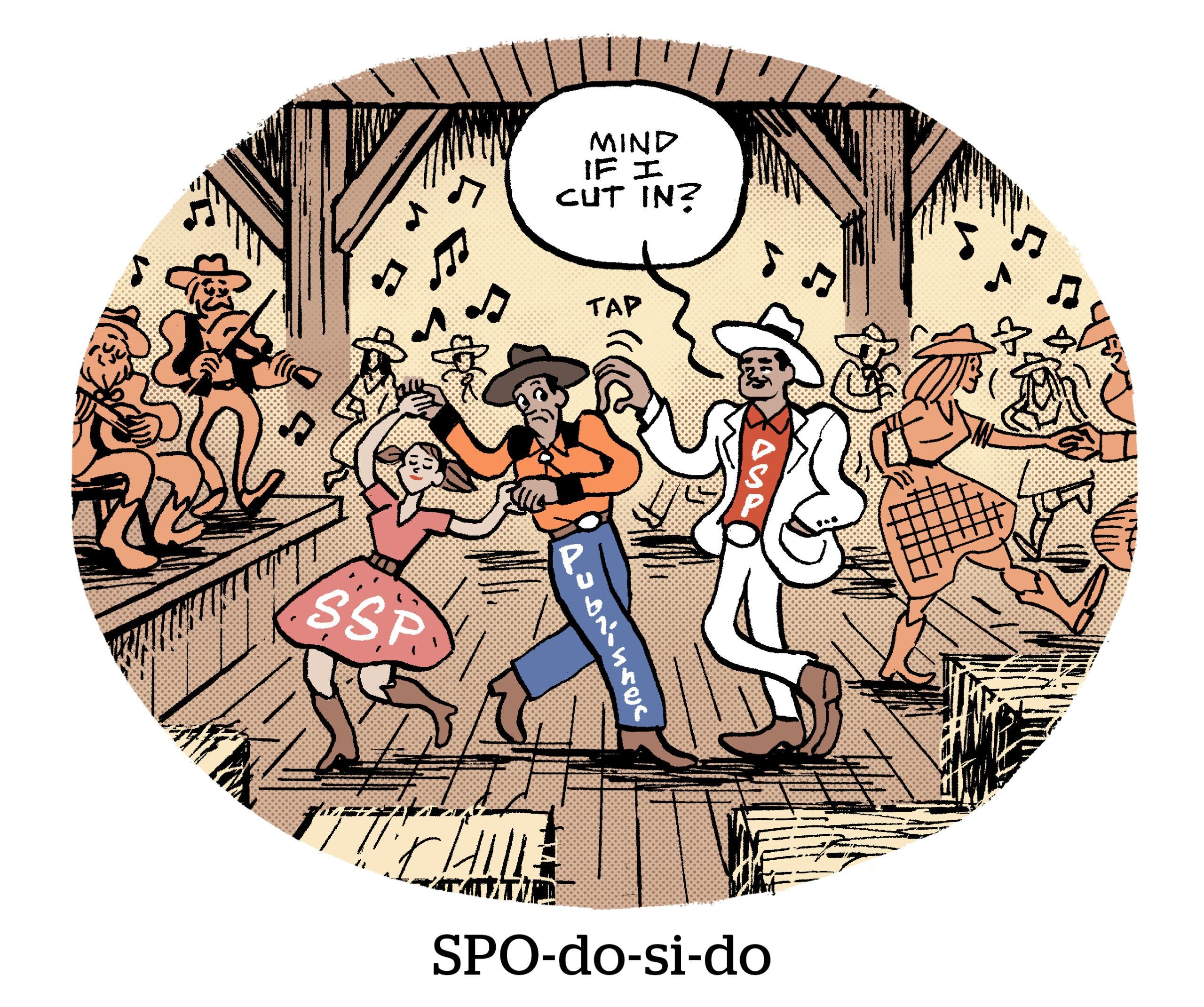
For example, Daily Mail considers whether smaller SSPs have strong footprints in markets where the publisher doesn’t have a sales team. But that needs to apply to multiple markets, he said, because the company won’t work with SSPs that are only strong in one region.
Curation is hot, but needs more transparency
Given the candid, no-quotes atmosphere, plenty of publishers jabbed at the ad tech topic du jour: sell-side curation.
A few presenters made the usual cracks about curation being a warmed-over version of the ad network model. One executive at a large ad network joked that they were from “a big curator.”
Japes aside, publishers also made pointed critiques regarding how curated deals are set up.
An ad ops exec who uses two prominent DMPs for curation took issue with how inventory that’s included in some curated deals may not get exposed to open auction demand.
The ad ops exec highlighted how one of their DMPs, Audigent, requires that a type of PMP it offers, called Premium Priority Deals (PPDs), take priority in the publisher’s ad server. That means, if a bid for the PPD package clears the publisher’s price floor for PPD deals, then open-market bidders would not get a chance to bid on the inventory.
When asked to comment, Audigent said that PPD deals need to be prioritized in the auction to give buyers that have programmatic guaranteed deals in place with the publisher preferred access to some of its inventory. So, while the CPMs for PPDs may be lower than the publisher would get from an open-auction bidder, the PPD buyer will buy more inventory over time than the open-auction bidder would, meaning the publisher ultimately gets more revenue.
Still, that setup seems to contradict an emerging pro-curation talking point, that curated deals generally work on net bidding. Net bidding means that if a curated bid via a PMP wins the auction, then there wasn’t a higher bid available.
But Audigent’s PPDs don’t let higher open-market bids compete if a guaranteed buyer makes an acceptable bid. And some publishers aren’t comfortable with seeing less open-market competition for parts of their inventory.
Even so, curated deals are a growing demand channel, so it makes sense for most publishers to prioritize them, said Linda Chen, senior director of ad strategy and operations at Chegg. However, she stressed, publishers should understand how these deals are set up and pressure their partners for improved campaign transparency.
While curated PMPs and DSP direct deals are trending upward, Chen said, working with resellers is a bad long-term bet. Although some resellers deliver solid yield right now, she said, agencies say they’re swearing off media buys via resellers.
Indeed, ad agency Goodway Group recently began prioritizing direct connections like OpenPath and Yahoo Backstage while trying to work with as few SSPs as possible to deliver on its buys, said Chief Media Officer Stephani Estes during her keynote presentation at Sell Side Summit.
So, Chen said, keeping resellers in your stack risks having what appeared to be a steady revenue stream dry up in a year or two, if not sooner.









