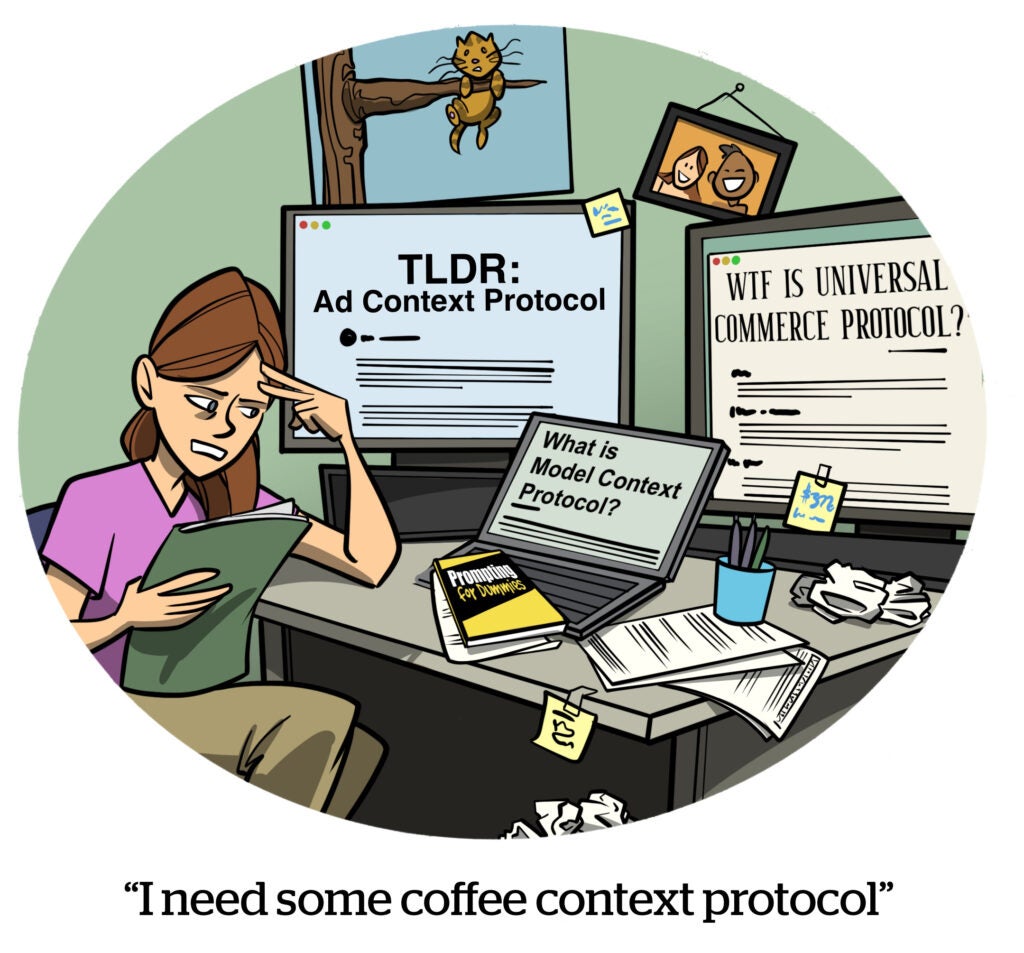
If there are two things ad tech isn’t short on, it’s acronyms and, more recently, AI product demos. But MCP – short for Model Context Protocol – is more than another TLA (sorry, three-letter acronym) or AI buzzword.
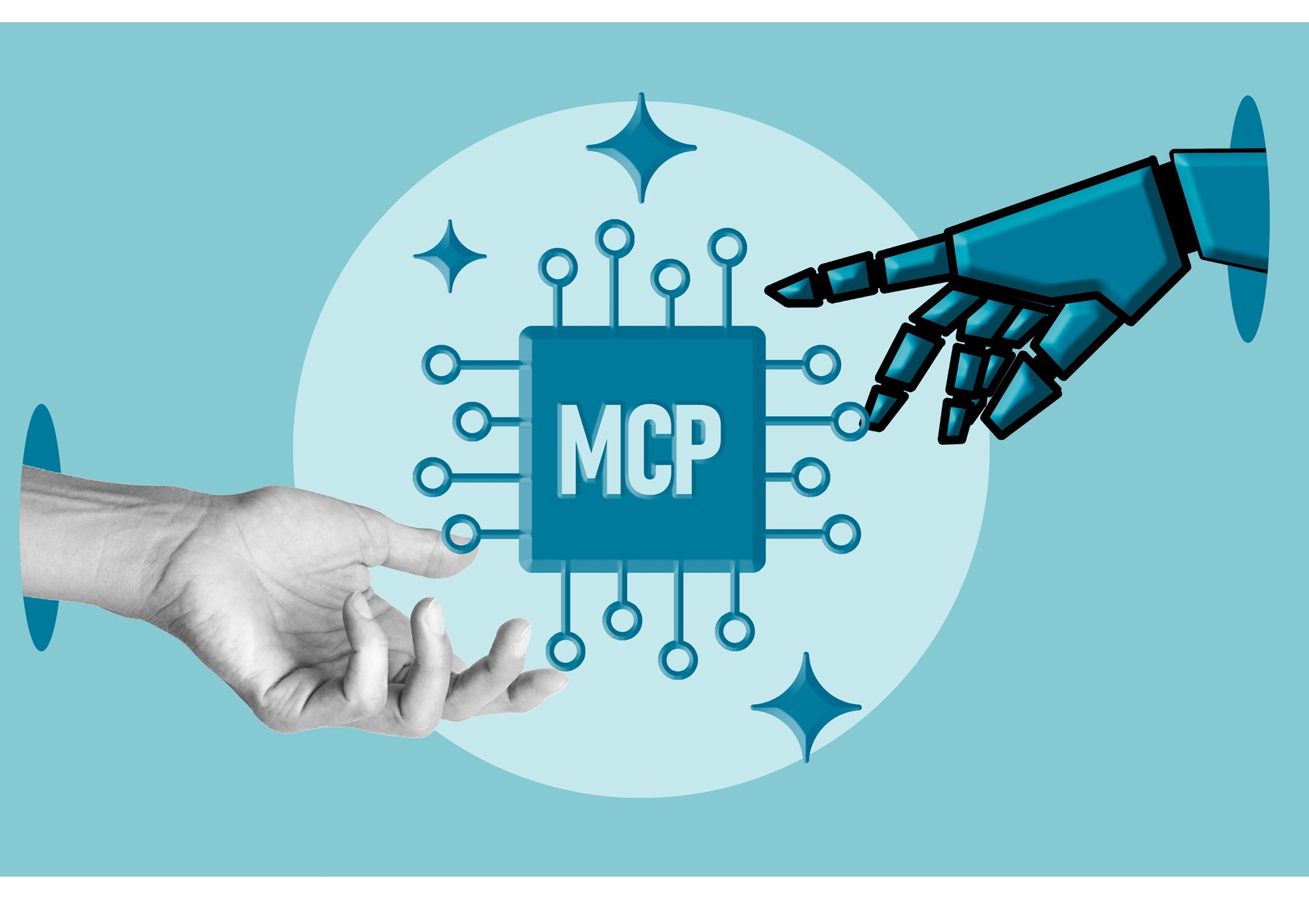
Metaphorically speaking, it’s plumbing for AI: the piping that lets large language models connect to other software in a predictable and controlled way.
In practical terms, it’s a specification, which was developed by Anthropic and open-sourced in late 2024, for how models interact with other software so AI can perform tasks across different systems, like pulling data and kicking off processes. It lays out which tools a model is allowed to use, how to call each one and where the limits are, meaning developers don’t have to build a new one-off integration for every use case.
Instead, developers define which actions their software can perform using the MCP standard format, including what data each action touches. AI systems can then string those actions together – for example, “pull a report,” “create an audience,” “send a message” and then “launch a campaign” – to complete a workflow.
That’s the base layer, and we’re already starting to see industry-specific protocols built on top.

AdCP, WebCP and UCP all use MCP as their underlying transport, but each one speaks to a different set of jobs. AdCP is for advertising workflows, such as campaign setup and bidding. WebCP is for web actions and navigation. And UCP is for commerce use cases, all the way from product discovery to checkout.
Without MCP, each of these would need its own custom integrations – but with it, they can all plug into the same agent ecosystem.
 Why ad tech needs MCP
A good mental model for thinking about MCP is “as a way for AI to remember where it is and what it’s doing instead of treating every question and prompt like it’s brand new,” said Jason Alan Snyder, former chief AI officer at IPG-owned Momentum Worldwide and now co-founder of health-focused data startup SuperTruth.
Memory and orchestration are what’s missing from a lot of the AI offerings you see in ad tech today. They tend to live inside single tools instead of spanning the full workflow.
But campaigns aren’t single prompts; they’re the result of long chains of decisions and iterations across planning, activation, optimization and reporting, often spread across a dozen different platforms.
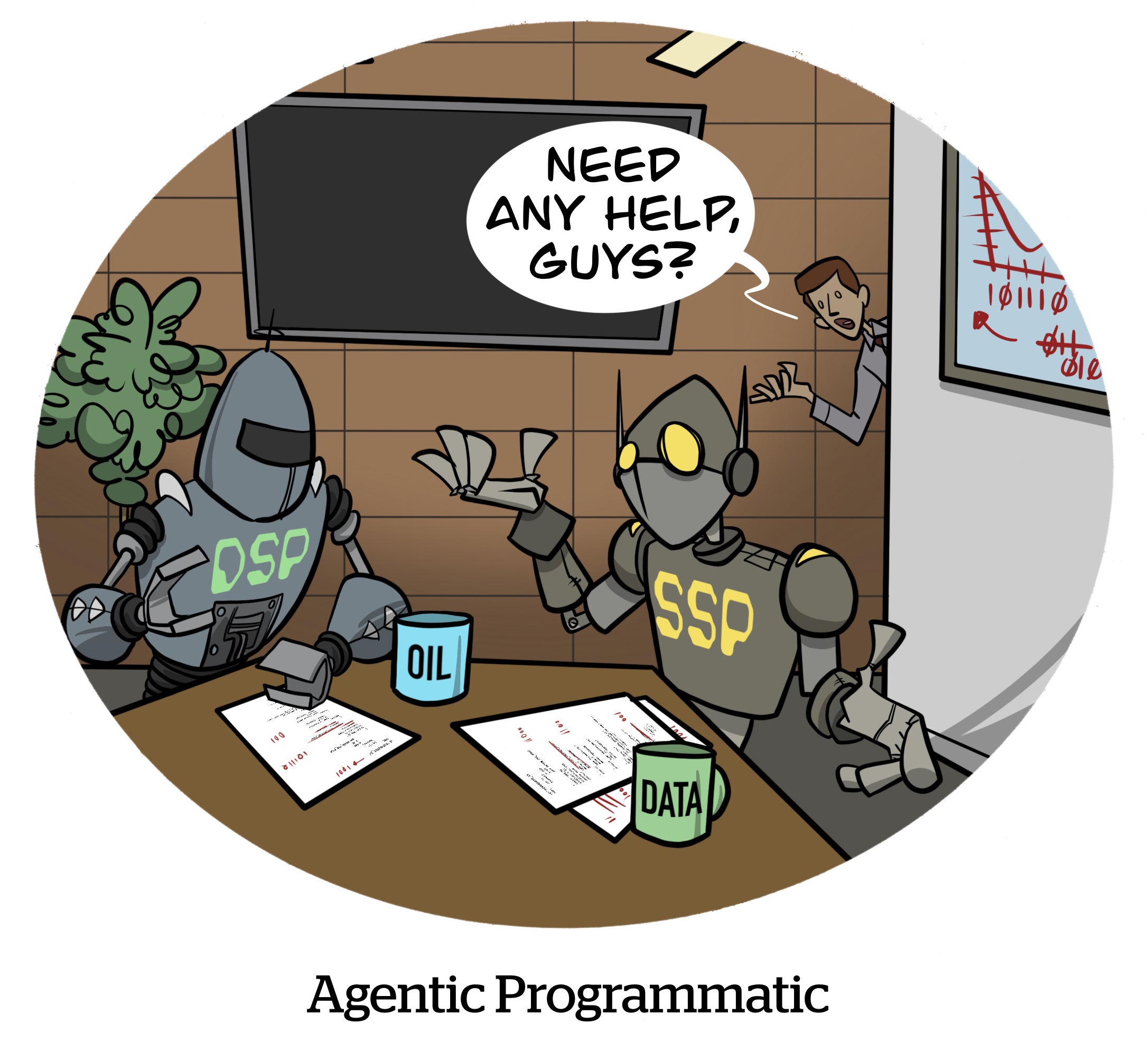
Marketers and publishers juggle multiple DSPs, SSPs, walled gardens, clean rooms, measurement vendors, retail media networks and internal tools on the daily. A typical marketer licenses somewhere between 80 and 120 different platforms across their mar tech and ad tech stack, said Bob Walczak, CEO of connectivity platform MadConnect.
But MCP isn’t a magic button that automatically simplifies the stack. It’s an open standard for how AI models connect to external tools and data, and it still has to be implemented and governed on both sides.
“It’s like a universal adapter that makes AI more usable for marketers,” said Todd Parsons, chief product officer at Criteo. The “universal adapter” idea is what makes MCP interesting beyond any one vendor, he said, because it’s the difference between an AI widget that lives inside a platform and an AI layer that can see and act across the stack.
Omri Shtayer, VP of data products and AI at digital intelligence platform Similarweb, also reached for a hardware metaphor, which is the same analogy that the creators of MCP use to describe it.
“MCP is like a USB,” Shtayer said, but instead of plugging a physical device into a port, it’s the connector between AI applications and external tools.
MCP in the stack
It’s important to be extra clear, though, that MCP isn’t specific to ad tech – it’s a general-purpose way for LLMs to connect to tools and data in any domain.
But advertising is a natural proving ground.
The online ad industry already runs on APIs, data feeds and a tangle of platforms, making it a prime candidate for MCP‑powered workflows. A handful of early implementations in and around ad tech are already demonstrating how this can play out in practice.
Criteo, for example, is using MCP behind the scenes so marketers can query campaigns and catalogs in natural language, like pulling product recommendations, assembling audiences and setting up campaigns. “It’s exactly as if you were using Claude,” Parsons said.
Similarweb is primarily applying MCP to the planning process by connecting AI agents to web traffic, app traffic, keywords and category data so media teams can ask questions about competitors and market trends without hopping between tools. Its MCP server acts as a connector layer that plugs Similarweb’s data into LLMs with enough context that the models can analyze and act on it reliably, rather than guessing, Shtayer said.
Marketing data platform Adverity, meanwhile, is tapping the protocol to give its intelligence product a very specific kind of memory and logic, said Lee McCance, the company’s chief product officer. Because its MCP-powered tool is built on a clean, unified data foundation, he said, the insights are inherently reliable.
A campaign manager can ask, for instance, “Why is my Facebook CPC rising?” and Adverity’s system will maintain awareness of any filters, brands that were mentioned and time frames across multistep queries.
A major concern among marketers, McCance noted, is that an AI will forget what it’s already asked. “The MCP prevents this by preserving the conversational state,” he added.
Whereas Adverity uses MCP to help marketers interrogate their data, MadConnect uses it to move that data and campaign instructions between platforms.
MadConnect positions itself as an “intelligent connectivity layer” that unifies ad tech and mar tech APIs and exposes them through MCP, allowing AI agents to sit on top of a marketer’s existing tools and handle cross‑platform workflows – moving audiences, syncing conversions and pulling reports, for example – without new custom integrations.
 The open questions
Although MCP is widely adopted – it’s been downloaded tens of millions of times – it’s still somewhat nascent in ad tech, and there are issues to deal with before that plumbing can be woven into the everyday workflows of how campaigns are planned, run and measured.
For instance, there’s a difference between the protocol itself and the politics around it; as in, what MCP can enable technically and whether that lines up with existing business incentives.
“MCP is not the hard part,” SuperTruth’s Snyder said. “The hard part is getting people to agree that they want a common context, because a lot of the margins in ad tech come from the fact that nobody has the full picture.”
In other words, if agents can share a consistent picture of how a campaign performed, that’s a win for buyers – and a potential problem for businesses that profit from fragmentation and opacity.
Data quality and governance are another constraint.
“The value isn’t just in connecting data, but in governing it,” said Adverity’s McCance, who argues that unified models and automated checks have to come first if marketers are going to trust AI agents.
In short, jot this down and keep it prominently displayed on a Post-it: MCP can preserve conversational states and business contexts, but if the inputs are wrong or incomplete, all it’s gonna do is help teams get to the wrong answers faster.