Deduplicated Dollars
Much ado has been made of late about The Trade Desk’s data fees.
Well, TTD is making a change to its fee structure, overhauling how the DSP pays ID providers. But it’s unclear how it will affect how advertisers pay to apply data to their campaigns.
Going forward, TTD will pay ID providers that participate in the platform’s Identity Alliance based on the incremental impact their IDs had on a campaign, Digiday reports.
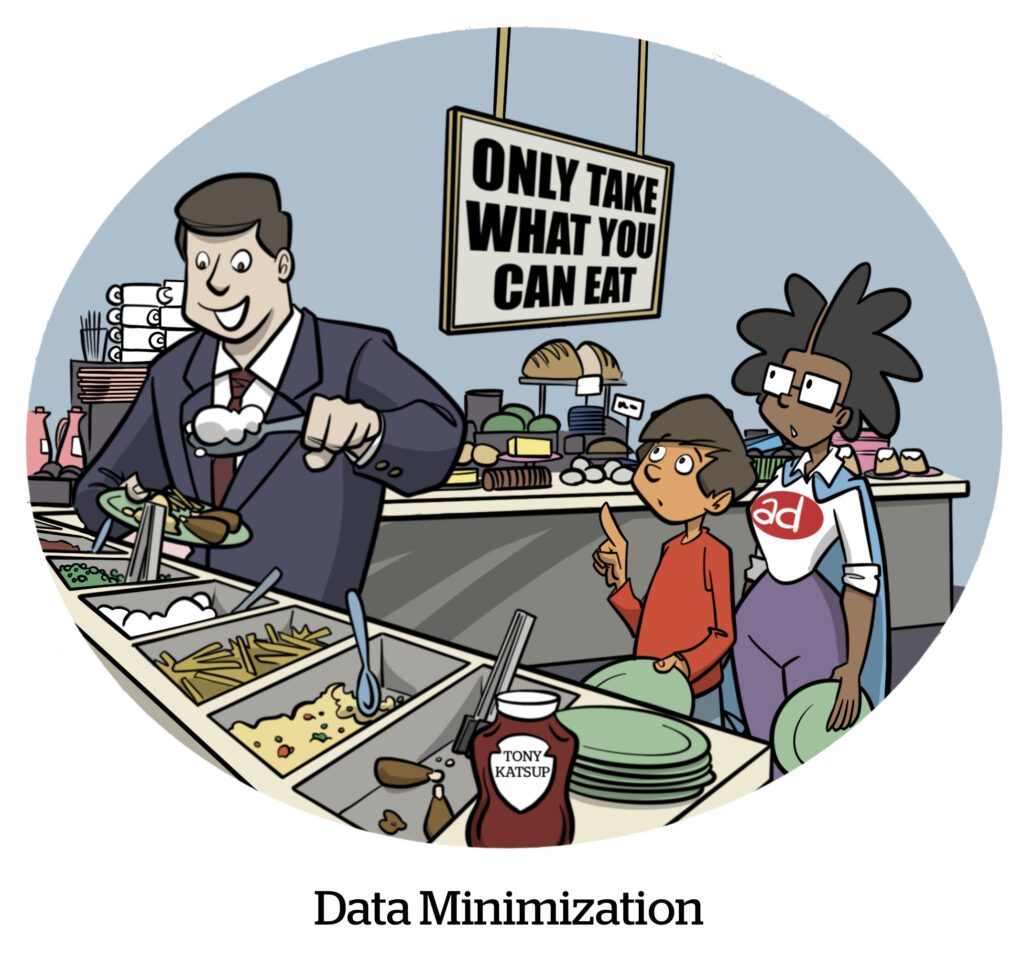
In other words, TTD will share revenue with ID providers if they contribute unique data signals that aren’t already offered by the DSP itself or another data broker. It’s an attempt to cut down on partners collecting revenue for providing duplicative data – i.e., why pay two vendors for the same email address?

Previously, TTD paid Identity Alliance members based on volume, not results.
Some ID providers are stoked on the change. One data broker exec tells Digiday, “If you’re bringing something new, you should earn more. If not, you’ll likely see less.”
But critics say TTD isn’t transparent about which data signals factor into its bidding decisions.
With those complaints in mind, TTD says it will introduce new APIs and mechanisms to shed light into its revamped payments.
Don’t Want Your SaaS
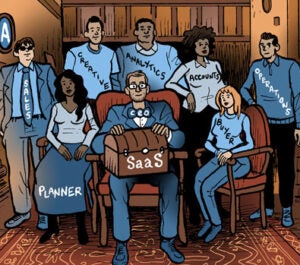
Investors have soured on software companies, although the biggest private-credit funds – Blackstone, Blue Owl Capital, Ares Management and Apollo Global, specifically – are still far more invested in software than they advertise, according to a Wall Street Journal report.
And “advertise” is a deliberate word choice, because these private-credit funds are leaning into a newish practice whereby individual people participate in the funds’ investments.
The software antagonism has been hard on ad tech, with companies like AppLovin, Criteo and LiveRamp being downsized by Wall Street in the past year. But the concern at hand is how the private funds market themselves to potential customers.
“The way in which [private-credit funds] classify their sector exposures is not uniform,” Barclays analysts wrote in a recent report Thursday regarding the trend. “This sector ‘massaging’ generates concern from the investor community and makes it difficult to assess degrees of true diversification across funds.”
Take Blue Owl, a firm that often touted its tech investment chops. But in February, shortly after what the Journal dubs the “SaaSpocalypse,” co-CEO Marc Lipschultz boasted that “actually amongst the peer group, we have the lowest software exposure.”
Although the Journal found Blue Owl had almost twice as many software investments than it self-reported.
Bad Bets
Kalshi is tired of being lumped in with its rival prediction market Polymarket.
So Kalshi’s new ad campaign aims to make clear that it’s regulated by the US government, unlike Polymarket, The Washington Post reports.
It’s a valid point. Americans can’t even access Polymarket without a VPN due to its unregulated status. (Polymarket is trying to reenter the US market this year after being banned in 2022.)
Kalshi’s campaign, which launched earlier this month online and on outdoor billboards, touts that, as a federally regulated exchange, the company doesn’t operate “death markets” for, say, predicting bombings or assassinations. Polymarket, meanwhile, removed a prediction market for nuclear bomb detonations after backlash.
Kalshi’s ads also boast that it doesn’t allow insider trading. Again, in contrast with Polymarket, which is being investigated for allegedly enabling bets by insiders.
But Kalshi’s campaign to distinguish itself from Polymarket may be having the opposite effect than intended, in a “this brand doth protest too much” kind of way.
Or, as journalist David Dayen put it after seeing a Kalshi ad, “My ‘We don’t allow bets on assassinations and murder’ ad campaign has people asking a lot of questions already answered by the ad campaign.”
But Wait! There’s More!
A leaked Amazon pitch deck reveals that sponsored ads on the platform’s Rufus AI shopping assistant will soon exit open beta, and advertisers will start being charged on a cost-per-click basis. [Adweek]
Meta wants to capitalize on a recent Supreme Court ruling about internet piracy to argue that the company shouldn’t be liable for torrenting 80 terabytes of pirated works to train its AI tech. [Ars Technica]
OkCupid parent company Match Group settled an FTC complaint that it shared users’ photos, demographics and location data with a third-party facial recognition company, Clarifai, without consent. [The Verge]
A new paper by Stanford University suggests that sycophantic behaviors exhibited by AI chatbots like Claude and ChatGPT are still “prevalent and harmful” to users. [Futurism]
New York City mayor Zohran Mamdani is reversing a city government TikTok ban, first enacted by Eric Adams in 2023. [Wired]
Analytics firm Pro Football Focus is being acquired by Teamworks – which means, of course, that it’s time for some layoffs. [Awful Announcing]
Roku launches a standalone mobile app for Howdy, its new SVOD service. [TechCrunch]
Locality acquires Deben, a media planning software company. [Advanced Television]
You’re Hired!
Jamie Cutburth moves from NBCU to iHeartMedia as EVP of marketing. [Radio Ink]
Thanks for reading AdExchanger’s Daily News Roundup. Want it by email? Sign up here.