
Google Gives Retailers Its Seal Of Approval; The Benefits Of Brands Getting Political
Google is testing a new badge for shopping-related searches on some mobile devices. Plus, should brands have political opinions?

Google is testing a new badge for shopping-related searches on some mobile devices. Plus, should brands have political opinions?

Upfront negotiations might take longer than normal this year. Plus, Meta is already in hot water with the EU’s new digital regulations.

The end of Oracle’s ad business is a major shift in the ad landscape. Here’s how to assess the impact on your business and begin to find a new path forward, according to Alliant’s Christopher Morse.

Tech companies have developed AI solutions that shift budgets and strategies toward contextual. But the AI-driven transition to black-box optimization requires agencies to build and develop new skills, custom tools and processes.

LegalZoom has been beta testing new tools from communications API provider Twilio that allow marketers to access data from the cloud without needing to call in the engineers.

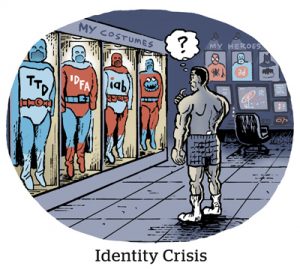
Wishing you all a beautiful Memorial Day! This classic comic first ran in October 2011.

Here’s today’s AdExchanger.com news round-up… Want it by email? Sign up here. Walmart’s Writing On The Walls Targeting in aisle three? Beyond selling access to its online ad supply, Walmart is now offering advertisers a way to reach customers while they’re roving physical store aisles, The Economist reports. Theoretically, an advertiser has the best chance of […]

Curation’s shift to the sell side is giving DSPs less control over how advertisers curate audiences, which is creating new tensions in the programmatic ecosystem.

In today’s newsletter: Companies looking to sell data target the US market; which media companies to bet on at TV upfronts; and generative AI data licensing is the new publisher revenue stream.

Dotdash Meredith previewed plans for how its OpenAI partnership could provide incremental traffic and scale its contextual targeting capabilities across a wider network of sites and media types.

Business Insider released a new targeting tool called SAGA reACT that analyzes the emotional reactions its content produces to create actionable, emotion-driven audience segments.

Enjoy this weekly comic strip from AdExchanger.com that highlights the digital advertising ecosystem …

Debrief on the CMA’s biggest issues with the Privacy Sandbox highlighted in its latest report. Then, a vibe check on the Newfronts.

If you’re looking for a think piece about what Google’s most recent third-party cookie deprecation delay means for the online ad industry – this isn’t it. 😅
Yahoo is expanding its identity solutions to CTV media to make it easier for digital marketers to incorporate CTV within their digital media plans.

Cookie deprecation and the reduced availability of mobile ad IDs is rocking the ad tech ecosystem. But signal loss is also an opportunity for a younger company to build new privacy-preserving targeting technology and grab market share, according to Remco Westermann MGI CEO.

Only a small handful of identity solutions will still be standing within the next five years, according to ID5 CEO Mathieu Roche – and he intends ID5 to be one of them.

In today’s newsletter: The internet doesn’t have enough data to train generative AI models; publisher squabbles over the Privacy Sandbox could delay cookie deprecation; and a federal privacy law is in the works.

In today’s newsletter: Google’s ad strength meter could push advertisers to adopt Google’s campaign preferences; Home Depot hosts an “InFront” to show off its RMN, Orange Apron Media; and the Privacy Sandbox rollout could do serious damage to the online ad industry.

Gathering information from industry insiders is a critical part of the CMA’s evaluation process, says Chris Jenkins, director of the its Digital Markets Unit.

The third-party cookie actually stymied the development of digital advertising. Here’s what the cookie got wrong and what its inheritors need to get right.

On Tuesday, iHeartMedia-owned Triton Digital acquired AI brand safety and suitability startup Sounder in a bid to improve its programmatic chops.

Now, advertisers have more flexible access to the MTA’s four million daily riders while they’re inside the stations, waiting for their trains.

Cookie loss is happening, even if it doesn’t feel imminent, and there’s no point in procrastinating, according to Sisi Zhang, chief data and analytics officer at Publicis-owned Razorfish.

Enjoy this weekly comic strip from AdExchanger.com that highlights the digital advertising ecosystem …

New contextual targeting tools use generative pre-trained transformers (GPTs) to analyze websites and and build contextual audience segments. The companies behind them believe that GPTs can address some of the problems that plague contextual targeting.
In a world without cookies, ads aren’t viewable and yield goes down. But it’s still early days. Mediavine SVP Amanda Martin shares early results from its Privacy Sandbox tests.

G/O Media introduced a new contextual targeting solution that combines first-party contextual signals and data on audience browsing behavior to create cross-site contextual segments that can be activated programmatically.

Reddit generates “substantially” all of its revenue through advertising, and its S-1 filing reveals its strategy for licensing data and becoming “the leader in contextual advertising.”

The partnership announced on Thursday between MediaMath’s new owner, Infillion, and programmatic media buying platform AdLib isn’t a typical integration. It’s what you might call a reintegration.

VideoAmp is competing in the measurement space by sharpening its focus on TV audience data, ad performance and, of course, AI. The company is also making strategic hires and promoting from within.

The Prebid Summit in New York City on Tuesday exceeded the event’s reputation for liveliness.

The ad industry has become a community of people who say things like “This is going to sound relatable” and follow it up with a sentence that may as well be Martian to 99% of America.


LG home screen inventory is now available through agentic buying, opening up a premium TV placement to faster, more automated campaign setup.

Reorienting the ad auction so that ad servers bid into Prebid lets publishers access demand from Google AdX without also having to use Google’s ad server.

Starling recently launched as a connected TV SSP and wants to capitalize on the opportunity to address a major pain point facing CTV marketers: the lack of show-level data.