Comic: Two More Years
A weekly comic strip from AdExchanger.com that highlights the digital advertising ecosystem…
The expiration date for third-party cookies has been extended for another year. We talk through what the delay will mean for ad tech. Plus, an entire corner of the LUMAscape now exists within the Tremor-Amobee deal, the ultimate example in ad tech consolidation.
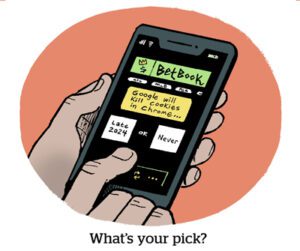
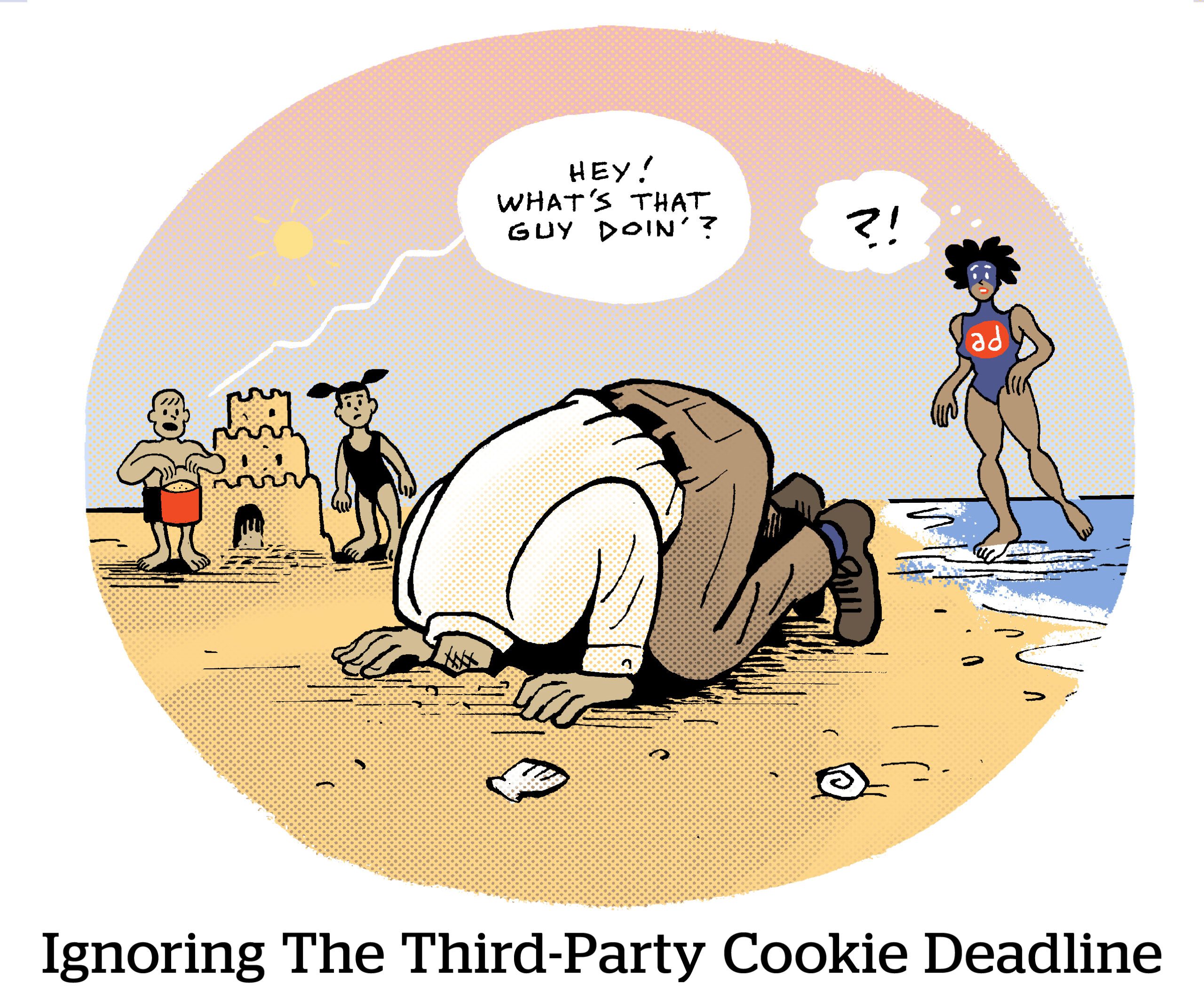
Procrastinators are being given a gift (of sorts): Google is postponing its deadline for the phaseout of third-party cookies in Chrome by a year, until the second half of 2024.
Advertisers love a captive audience, and there are few audiences more captive than mass-transit riders. So it was perhaps inevitable that Intel-owned urban mobility app Moovit would launch an ad platform. Moovit’s advertising service is live for advertisers in Latin America, Italy and Israel, and the company plans to roll it out everywhere its app is used.
🏆 We’re hosting our next comic caption contest. 🏆 Submit your caption idea by 5 p.m. ET on Tuesday, July 25, for the chance to win a free ticket to Programmatic I/O New York in October.
A weekly comic strip from AdExchanger.com that highlights the digital advertising ecosystem…
Ad agencies are understaffed and their clients – small businesses in particular – often don’t have the time or the technical background to sift through reams of campaign data. And so, increasingly, they’re turning to automation to cut down on the more tedious and time-consuming aspects of account management. Tag, an independent agency based in Iowa, uses a suite of automated reporting tools, including from Basis Technologies, to communicate cross-platform campaign metrics to its clients.
A weekly comic strip from AdExchanger that highlights the digital advertising ecosystem…
As clients look for alternatives to third-party cookies, ad agency Dentsu can steer them to its in-house Contextual Intelligence tool, which launched today. Although contextual targeting is often considered inferior to demographic or behavioral targeting, it can drive performance. Jewelry retailer Pandora piloted the tool during the 2022 Valentine’s Day season. Ads placed using the solution represented 2% of campaign spend, but drove 36% of revenue, a 24x return on investment.
Personalization – paired with effective measurement – has enabled marketers to see and understand results, ultimately driving them to spend more. Madan Sundararaju, vice president of the M&E sector at Capgemini Americas, writes on how traditional media platforms can adapt to these trends and increase their share of ad revenue.
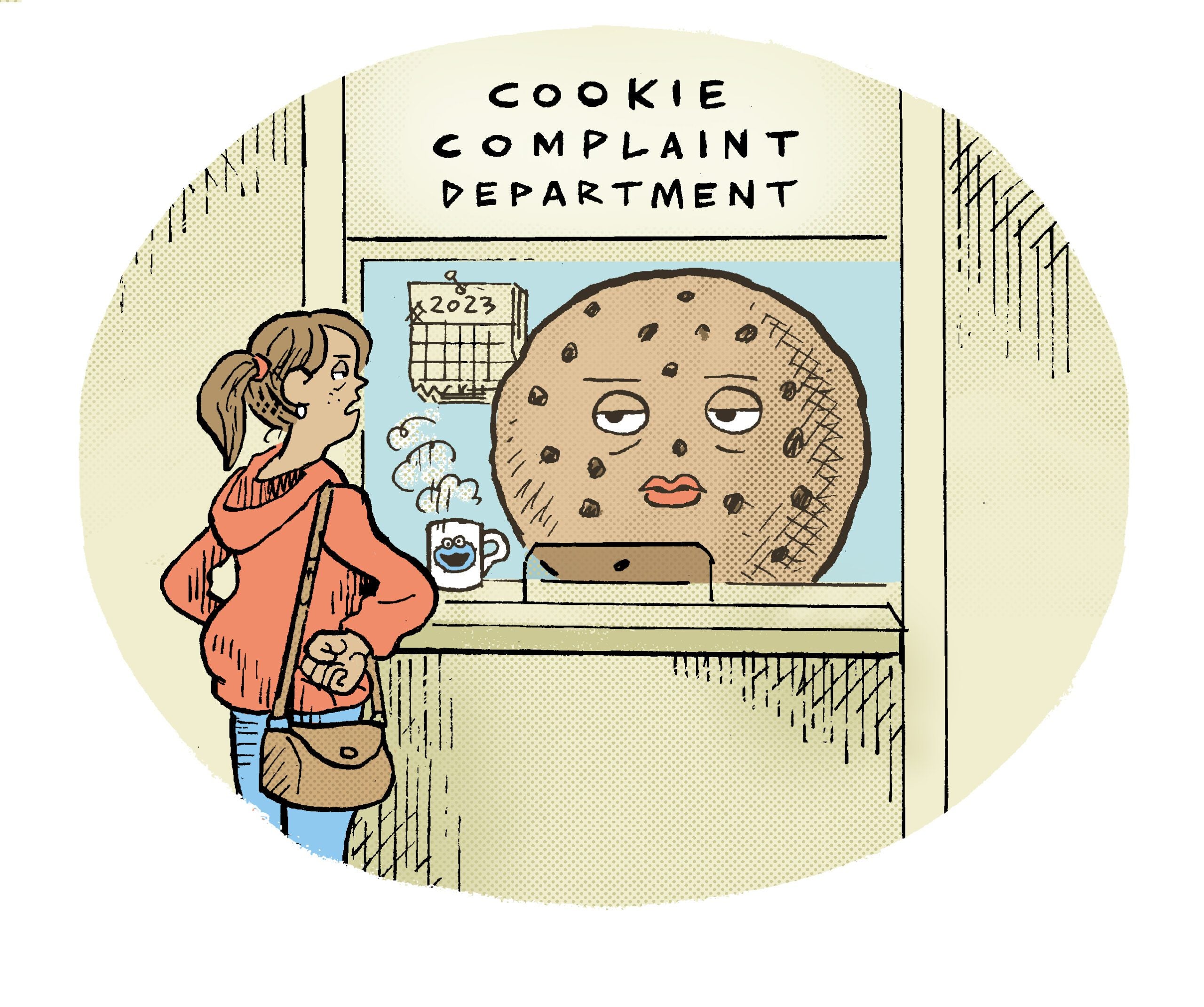
We read between the lines of Google’s progress report to the UK’s antitrust regulator on its plan to remove third-party cookies from Chrome. Could Google miss its own self-imposed 2023 deadline? “Signs point to yes.”
You’ve probably heard (dozens of times) by now that first-party data will be the key to post-third-party-cookie ad targeting. But what exactly is first-party data? How does it differ from second-party, third-party and zero-party data? And what makes first-party data more suited to a privacy-centric ad experience?
The word “cookieless” crops up in virtually every conversation about the future of online identity. But what exactly do people mean when they say “cookieless”? Although the definition seems simple enough – the absence of cookies – it lacks the nuance to encompass the true complexity of signal loss. It’s also a misnomer.
Even if third-party cookies weren’t on Chrome’s chopping block, brands would need a strategy to navigate signal loss, says Spiceology CEO Chip Overstreet. Spiceology is working with digital identity management company Parrable and MediaMath to retarget users in environments where third-party cookies aren’t available.
You get what you pay for. This adage is considered way too infrequently in the world of digital advertising, especially programmatic. There is so much pressure placed on gaining efficiency, both in execution and cost, that marketers have begun to prioritize “added value” impressions over meaningful business results, writes Elise Stieferman, director of marketing and business strategy at Coegi.
In today’s hybrid retail environment, customers can window shop in person or comparison shop online before completing their purchase in a store or on the internet. Or they partake in “buy online, pick up in store” (BOPIS). The need to capture the customer’s journey between online and offline behavior was the seed for Foursquare’s new Closed Loop feature, the location data platform’s latest addition to its attribution product
Under COPPA, businesses can’t target ads based on the data of children under 13 years old. Toy manufacturers like WowWee need other ways to get their products in market via advertising, and after testing a YouTube campaign with contextual ad platform Precise TV, the promising results allude to the potential of contextual in targeting ads effectively without audience data, profiles or cookies.
Jay Glogovsky, vice president of revenue operations and analytics for The New York Times, talked to AdExchanger about how The Times relies on direct partnerships to create a positive ad experience for its readers, why open-web programmatic is the wrong choice for a privacy-centric in-app experience and why publishers should double down on close partnerships rather than worry about who will control the keys to monetization.
As brands build out their first-party data strategies and work to assemble post-cookie capabilities, many are “in-housing” to remain in control of their data. But to ensure success, they need to accomplish a few important tasks, writes Nancy Marzouk, CEO of MediaWallah.
A rundown on the state of TikTok’s ad platform, including its attribution woes. (But you’d be crazy not to advertise there.) And location-data-related privacy issues that will crop up should Roe v. Wade be overturned.
Google is launching a new preference center so people can more easily manage their privacy settings, opt out of personalized advertising and specify whether they want to see fewer (or more, ha) ads on a given topic.
Criteo is still using third-party cookies while it can. Why not? But “if tomorrow we don’t have access to them, then we’ll have to use something else,” said CEO Megan Clarken. What sort of “something else?” Criteo has been testing what it refers to as “more privacy-enabled, controllable and reliable signals.”
A weekly comic strip from AdExchanger that highlights the digital advertising ecosystem…
Here’s today’s AdExchanger.com news round-up… Want it by email? Sign up here. Movers And Shakers Did you feel that? There have been some seismic moves lately in Ad Tech Land – not even counting M&A or privacy rules. Stephanie Layser, longtime leader of News Corp.’s advertising technology, is taking her talents to the cloud. She […]
With FLEDGE origin trials just begun – they finally kicked off on March 31 after multiple delays – publishers and advertisers need to get up to speed. But how is FLEDGE different from other targeting-focused proposals within the Chrome Privacy Sandbox, what use cases does it support and – most importantly – is FLEDGE a viable and privacy-safe alternative to third-party cookies?
Here’s today’s AdExchanger.com news round-up… Want it by email? Sign up here. Thinking Outside The Xbox Microsoft is evaluating vendors to help launch an in-game Xbox ad network for free-to-play titles, Insider reports. Rather than interstitials that appear between breaks in mobile games, the Xbox network would help place a snazzier type of ad, like a […]
Roughly three years ago, dairy and food manufacturer Land O’Lakes tested a customer data platform (CDP) to help with site optimization. People who visited pages about horse management, for example, or how to set up a home chicken coop, were targeted with relevant ads. Land O’Lakes sells farm feed and equipment, not just products you […]
The Privacy Sandbox proposals are moving forward in an organization whose governance is in the air and whose leadership is disengaged. We unpack what’s going on at the W3C with working group member and IAB Tech Lab advisor Alex Cone. He also weighs in on what went wrong with FLoC.
Paula Connard, chief personalization officer at Horizon Media, on why third-party data is disappointing, why testing proposals in the Chrome Privacy Sandbox isn’t a top priority, why the indie agency decided to build rather than buy a data platform and the questions she’s getting from clients as they deal with signal loss.
Earlier this month, ESP, not to be confused with PPIDs, entered open beta in GAM, so feel free to rev up your UID2s. In English: Google is moving forward with its solution, called encrypted signals from publishers (ESP), that allows publishers to share encrypted first-party signals, including Unified ID 2.0 identifiers, with buy-side platforms of their choosing via Ad Manager. Here’s the DL on all things ESP.