
Here’s today’s AdExchanger.com news round-up… Want it by email? Sign up here.
Twinning
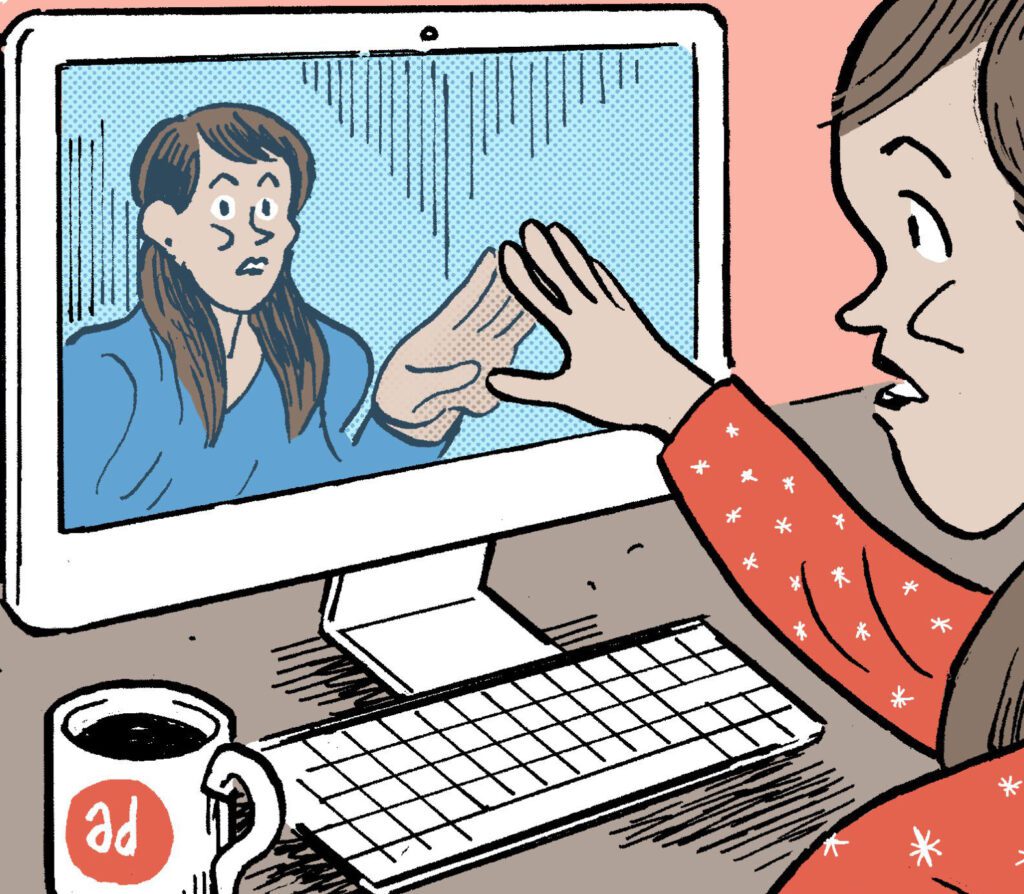
Marketing and ad tech companies are trying to make “digital twins” a thing, according to an Ad Age column.
For instance, a brand might use its own first-party data about high-value customers as a seed audience to create a digital twin. A large language model like OpenAI’s, Google’s or Amazon’s digests the info to create an archetype version of that customer cohort. And this persona could be prompted to identify new shows they’re into and what campaign tactics, ad copy or creative works best.
Digital twins often involve jargon like “synthetic data.” And the idea isn’t to create a digital persona of an individual or an AI assistant. The digital twins instead enable sandbox testing and product development.

AWS is a proponent of synthetic data, because it allows testing without using personal information.
Though there is a dose of hocus-pocus. Synthetic data and digital twins give marketers confidence to spend more on campaigns ahead of time, having already “run” the campaign in a virtual environment.
This is kind of like having an NFL season simulated by the latest Madden video game and expecting the results to resemble reality.
The New Netflix Standard
Netflix needs more ad-supported members. So it’s taken a page from Prime Video’s playbook and defaulted some ad-free subscribers to the ads plan.
The service notified some subscribers on the cheapest ad-free (“Basic”) plan that their memberships will automatically switch to the ad-supported plan. Subscribers who don’t want ads have less than a month to upgrade to one of Netflix’s more costly ad-free plans: Standard for $15.49 per month or Premium for $22.99 per month. Members who don’t take action within their billing cycle will become ad-supported users, Adweek reports.
Netflix first started phasing out its Basic plan for existing subscribers in the US and France last month, hoping to funnel more subscribers into ad-supported streaming. Still, Netflix needs a lot more than just 40 million monthly active users on its ad plan to compete with the 130 million US households Prime Video is expected to have as ad-supported members this year.
Defaulting subscribers to ad-supported accounts – Prime Video’s strategy since it first launched ads in January – is the surest way for a streaming platform to rapidly increase ad supply.
Guess Netflix isn’t only on the receiving end of copycatting.
Splitting The Bill
California lawmakers and Big Tech have reached a compromise on a method to compensate news publishers, reports Sacramento-based NBC affiliate KCRA.
The California legislature is considering two local news bills. One requires platforms to share ad revenue with publishers; the other imposes data-scraping taxes on platforms, to be paid as journalism grants.
Google and Meta oppose both bills and threatened to block California news orgs from their platforms – echoing their responses to laws in Canada and Australia.
As part of the reported compromise, neither bill will be voted on. Instead, $242.5 million will be earmarked for newsroom funds and AI programs over the next five years.
KCRA’s sources claim Google will commit $172.5 million, with the state pitching in $70 million. Google also has $12.5 million set aside for AI research, while OpenAI will contribute technology.
Publishers aren’t thrilled, though. Media Guild of the West circulated a memo calling the compromise “a ratification of Google’s monopoly power over our newsrooms.”
Subsidizing AI bandwidth charges and local news ad credits, for instance, two of Google’s go-to incentives for news publishers, are plainly self-dealing to keep those sites on Google products and offer no sustainable lifelines.
But Wait, There’s More!
What could stop AI from scaling? [The Information]
YouTube now accounts for 10% of time spent by US viewers watching streaming services on TV – the largest share of any streaming platform. [Nielsen] (h/t Julia Alexander)
TIME announces layoffs, citing decreased ad budgets and changes to search and social algorithms, one year after it removed its subscription paywall. [tweet] (h/t Max Tani)
Paralympics opportunities and lessons for brands. [Campaign]
Disney reverses course on its bid to block wrongful death lawsuit by widower who had Disney+. [CNN]









