
Here’s today’s AdExchanger.com news round-up… Want it by email? Sign up here.
MMM For Miles
M&A is still hot in ad tech this summer.
On Monday, research and analytics company Circana announced two acquisitions: NCSolutions, a joint venture between Nielsen and shopper data platform Catalina, and Nielsen’s Marketing Mix Modeling (MMM) business. Circana, which was born from a 2022 merger between retail data sellers IRI and NPD Group, wants to expand its own marketing mix modeling (MMM) solutions.

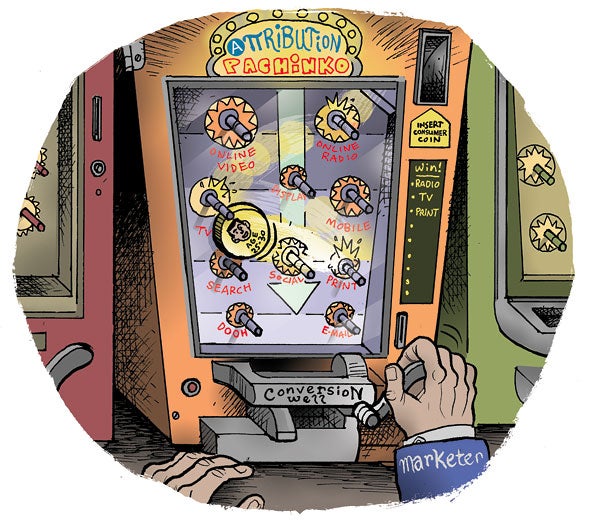
MMM has been making a comeback in response to industrywide signal loss, which is complicating cross-platform measurement. MMM is seen as a more old-fashioned attribution model because, unlike multitouch or last-touch attribution, MMM doesn’t offer impression-level attribution. But there’s a reason why MMM is making a comeback. Even better measurement at the channel level can help fill in some of the gaps.
NCSolutions, for example, is getting more attention from streaming services that want to compete for ad dollars with retail data. In the spring, Netflix tapped NCSolutions for shopper data from grocery chains and drug stores that can help Netflix advertisers measure incremental sales lift. And with partners like Netflix, NCSolutions could give Circana a more lucrative standing in the streaming space.
Netflix’s New Game
Netflix’s upfront results may sound promising, but the streamer still needs to grasp the finer points of how the advertising game is played, Digiday reports. YouTube and Prime Video, in particular, are proving to be intense competitors.
Unlike Netflix, which introduced ads with an opt-in model, Prime Video defaulted its members to ad-supported plans earlier this year. Now it boasts a scale of 200 million US subscribers. With CPMs hovering around $30, Prime Video was a better deal for advertisers than the $60 CPMs Netflix has been asking for its smaller audience. Currently, Netflix’s ads plan has 40 million monthly active users, which are individual viewing profiles grouped into a smaller (but undisclosed) number of paying accounts.
Netflix may have the Netflix brand, but advertisers also value a good deal.
This competition is why Netflix halved its CPMs from $60 to just under $30 earlier this month. It’s also why Netflix has an obsession with ad tech, Digiday writes. Its recent decision to build its own ad tech stack and integrate with programmatic platforms other than Microsoft could help the streamer reach new demand and cash in much more quickly with programmatic ads.
May the best streamer win.
Ad Pods
Podcasts have more ads than ever, reports the Wall Street Journal.
In Q2 this year, ads took up 10.9% of an average podcast’s runtime, according to research by ad agency Oxford Road and audio measurement company Podscribe. That’s up from 7.9% in Q2 2021. Podcasters earn six cents per hour for each listener in 2024, up from two cents in 2015.
The influx of ads may be putting more change in creators’ pockets. But tech companies’ pursuit of growth is the real driving force. For instance, Spotify spent more than $1 billion building a podcasting empire, acquiring studios like Gimlet and signing big-money contracts with celebrity hosts, and it’s under pressure to recoup those investments.
Increased audio ad load aside, the oversaturation of ads online and on TV makes podcasting seem like a haven. Only 10% of listeners find the number of ads they hear hard to tolerate, according to podcasting research firm Sounds Profitable.
But higher ad density dilutes the message. Listeners are less likely to convert when more ads appear in a podcast episode, according to Oxford Road. And some marketers, including the agency’s CEO, Dan Granger, worry that podcasts “have already pushed their ad load beyond where it should be.”
But Wait, There’s More!
Now that Reddit and Google Search are more entwined, spammers are using the former to exploit results on the latter. [Search Engine Journal]
What marketers can learn from Kamala Harris’ “weird” campaign. [Ad Age]
Why Instacart’s future might hinge on Uber. [The Information]
The Israeli government is buying Google ads denouncing the UN’s top humanitarian aid provider in Gaza. [Wired]
Jenna Ortega says she deleted her Twitter account after seeing AI-edited explicit images of herself as a minor on the platform. [NYT]









