
Trying To Make Kokai Happen; EU Readies GDPR Changes
The Trade Desk gets insistent with Korai again; the EU is rethinking hashed IDS; and is the AI industry becoming a cartel?
The Trade Desk gets insistent with Korai again; the EU is rethinking hashed IDS; and is the AI industry becoming a cartel?

With privacy under unprecedented attack by data brokers and social media, it is the wrong time to weaken CIPA’s private right of action protections, as has been proposed in California Senate Bill 690.

Rather than sharing universal TIDs that any DSP or curator can access, Raptive says publishers should instead share encrypted TIDs with an encryption key provided only to trusted demand-side partners.

We spoke to a score of ad tech leaders to uncover seven competencies essential for the success of the next generation of ad tech leadership.

The era of fragmented, adversarial ad tech is winding down. A new paradigm is emerging defined by AI-first, end-to-end platforms and collaboration among buyers and sellers.

Contextual intelligence platform Precise TV is hoping to make it easier for kid-focused brands to reach their target audiences without compromising on privacy.

Many well-intentioned advertising standards efforts gather digital dust thanks to industry politics and competing interests. Here’s how the industry can stop sabotaging its own progress.

CTV advertising has made great strides, but it still lags behind social platforms in one critical area: optimizing campaigns based on outcome data. Here’s how standardized conversion API integrations for CTV can help.

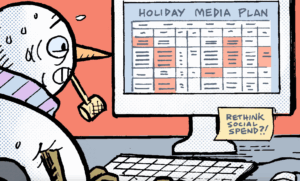
Enjoy this weekly comic strip from AdExchanger.com that highlights the digital advertising ecosystem …

GDPR may not be perfect, but it forced European companies to adopt a privacy-by-default position. For US companies, this is a clear signal: Change is inevitable.

Dave Strauss, VP of revenue operations and strategy for North America, spoke with AdExchanger about The Guardian’s PMP priorities and how it’s tapping into other emerging revenue streams.

Competing agendas are limiting the tools publishers have at their disposal in ways that aren’t always primarily motivated by user privacy. Here are five things about privacy in digital media that should keep publishers up at night.

If Chrome imitates Apple, there may be a de facto deprecation of the third-party cookies, since potentially only a slim percentage of users would consent to tracking. In that case, advertisers would still have to primarily rely on cookie alternatives, including the Privacy Sandbox.

Ad tech faces a GDPR compliance paradox. Plus, TikTok will make it harder to target teenagers and plans to give users more control.

Musings on the Chrome Privacy Sandbox consent pop-up after experiencing one in the wild in Europe. Do people know what they’re opting into?

Future believes its new monetization offering can succeed where other publishers have struggled with selling ad tech and consulting to third-parties.

There are other motivating factors for crossing the LUMAscape, besides increased efficiency and less ad fraud. These businesses are trying to position themselves to win in a transformative era that will make or break many ad tech companies.

In today’s newsletter: Google’s new generative AI image tool within its campaign planning product has some major limitations; Grindr faces a class-action claim over its data-sharing practices; and Snap snaps up political ads.

To help bridge the disconnect between SMBs and media platforms, Media Disco recently launched its self-serve ad-buying platform.

There’s a lot more good than bad in Google’s Privacy Sandbox. Here’s why some of the current criticisms around the cookie alternative don’t hold water.

Reddit generates “substantially” all of its revenue through advertising, and its S-1 filing reveals its strategy for licensing data and becoming “the leader in contextual advertising.”

Do people hate ads? No, according to Vegard Johnsen, eyeo’s chief product officer. What they don’t like, he says, is not being treated with respect.

The anonymous alphanumeric string made and lost fortunes in its short but eventful life. It was best-known for something it wasn’t actually designed to do: targeting ads.

Crisis is often fertile ground for change. And boy, the marketing world is in desperate need of change.

Welcome to Scandi-Land, where the cookieless future has been our online media reality for the last five years. Here are three lessons for media planners, buyers, sellers and platforms who are going to have a tough time navigating the thicket of change.

it’s hard to believe anyone in ad tech truly expects consumers to signal how they would like each corporate entity to track them across every property on the web.

Here’s today’s AdExchanger.com news round-up… Want it by email? Sign up here. Is Free Social A ZIRP? Social media is free. Well, it’s supposed to be, anyway. That’s the point. All your friends join, it’s free fun, and rather than paying money you get served with ads. But that could change. On Monday, Android Authority […]

Collecting consent is a far more nuanced process than just getting someone to opt in. It also matters how you ask for it.

In the context of TV advertising, clean rooms offer privacy-compliant software that enables advertisers and publishers to match user-level data without actually sharing any personal information or raw data with one another.

The ad industry tends to get lost in its own weeds. (Endless consternation about the end of third-party cookies, anyone?) But the concept of privacy encompasses much more, from dealing with misinformation to promoting competition, says Jules Polonetsky, CEO of the Future of Privacy Forum.