
OPINION: Data-Driven Thinking
The Creativity Trade-Off: What Marketers Risk Losing In The Age Of AI
We now have plenty of evidence that AI can be an incredibly useful tool. But proof is also piling up that it erodes our creativity.

We now have plenty of evidence that AI can be an incredibly useful tool. But proof is also piling up that it erodes our creativity.

The industry has spent years debating third-party cookies, but AI has settled the debate. First-party data isn’t just preferred; it’s structurally necessary. And the capital is already moving.

An upcoming paper from CIMM doesn’t just demonstrate that differences in media quality can be measured. It also argues that tying media value to short-term outcomes has perpetuated longstanding industry challenges.

Onetag’s acquisition of creative ad tech platform Aryel equips its curation solution with new tools for tweaking and testing interactive ad creative.

Google faces another antitrust investigation; Americans want free, ad-supported news; and the K-shaped economy dings mass-market manufacturers.

The IAB’s new framework aims to standardize when AI in ads should be disclosed, but a lot is still left up to interpretation.

On stage at the IAB’s Annual Leadership Meeting, IAB CEO David Cohen tore into AI companies, accusing them of “free riding” on publishers’ work – and calling it “stealing.”

The IAB unveiled its Project Eidos on Monday, a new program uniting its numerous measurement initiatives under one banner.

A Google divestiture is still in the cards; the IAB’s new framework lays out exactly when to disclose use of AI; and Hershey’s doubles down on marketing.
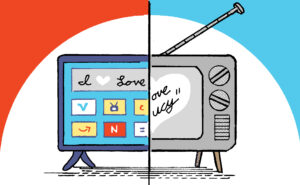
If any single event can be considered the jumping-off point for TV upfronts, it’s the Consumer Electronics Showcase (CES), which kicks off this week in Las Vegas, Nevada.

The generative AI trend generated endless hot takes this year, but the ad industry also had plenty to say about growing competition between DSPs and SSPs. Here are AdExchanger’s top 10 most popular guest columns of 2025 and why they resonated.

Social CPMs have risen. The ability to find incremental audiences on social platforms has declined. Add the growing brand-safety concerns, and the equation looks even worse.

Greg Glenday weighs in on why Acast is resisting the allure of video, the trade-offs of accepting political ad bucks and positioning influencer marketing as audio’s entry point into the omnichannel mix.
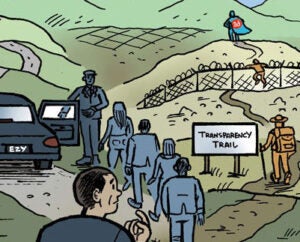
Publicis celebrates as its growth aligns with the IAB’s downgraded ad spend projection; Spotify and Netflix partner to chase YouTube’s video podcast biz; and how investor cash keeps health data safe from advertisers.
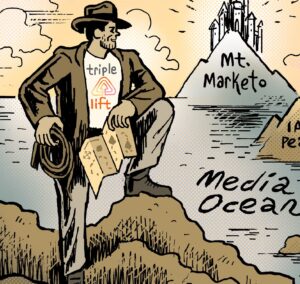
Private equity firm Novacap acquires IAS; many large online retailers are seeing an uptick in referral traffic from ChatGPT; and the IAB downgraded its US ad spend projection for the rest of the year.

TTD turns its back on SSPs; scientists are finding a home on Bluesky; and a hacker used Anthropic’s Claude to plan a cybercriminal operation.
IAB Tech Lab CEO Anthony Katsur didn’t mince his words when declaring unauthorized generative AI scraping of publisher content “theft, full stop.”

The Trade Desk makes the S&P 500, triggering a stock price rebound; Estée Lauder is the latest big legacy brand to embrace influencers; and CMOs are trying to measure their return on AI, but it’s tricky.

The IAB Tech Lab’s new initiative suggests regulations for how AI bots can access content, ensuring that publishers are fairly compensated.

Hearst has seen improvements in addressability between 30% and 200% since introducing AURA, its AI-powered ad targeting solution, last year.

On Wednesday, AI-powered audio intelligence platform Sounder launched a new version of its brand suitability and contextual targeting tool for podcasts that can understand the nuances of Spanish-language audio content.

AI app marketplace Dappier ensures that chatbot responses using Benzinga’s data link back to the original source, and it also shares revenue from ads placed in these responses.

Angelina Eng, a 30-year industry veteran who serves as the IAB’s vice president of measurement, addressability and data center, has been swimming in the ocean of digital advertising from the very beginning.
Now that all the dust and confetti has settled after the upfronts, negotiations between marketers, agencies, networks and streamers are only just getting started.
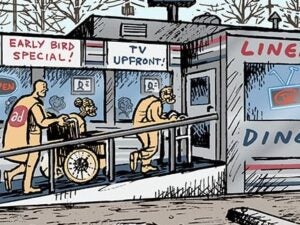
Ever since 2020, TV upfront rates have declined; inconsistent metrics mean inaccurate results; plus, Roblox is touting its strong hold on its viewers’ (er, gamers’) attention.
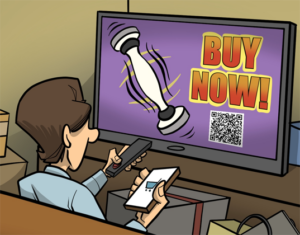
Instead of simply watching ads on the big screen, consumers are now being encouraged to interact with those ads – a shift in marketing that was particularly apparent at the 2025 NewFronts presentations in New York City this week.
AI is being embedded in tools, tagged in decks and tossed into internal sprints. But for agencies, publishers, brands and platforms, there’s still no shared definition of success.
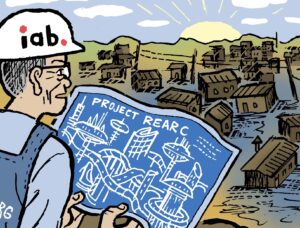
Earlier this year, Pinterest conducted reviews of five potential ad tech acquisitions. Plus, what do LLMs think is the best retail media tech for retailers, and why?

Many well-intentioned advertising standards efforts gather digital dust thanks to industry politics and competing interests. Here’s how the industry can stop sabotaging its own progress.

CTV advertising has made great strides, but it still lags behind social platforms in one critical area: optimizing campaigns based on outcome data. Here’s how standardized conversion API integrations for CTV can help.