There's A Meta Diaspora Building The Fastest-Growing Ad Platforms
The great Meta migration is in full swing. Ex-Meta employees are, filling the ranks at Open AI, TikTok, Amazon Ads and Roku and bringing their expertise with them.
Meta alumni are on the move – and they’re bringing the world’s most successful ad playbook with them to the next generation of would-be ad platform greats, with OpenAI at the top of the list.
Cuisinart’s marketing team has been eager to take advantage of generative AI-based creative.
Amazon’s advertising businesses earned a total $19.8 billion in Q2, the company reported in its quarterly earnings on Thursday. That’s up from $15.7 billion in Q2 2025, and good for a 26% year over year growth rate.
Million Dollar Sellers, or “MDS,” is a group of Amazon sellers and specialists. And they’ve had it with Amazon’s advertiser and seller squeeze. But can they do anything about it?
Amazon Ads expects this year’s television upfronts to be an outcomes-focused affair. That may explain why the company preempted its Monday evening presentation by announcing the launch of a new ad product called Dynamic TV Creative.
Amazon has packaged a handful of upgrades to its ads measurement solutions, obviously catered to TV and streaming media advertisers.
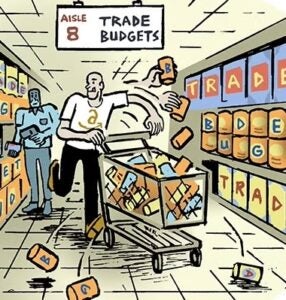
The Amazon advertising boycott last week wasn’t really about Amazon’s ad platform as much as it was a dispute over evolving seller economics, which raises a fundamental question: Can you even build a brand on Amazon anymore?
OpenAI has its own tracking pixel; Amazon sellers are boycotting the platform; and DirecTV hops on the CAPI bandwagon.
The Dynamic Traffic Engine, an open-source tool, is geared toward optimizing bid requests and reducing programmatic waste.
The industry has spent years debating third-party cookies, but AI has settled the debate. First-party data isn’t just preferred; it’s structurally necessary. And the capital is already moving.
DSPlease Brand marketers and agency buyers are skeptical of DSPs’ transparency claims. After Publicis announced last month that it’s no longer recommending The Trade Desk to its clients, other DSPs saw an opportunity to strike. Since then, other DSPs (Viant being “the most aggressive,” according to one media buyer) have been reaching out to TTD […]
In 2011, three media devices captured 87% of consumer attention. Today, that figure has dropped to 65%, according to McKinsey. The fragmentation isn’t slowing down; it’s accelerating. Streaming services, social media, podcasts and gaming now compete for eyeballs, making traditional media planning feel like navigating with an outdated map.
The age-old question for streaming TV advertisers is, how to target the viewers they want while reaching the scale their businesses need. The quick-serve restaurant operator CKE, which owns Carl’s Jr. and Hardee’s, sought an answer in a case study with Attain and Amazon Ads.
Amazon’s Fire TV redesign is extra friendly for ads; Anthropic benefits from its newfound spine; and the children yearn for the malls.
Starting next quarter, US media buyers will be able to tap Amazon Audiences for targeting when they run Netflix campaigns through the Amazon DSP.
Amazon Ads’ MCP server is in open beta, allowing advertisers to connect their own tools to its API functionalities through one integration.
Maggie Zhang from Amazon Ads talks interactive video strategy, including opportunities on Amazon Prime Video and which genres drive the most engagement.
Viewers aren’t just watching streaming content anymore; they’re living in it. And while they’re streaming, they’re telling us something important about how they want to experience advertising. They want to do more than watch; they want to engage.
Samsung Ads built a new integration with Amazon Publisher Cloud (APC), which is a clean room solution within the larger Amazon Publisher Suite (APS), the companies announced on Monday.
People tend to think of digital-native product brands as a single bucket. But there’s a huge difference between companies that are social natives, for instance, rather than an Amazon-based brand.
As artificial intelligence transforms advertising analytics, many organizations are rushing to adopt AI tools, hoping for a “magic button” that instantly democratizes data access.
Take a moment to think about how your day sounds. Maybe you start with the sound of your alarm, followed by a quick news briefing from your smart speaker while you scroll through emails. Your favorite podcast keeps you company during your commute. Your to-go playlist helps you get in the zone at the gym.
“We just constantly hear how complex it is right now,” Kelly MacLean, Amazon Ads VP of engineering, science and product, tells AdExchanger. “So that’s really where we we’ve anchored a lot on hearing their feedback, [and] figuring out how we can drive even more simplicity.”
Jeff Cohen, Skai’s new chief business development officer, unpacks why the smartest retailers and brands are already connecting the data dots and rethinking their playbooks for the AI era, even though the shopping bots aren’t quite there yet.
On Monday, Amazon announced the launch of location-based interactive video ad units on Prime Video, which will allow small and local businesses to reach their target customer in specific geographic areas.
The IAB Tech Lab’s new device attestation feature for its Open Measurement SDK provides a scaled way for original device manufacturers to confirm that ad impressions are associated with real devices.
Mastercard launched an ad network; Meta plans to sell targeted ads based on engagement with its AI products; and the Washington Post is in trouble if Ad Chief Johanna Mayer-Jones departs.
On Wednesday, Amazon introduced an agentic AI tool that brings all the image, video and audio generation capabilities of the company’s Creative Studio into its ad platform creative setup.
Today’s developers face mounting challenges: heavier workloads, complex tech stacks and an increasingly fragmented advertising landscape demanding automation at scale. This complexity limits their ability to adopt new products and innovate.