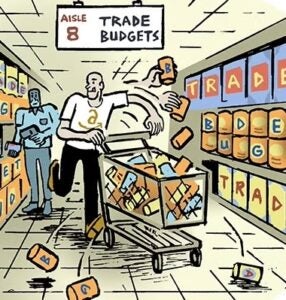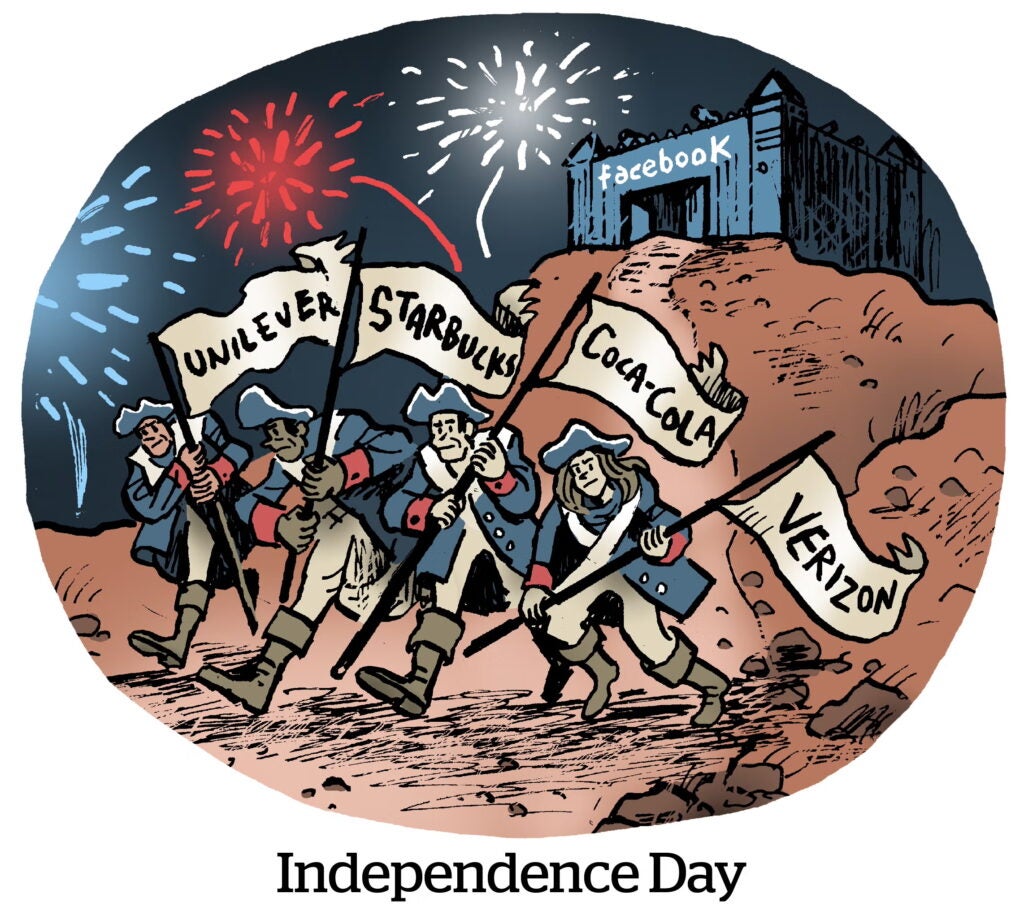
I couldn’t help but follow up on recent news, first reported by CNBC, about an Amazon ad platform boycott – compelling because it’s been some time since advertisers have boycotted a major walled garden platform.
Advertisers used to regularly throw their weight around. Remember when hundreds of major advertisers ditched YouTube for several months in 2017 over egregious brand-safety issues? And more than 1,000 advertisers boycotted Facebook in 2020 to push for stricter policies against hate speech and misinformation. (There’s even a Wikipedia page about it.)
But, unlike those past examples, the Amazon advertising boycott last week wasn’t really about Amazon’s ad platform as much as it was a dispute over evolving seller economics. And this raises a fundamental question for many ecommerce marketers and entrepreneurs, one that’s been lurking in the back of their minds: Can you even build a brand on Amazon anymore?

Boycott background
First, though, here’s some quick context on the Amazon boycott.
Last week, a coalition of large Amazon sellers organized by a group called Million Dollar Sellers halted spend for 24 hours on Amazon ads in protest of policy changes over the past few months that reduce seller margins, including a 3.5% fuel surcharge on Amazon fulfillment and new payout terms that delay when sellers receive payments. (Amazon waits until seven days after delivery is confirmed, rather seven days after the shipment date, to pay out.)
But sellers are particularly aghast at a proposed change that would put an end to credit card purchases for Amazon media and data.
From Amazon’s perspective, credit cards are intermediaries that take between 2% and 3% of ad spend without benefit to Amazon.
Advertisers, though, get a few percent cashback from their card and other perks, which they can apply to company travel and other operational business costs, said Alex Yale, an Amazon brand owner and Million Dollar Sellers board member.
Yale is an old hand at Amazon. He owns three Amazon brands, the largest being Uncle Todd’s home cleaning supplies, and he was previously GM for the largest portfolio company at Amazon brand aggregator Thrasio.
When you’re scraping by on single-digit margins, even modest fee hikes combined with fewer benefits and longer payout cycles is enough to break the business model, he told me.
The boycott demonstrates why Wall Street investor types are hesitant about businesses that depend on ad revenue. The Amazon Ads platform hasn’t gone haywire or delivered unacceptable ad placements, as has happened before with other large walled gardens – but it is the only part of the Amazon business over which sellers possess any leverage.
If sellers are able to “bend the curve” of Amazon’s revenue slightly and even just for a brief period – as short as one day – it sends a signal that a collective group could decide to pull back spend and impact Amazon’s bottom line, Yale said.
Although, he added, the Amazon Ads platform has been stable, at least in his experience, in terms of cost per acquisition and overall share of revenue based on sales. The problem is about Amazon’s fulfillment costs, new fees and its return and payment.
And it’s important to acknowledge that the Amazon boycott did bear fruit. Although the fuel surcharge and other policies remain intact, Amazon delayed the credit card prohibition to August. It was supposed to roll out this month.
“They heard several voices rallying, a battle cry against the changes,” Yale said. “They’ve at least bought us four months.”
Even so, the advertising boycott was surely just a blip for Amazon. More pressing for the ecommerce giant are its regulatory issues and reputational challenges. For example, the day after the boycott, California Attorney General Rob Bonta touted his office’s incremental procedural win in an ongoing antitrust suit against Amazon for allegedly forcing sellers and brands to increase prices.
So, who knows? Maybe sellers will be able to piggyback on antitrust pressure and delay the credit card phaseout a second time come August.
The builders
But back to my original question: Is it even possible to build a brand on Amazon anymore?
You could ask the same of any platform.
In the past, the answer was yes. Warby Parker, Casper, Dollar Shave Club, Bonobos and many other ecommerce and DTC startups could be said to have been “built on Facebook.” And some ecommerce brands have definitely been built on TikTok. (Sorry, none for you, Snapchat.)
During AppLovin’s 2025 full-year earnings call in February, CEO Adam Foroughi cited an Israeli cookware startup that went from $16 million in annual revenue last year to a projected $80 million this year, with a majority of its customer acquisition ad spend going to AppLovin.
Foroughi’s point, to paraphrase, is that, “Hey! Here’s a company that is being built on AppLovin.”
But more than any other platform – including even Shopify – countless companies, from obscure small businesses to now-ubiquitous brands, were arguably built on Amazon.
That’s changing, though, and Yale himself is an apt example.
While Amazon remains the largest-selling channel for three brands he owns and where he spends the most on ads, Yale said that the products have now diversified to Walmart, The Home Depot, grocery stores and other channels.
According to Marketplace Pulse tracking data published last week, Amazon’s total active seller count dropped from 584,000 early last year to 500,000 as of last month. And fewer than 8,000 sellers generate more than half of Amazon’s third-party gross merchandise value. Three years ago, it took more than 15,000 sellers to account for half of US sales.
In other words, fewer companies are able to get by on Amazon nowadays, and the overall revenue is accruing to the top sellers.
It may be a long time before a meaningful coalition of brands or sellers is able to take the plunge and move off Amazon, just as Meta and Google advertisers will continue to eat their mud sandwiches and say, “Thank you, may I have some more.”
In the meantime, Amazon sellers will do what they’ve always done, which is figure out how to scrape by.
“It used to be quite viable” to be sustainably profitable on Amazon, Yale said. “And I’d say it’s still viable, but it’s becoming harder and harder.”