Mediaocean Partners With The Internet Watch Foundation To Report CSAM Content
Protected by Mediaocean, Mediaocean’s ad verification division, is partnering with the Internet Watch Foundation to crack down on CSAM and ensure children’s online safety.
New social media content moderation policies will enable connections with audiences that reflect a broader range of perspectives, expand inventory, and provide opportunities for contextual alignment.
On Wednesday, AI-powered audio intelligence platform Sounder launched a new version of its brand suitability and contextual targeting tool for podcasts that can understand the nuances of Spanish-language audio content.
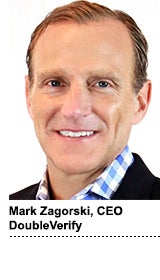
AdExchanger spoke with DoubleVerify CEO Mark Zagorski just a few days after the company sued Adalytics alleging defamation over the latter’s recent report on bot detection.
Concern over brand safety and suitability is now tied with campaign underperformance as the top reason for why advertisers pull back on budget.
True crime podcasts are incredibly popular with listeners. But they’re a hard sell with advertisers. So Sony Music Entertainment is turning to sentiment analysis to address buyer concerns.
Stop thinking about brand safety verification as “insurance” – a way to avoid undesirable content – and start thinking about it as an opportunity to build positive brand associations, says Kenvue’s Mark Proulx.
Brands have two options for avoiding election misinformation on YouTube: block all news, or only monetize credible news. But blocking all news restricts campaign reach and harms reliable journalists, just when we need them most.
Enjoy this weekly comic strip from AdExchanger.com that highlights the digital advertising ecosystem …
It’s time for advertisers to get more nuanced with their approach to brand safety, says Mia Libby, The Wall Street Journal’s SVP of enterprise. It’s okay to be cautious, but excluding all news from programmatic media plans isn’t the answer.
AdExchanger caught up with Zefr’s new chief AI officer, Jon Morra, about his role and how digital media will adapt (or acquiesce) to AI tech.
It’s not that brands don’t care about supporting the news and good journalism. But an overreliance on keyword blocklists has made it seem that way, says Zefr CEO Rich Raddon on this week’s episode of AdExchanger Talks.
Josef Najm, director of programmatic and partnerships at Reuters, has a message for advertisers: Don’t be afraid of journalism.
Integral Ad Science added a new capability to measure brand safety and suitability for off-YouTube sites and apps through YouTube’s ad network.
Here’s today’s AdExchanger.com news round-up… Want it by email? Sign up here. Better Safe Than Sorry Brands are nervous about misinformation, especially as generative AI tools make it relatively easy to create convincing fake images, audio files and videos. General Mills is teaming up with verification company Zefr to measure misinformation around its social media […]
After more than two years of building and testing, Meta is releasing brand suitability controls and third-party verification for its feed environments.
Here’s today’s AdExchanger.com news round-up… Want it by email? Sign up here. Trade Desk Trade-Offs The investment bank Needham has both the bullish and bearish takes on The Trade Desk after the DSP reported earnings this month. And there is a compelling case in both directions.
Here’s today’s AdExchanger.com news round-up… Want it by email? Sign up here. Better Sorry Than Safe Twitter is partnering with DoubleVerify and Integral Ad Science on brand safety. Gotta do something to woo back its advertisers. “Through custom-built solutions for Twitter’s feed environment, these tests have shown that more than 99% of measured impressions appeared […]
Brand safety has a hypocrisy problem. Violence that gets a pass when it’s a fictional TV show becomes flagged if it’s part of an online news story. But to what end? Plus: what Black Friday and Cyber Monday sales results portend for retailers’ prospects in Q4 and beyond.
Pixability started out contextualizing advertisers’ digital video buys on YouTube to make sure they ran in brand-safe environments. But now that consumers are watching more YouTube on TV screens than on web browsers (and CTV buyers are demanding media transparency with proverbial pitchforks), Pixability is expanding its brand suitability metrics to apply more broadly to CTV environments.
VideoAmp released a tool that allows publishers and advertisers to compare audience viewership second by second throughout the duration of a program. The purpose is to help buyers target their ads more effectively. Advertisers have been demanding discrete program insights for targeting and measurement planning, Jonathan Bohm, VP of product at VideoAmp, tells AdExchanger.
The programmatic ecosystem is so complex and opaque that bad actors are able to game the system to fund hate and social harm. Now, advertisers are getting more concerned about funding harmful activity through ad fraud and high-velocity disinformation within social and programmatic ecosystems, writes Sarah Bolton, EVP of business intelligence at Advertiser Perceptions.
Contextual targeting laid the foundations of TV advertising – particularly by ensuring that ads were stitched into content marketers considered “brand safe.” With the advent of CTV, buyers put context on the back-burner in favor of more granular, first-party audience targeting. Now, the pendulum is swinging back again. Why? Two words: signal loss.
Keyword blocklists are blunt instruments, and yet they persist in programmatic media buying. It’s time to kick blocklists to the curb and start curating keywords by campaign, says contextual pioneer John Snyder, who sold his company, Grapeshot, to Oracle in 2018.
Meta announced plans on Thursday to create content-based controls for Feed (formerly News Feed) on Facebook and Instagram. The question is, why did it take so long for Meta to start bringing third-party brand suitability to Feed? After all, the News Feed was one of Facebook’s first products, launched during the long-ago year of 2006.
With the looming threat of privacy crackdowns across the globe – and big platform changes coming – contextual advertising is starting to look pretty good again. And not just on the open web – on TV, too. On Wednesday, Precise TV, a kid-safe contextual advertising platform for YouTube, announced a partnership with video data platform […]
Here’s today’s AdExchanger.com news round-up… Want it by email? Sign up here. Neeva Have I Eeva Paid To Search The search engine startup Neeva launched its $5 per-month tier on Wednesday, Fast Company reports. It’s small news – Neeva has some hundreds of thousands of users – but it’s an important marker because at least someone’s […]
Advertisers understandably seek to protect themselves from fraud, awkward placements and inadvertently funding misinformation, but in doing so rely on overzealous or blunt brand-safety filters that steer them away from news and diverse content.
As opposed to brand safety, which the IAB defines as content that’s “generally considered to be inappropriate for any advertising and unfit for publisher monetization regardless of the advertisement or brand,” brand suitability is a more nuanced affair.
“On TV & Video” is a column exploring opportunities and challenges in advanced TV and video. Today’s column is by David George, CEO of Pixability. Traditional TV is losing customers and advertisers to connected TV (CTV) and digital video, and large brands are asking questions about how they should align their ads with content that […]