
Introducing The Netflix Pixel (Netflixel?); FTC Approves The Publicis-LiveRamp Deal
Netflix has a tracking pixel; the FTC signs off on Publicis acquiring LiveRamp; and Apple’s ad ID ban is no big deal next to its product plans.

Netflix has a tracking pixel; the FTC signs off on Publicis acquiring LiveRamp; and Apple’s ad ID ban is no big deal next to its product plans.

Agencies are pitching AI directly to CEOS; Xandr under fire for sharing sexual orientation data sourced from Grindr; and Publicis says brands don’t need to sweat big holdcos working for their competitors.

When a data or measurement provider is acquired by a company that sells media technology, talk of neutrality is cheap. The best way to reassure marketers is to make the measurement tech widely available.
Agencies are differentiating their tech stacks by building custom agentic AI tools for their clients. And they’re rethinking owning those AI tools – particularly since licensing them creates new revenue streams.

Somewhere between what the ad industry says and what the market rewards is often where the truth lives. Here are the three industry storylines most in need of debunking.

Advertising in AI-native destinations and experiences is already starting to look less like a series of experiments and more like an emerging market.
Some DOJ staffers wanted to challenge the Paramount/WBD merger on antitrust grounds; ad tech M&A is poised to pick up; and social media marketers want to normalize controversial clipping.

Recorded live in Las Vegas at Prog AI, the AdExchanger team tackles a tricky question: As AI floods the feed with chaotic, addictive content and people engage with it, what does “premium” even mean anymore?

If creators want brand dollars, they have to play by the rules of data-driven marketing and measurement, says Ryan Detert, CEO and co-founder of Publicis-owned influencer marketing platform Influential.

Meet Clamor, a new social listening product that pulls cultural insights from online conversations in real time. Clamor helped Manscaped freshen up its marketing, including for this year’s Super Bowl.

Ad agency holding companies are among the most adaptable businesses out there. In recent years holdcos like Publicis, WPP and Omnicom-IPG have stretched our notions of what an agency business even is exactly.
Publicis recommends some clients ditch The Trade Desk; ChatGPT reconsiders its “unlimited” enterprise subscription; and how NYC’s Washington Square Park became an influencer hub.

During Thursday’s earnings call, CEO Cindy Rose announced a new plan to reposition WPP as a single company, rather than an agency holdco.

During his time as a New York financier, Jeffrey Epstein met and did business with dozens of other investors, entrepreneurs, tech founders and members of the elite. Which means it was inevitable that he would intersect with Ad Land at some point.

Q4 earnings reports are heating up; Private equity firms get squeamish; and AI data centers are harder to build than ever.
Omnicom unveils the latest version of its ID and analytics tool; there’s a new Google Search update in town; and Omnicom Media addresses CTV ad frequency.

Generative AI is the new ad land obsession: a shiny promise of a fully autonomous world of self-driving advertising. But behind the hype lies the costly delusion that automation can replace judgment and more content somehow means better marketing. We’ve entered the age of machine-made abundance, where content can be generated faster than it can […]
Omnicom revamps its revenue reporting; Amazon will now charge for access to its Selling Partner API; and brands seek sponsorship deals with all sorts of social creators.
Publicis celebrates as its growth aligns with the IAB’s downgraded ad spend projection; Spotify and Netflix partner to chase YouTube’s video podcast biz; and how investor cash keeps health data safe from advertisers.

Delivery apps are launching social networks now; Google is the latest Big Tech company to write a huge check to Trump; and ad agencies of all sizes apparently aren’t big enough.

Why is Publicis still winning?; The Dollar Shave Club gets into influencer marketing; and publishers are tossing their cultural critics aside.

Google’s search antitrust trial ends with a whimper; the pitfalls of agency-owned SSPs; Perplexity axes its ads business; and brands are still building big-ticket metaverse experiences.
Dentsu might sell its overseas business; a Prebid update worries the buy side; and Washington State imposes a new ad tax.

Ad agency hold cos have broadcasted their earnings. As AI and acquisitions transform their businesses, there are clear winners and losers. With media as a strong spot, we discuss the paradox of “transparent nontransparency.”

Sing along, now: “Everything is an ad network!” Plus, Publicis is doing A-OK and Substack is changing its tune on advertising.
AI Overviews are even dinging Google Search ads’ traffic; WPP downgrades its earnings forecast; and Google’s AI competitors launch their own web browsers.
In the latest sign of massive change among ad agency hold cos, Mark Read is stepping down as leader of WPP. We unpack the impact of AI on agency hold cos and media, including WPP Media’s prediction that 2025 will be the first year in which the majority of ad spend flows through user-generated content.
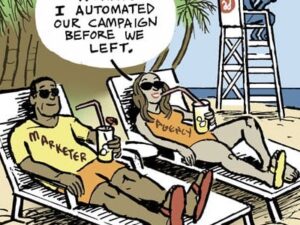
Mark Read is exiting WPP at the end of the year; the CEO of DeepMind is important, we swear; Google’s major SEO swings have changed the game.
WPP’s GroupM is getting a new name; there’s no such thing as a TikTok ban at NewFronts; and Meta’s ad growth prospects might be plateauing.
Atlas Technology Group’s Brian Andersen shares insights on investment trends in the ad tech market and how AI is changing the M&A landscape.